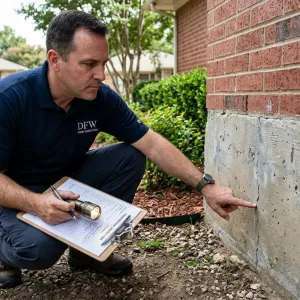
A DFW buyer found the house they’d been searching for months. Right neighborhood, right price, right school district. To keep the deal competitive, they skipped the full home inspection and saved $500. Three months after closing, they discovered a $12,000 foundation issue—the kind caused by DFW’s expansive clay soils shifting beneath the slab. No negotiation possible. No seller to call. Just a check they hadn’t planned to write. Contrast that with another buyer who invested $525 in a comprehensive home inspection on a similar property in Weatherford. The report flagged early-stage foundation movement, a failing HVAC unit, and deteriorating roof flashing. They negotiated an $8,500 credit before closing and moved in with clear eyes. Same DFW market. Very different outcomes.
The decision between a full home inspection and a specific system evaluation isn’t just a line item on your closing checklist. It’s a financial and emotional decision that shapes what you know—and what you don’t—when you hand over your down payment. This guide breaks down exactly what each approach covers, what it costs, and how to choose the right inspection strategy for your specific situation in the Dallas-Fort Worth market.
Key Takeaways
- A full home inspection covers all major systems in one report; specific system evaluations focus on a single area and cannot replace comprehensive coverage.
- Full inspections in DFW typically cost $400–$750 and can save $5,000–$15,000+ in negotiated repairs or informed walk-away decisions.
- DFW’s expansive clay soils, extreme summer heat, and hail frequency make comprehensive inspections especially critical in this market.
- 80–95% of full home inspections uncover at least one significant defect; buyers who skip inspections face average post-closing repair bills of $7,000–$20,000+.
- Specific system evaluations are best used as add-ons after a full inspection flags a concern—not as replacements for comprehensive coverage.
- Always verify your inspector holds a TREC Professional Inspector (PI) license and carries E&O insurance with at least $1 million in coverage.
- Bundling a full inspection with 2–3 add-ons typically saves 10–20% compared to individual pricing.
Why the Inspection Decision Matters More Than You Think
When you’re deep in the homebuying process—juggling mortgage approvals, negotiations, moving timelines, and the emotional weight of one of the largest purchases of your life—the inspection can feel like just another box to check. It isn’t. The inspection is the only moment in the entire transaction where a licensed, unbiased professional evaluates the property on your behalf before you’re legally committed to it. Every other party in the deal has a financial interest in closing. Your inspector doesn’t.
Choosing the right home inspection services in the DFW area directly shapes your ability to negotiate repairs, request seller credits, or walk away from a bad deal with your earnest money intact. A weak inspection—or no inspection at all—leaves you flying blind into a six-figure commitment.
In the Dallas-Fort Worth market specifically, this decision carries extra weight. DFW’s expansive clay soils create foundation movement that’s common enough to be expected, but serious enough to cost $3,000–$15,000+ to repair. Extreme summer heat pushes HVAC systems to their limits. Hailstorms roll through regularly, leaving roof damage that isn’t always visible from the street. These aren’t abstract risks—they’re documented patterns that show up in inspection reports across Fort Worth, Weatherford, Justin, Eagle Mountain, and every corner of the metroplex.
Buyers who limit or skip their inspection to save a few hundred dollars are, statistically, far more likely to face post-closing repair bills that dwarf what they saved. According to data from the National Association of Realtors and industry studies analyzing the 2021–2023 competitive market, buyers who waived inspections reported average unexpected repair costs of $7,000–$20,000+. The inspection isn’t a cost. It’s an investment with a measurable return.
Feeling Overwhelmed by Inspection Options?
You’re not alone—many DFW buyers struggle with deciding between a full inspection and targeted evaluations. The good news: the choice is simpler than it seems once you understand what’s at stake. By the time you finish this guide, you’ll know exactly which approach fits your situation.
What Is a Full Home Inspection?
A full home inspection is a comprehensive, visual evaluation of a property’s major systems and components, conducted by a licensed inspector following TREC Standards of Practice for home inspections. In Texas, the Texas Real Estate Commission (TREC) mandates specific reporting requirements for all licensed inspectors, establishing a baseline of what must be evaluated and documented in every full inspection report.
The result is typically a 30–50+ page report with photographs, written descriptions of findings, and maintenance recommendations. This isn’t a pass/fail document—it’s a detailed snapshot of the property’s condition at the time of inspection, giving you the information you need to negotiate, plan repairs, or reconsider the purchase entirely.
One of the most valuable aspects of a full inspection is its holistic perspective. Systems in a home don’t operate in isolation. A roof leak can damage insulation, which affects HVAC efficiency. Electrical problems can be connected to panel issues that also affect other systems. A full inspection catches these interconnected problems that a single-system evaluation would completely miss.
Systems Covered in a Full Inspection
- Structural components: Foundation, framing, exterior walls, and roof structure—the bones of the home.
- Roofing: Shingles, flashing, gutters, and drainage systems. In DFW, this is especially important given hail frequency.
- Electrical: Service panel, wiring, outlets, switches, and safety devices including GFCIs and AFCIs.
- Plumbing: Water supply lines, drainage, fixtures, and the water heater.
- HVAC: Heating systems, cooling equipment, ventilation, and ductwork condition.
- Insulation and ventilation: Attic insulation levels, ventilation adequacy, and crawl space conditions where accessible.
What’s Excluded from a Standard Inspection
Understanding the exclusions is just as important as knowing what’s covered. TREC’s Standards of Practice do not require inspectors to evaluate:
- Interior of walls, inaccessible attic areas, or crawl spaces with limited access
- Underground utilities or septic systems (a sewer scope or septic system inspection is a separate service)
- Pest infestations—these require a separate WDI (Wood Destroying Insect) or termite inspection
- Environmental hazards like radon, mold, or asbestos, which require specialized testing
- Cosmetic issues, minor wear, or code compliance for items not covered under TREC’s SOP
- Pools, spas, irrigation systems, or detached structures unless specifically included
These exclusions aren’t gaps in quality—they’re the boundaries of what a visual inspection can reasonably assess. The solution is targeted add-on inspections for specific concerns, layered on top of a full inspection as your foundation.
Understanding Specific System Evaluations
A specific system evaluation is exactly what it sounds like: a focused inspection of one particular system or component. Foundation evaluations, HVAC assessments, roof inspections, sewer scopes, electrical evaluations—each goes deeper into a single area than a full inspection typically can, and each is performed by someone with specialized expertise in that system.
These evaluations have real value—but only in the right context. They’re most powerful as add-ons after a full inspection has identified a concern in a specific system. They’re also appropriate for specialized concerns like pool condition or septic integrity. What they cannot do is replace the comprehensive overview that a full inspection provides. If you only get a foundation evaluation, you have no professional assessment of the roof, electrical, plumbing, or HVAC systems. You’re making a major financial decision with incomplete information.
Many DFW buyers wisely add specialized add-on inspections like sewer scopes and thermal imaging to their full inspection package, getting the best of both worlds: comprehensive coverage plus deeper expertise where regional risk factors demand it.
Common Specific System Evaluations in DFW
- Foundation Inspection: Critical in DFW due to expansive clay soils and the settlement risk they create. Cost: $300–$500.
- Roof Inspection: Essential given the region’s hail storm frequency and the prevalence of aging roofs in established neighborhoods. Cost: $150–$300.
- HVAC Evaluation: Important because DFW summers regularly exceed 100°F, stressing systems to their limits. Cost: $150–$300.
- Sewer Scope: Recommended for older homes with original lines to detect blockages, cracks, or root intrusion. Cost: $300–$500.
- Electrical Evaluation: Identifies outdated wiring, panel issues, or safety hazards in older properties. Cost: $150–$300.
- Thermal Imaging: Detects insulation gaps, moisture intrusion, and electrical hot spots invisible to the naked eye. Cost: $100–$300.
- Pool and Spa Inspection: For properties with pools, a pool and spa inspection evaluates equipment, structure, and safety systems. Cost: $100–$250.
When Specific Evaluations Make Sense
Specific evaluations are appropriate in these scenarios:
- As add-ons after a full inspection flags a concern in one system—the full inspection points the direction, the specialist goes deeper
- For older homes where a particular system is known to be at or near end of life
- For specialized concerns like pool condition, septic integrity, or irrigation systems
- For investment properties where a buyer has already done a full inspection on a similar property in the same condition
What they’re never appropriate for: replacing a full inspection on a primary residence purchase. The financial stakes are too high, and the blind spots are too large.
Not sure which inspection approach is right for your specific property? A conversation with a licensed Professional Inspector can help you understand exactly what your home needs—before you book anything. Browse common inspection questions or reach out directly to discuss your situation.
Full Home Inspection vs. Specific System Evaluation: Head-to-Head Comparison
Let’s put the two approaches side by side so you can see exactly what you’re trading when you choose one over the other.
Scope and Coverage
A full inspection gives you a holistic view of the entire property in a single report. Every major system is evaluated, and the inspector can identify how problems in one system affect others. A roof leak that’s been seeping into the attic for two years doesn’t just damage shingles—it can compromise insulation, create conditions for mold, and force the HVAC system to work harder to compensate for lost thermal efficiency. A full inspection catches all of that. A roof-only evaluation catches the shingles.
A specific evaluation provides deeper expertise in its target area but has zero visibility into everything else. You might get a flawless foundation report and walk into a home with a failing electrical panel and a roof that has two seasons left. You wouldn’t know.
Cost Comparison
Here’s what the numbers actually look like in the DFW market:
- Full home inspection (1,500–2,500 sq ft): $400–$600—the most common range for DFW buyers
- Foundation evaluation only: $300–$500
- HVAC evaluation only: $150–$300
- Roof inspection only: $150–$300
- Sewer scope only: $300–$500
If you tried to replicate full inspection coverage by stacking individual system evaluations—foundation, HVAC, roof, electrical, plumbing—you’d spend $1,050–$1,700 and still get less comprehensive coverage than a single full inspection. The math doesn’t support the piecemeal approach.
The smart strategy: start with a full inspection ($400–$600), then add targeted evaluations for systems flagged as concerns or high-risk based on the property’s age and regional factors. Bundling typically saves 10–20% compared to individual pricing.
Risk and Negotiating Power
This is where the comparison becomes most consequential. A full inspection report gives you documented findings across all major systems—findings you can bring to the negotiating table. You can request repairs, ask for seller credits, negotiate a price reduction, or walk away from a deal that doesn’t pencil out. Your leverage is proportional to the breadth and quality of your findings.
A specific evaluation gives you leverage only in its system. If your foundation evaluation comes back clean but you had no roof inspection, you have no grounds to negotiate the $8,000 in hail damage that’s been sitting on that roof for two years. You’ll discover it later, at your own expense.
Industry data consistently shows that 80–95% of full home inspections uncover at least one significant defect. Buyers who waived or limited inspections during the competitive 2021–2023 DFW market reported average post-closing repair bills of $8,000–$18,000—far exceeding the cost of a comprehensive inspection.
DFW-Specific Factors That Favor a Full Home Inspection
Every real estate market has its quirks. Dallas-Fort Worth has several that make comprehensive inspections not just recommended, but genuinely essential. If you’re buying anywhere in the metroplex—Fort Worth, Weatherford, Justin, Eagle Mountain, Southlake, Argyle, Trophy Club—these regional factors directly affect what’s at risk in your specific purchase.
Foundation and Soil Issues
DFW sits on some of the most expansive clay soil in the country. This soil expands significantly when wet and contracts when dry—and in a region that swings between drought and heavy rain, that cycle repeats constantly. The result is foundation movement that’s endemic to the area. Cracks, settlement, and slab issues show up in inspection reports across every price point and neighborhood age.
Understanding foundation inspections in the DFW area—including pier and beam foundations common in older Fort Worth neighborhoods—is critical context for any buyer. Foundation repairs range from $3,000 for minor stabilization to $15,000+ for significant structural work. Early detection through a full inspection gives you negotiating power. Discovering it post-closing gives you a repair bill.
Extreme Heat and HVAC Stress
DFW summers regularly exceed 100°F, sometimes for weeks at a stretch. HVAC systems in this climate work harder than almost anywhere else in the country, and they fail at higher rates as a result. HVAC failure is one of the most common post-closing surprises for DFW buyers—and one of the most expensive, with replacement costs running $5,000–$7,000+ for a full system.
A full inspection evaluates HVAC alongside electrical and insulation, which matters because these systems are interconnected. Poor attic insulation forces the HVAC to run longer. Electrical issues can cause HVAC components to underperform or fail prematurely. You need the full picture to understand what you’re actually dealing with. For more on how maintenance affects your HVAC system’s lifespan, this breakdown on HVAC maintenance is worth reading before your inspection.
Hail Damage and Roof Integrity
The DFW area is firmly in what insurance professionals call “Hail Alley.” Severe hailstorms are a regular occurrence, and the damage they cause to roofing systems isn’t always obvious from the ground. Granule loss, bruised shingles, damaged flashing—these are things an inspector identifies from the roof surface, not from a driveway walk-by.
Roof repairs range from $500 for minor patching to $10,000+ for full replacement. If a previous owner filed an insurance claim and the repair was done poorly—or if a storm hit after the last claim and wasn’t reported—you could be inheriting a roof problem that becomes your problem the first time it rains. A full inspection documents roof condition and provides evidence you can use with insurance companies or in negotiations.
Why DFW Homes Need Extra Attention
The Dallas-Fort Worth region’s expansive clay soils, extreme summer heat, and hail risk create unique challenges that don’t exist in most other markets. A full inspection tailored to these regional factors—conducted by an inspector who understands local conditions—is your best protection against costly surprises that are entirely predictable if you know what to look for.
Given DFW’s unique challenges with clay soils, extreme heat, and hail risk, a comprehensive inspection from someone familiar with regional conditions can be the difference between a confident purchase and a costly surprise. Explore what a thorough inspection covers and how it’s tailored to the DFW market.
Pricing Breakdown: What You’ll Actually Pay in DFW
DFW inspection pricing runs slightly higher than the Texas statewide average, reflecting the region’s higher cost of living, strong market demand, and the complexity of inspecting homes across a wide range of ages and property types. Here’s what to expect in 2026.
Full Inspection Costs by Property Size
- Under 1,500 sq ft: $350–$500
- 1,500–2,500 sq ft: $400–$600 (the most common DFW range)
- 2,500–4,000 sq ft: $500–$750
- Over 4,000 sq ft: $650+ (often priced per square foot)
- New construction: $350–$550, with emphasis on code compliance verification
- Historic Fort Worth homes: $500–$800+ due to complexity and specialized knowledge required
Common Add-On Costs
- Termite/WDI inspection: $75–$150
- Mold inspection: $200–$500
- Radon testing: $100–$250
- Thermal imaging: $100–$300
- Sewer scope: $300–$500
- Re-inspection after repairs: $100–$300
- Well inspection: Available for properties on private wells—a well inspection evaluates water quality and system integrity
Hidden Costs to Budget For
The inspection fee itself is only part of the picture. Smart buyers budget for:
- Termite treatment if found: $500–$2,000+
- Repairs identified during inspection: $1,500–$15,000+ depending on severity—but these are negotiable with the seller
- Follow-up specialist inspections: $200–$500 each for deeper evaluation of flagged systems
- Irrigation system inspection: If the property has an irrigation system, an irrigation system inspection can identify leaks or inefficiencies before closing
Pro Tip: Bundle Your Inspections for Savings
Many DFW inspectors offer package deals bundling a full home inspection with 2–3 add-ons—like a sewer scope, foundation evaluation, or thermal imaging—at 10–20% savings compared to individual pricing. When you book, ask specifically about bundled options. The savings can easily cover the cost of an additional add-on you might otherwise skip.
What Inspectors Are Licensed to Do in Texas
Texas takes home inspector licensing seriously, and that’s good news for buyers. Any individual performing a paid home inspection in Texas must hold a license issued by the Texas Real Estate Commission (TREC). You can verify any inspector’s license status at trec.texas.gov in about two minutes—and you should, every time.
TREC-licensed home inspectors in Texas operate under a framework that mandates specific reporting requirements, system coverage, and professional standards. This isn’t a self-regulated industry—there are real consequences for inspectors who fail to meet standards, including license suspension and disciplinary action.
License Types and Qualifications
- Real Estate Inspector: Entry-level license requiring 140 hours of qualifying education and passing the TREC exam.
- Professional Inspector (PI): Requires 2+ years of experience as a licensed inspector (or equivalent), plus an additional 110 hours of advanced education and a separate exam. This is the highest TREC license tier and the one you want for your inspection.
- Apprentice Inspector: Works under a licensed PI while gaining experience toward their own PI license. Apprentices can conduct inspections but must be supervised.
Beyond TREC licensing, look for additional credentials: InterNACHI Certified Professional Inspector (CPI) and ASHI Certified Inspector (ACI) both require significant training, experience, and adherence to strict codes of ethics. These designations signal a commitment to quality that goes beyond the minimum licensing requirement.
Insurance and Consumer Protection
Texas requires licensed inspectors to carry Errors and Omissions (E&O) insurance, typically with minimum coverage of $1 million. E&O insurance protects you if an inspector makes a significant error or omission that leads to financial loss. Always ask your inspector to confirm their coverage amount before booking.
If you believe an inspector failed to meet TREC’s Standards of Practice, you can file a complaint directly with TREC. They investigate complaints and can take disciplinary action including license suspension or revocation. Texas DTPA (Deceptive Trade Practices Act) protections may also apply if the inspection involved misrepresentation or fraud.
Red Flag: Inspectors Who Offer Repair Services
If an inspector offers to perform or recommend specific contractors for repairs they discover during your inspection, that’s a conflict of interest. An inspector’s sole job is to evaluate—not to profit from the problems they find. An inspector who stands to benefit financially from their findings has a compromised incentive to be thorough and objective. Always verify that your inspector’s only role is unbiased assessment.
Verify Your Inspector’s License Before Booking
Always check TREC’s online license lookup at trec.texas.gov to confirm your inspector is licensed, verify their license type (Professional Inspector is preferred), and check for any disciplinary history. It takes two minutes and protects you from working with unlicensed or sanctioned individuals. Don’t skip this step, even if the referral came from a trusted agent.
The Real Cost of Skipping or Limiting Your Inspection
The math here is uncomfortable but important. Industry data consistently shows that 80–95% of full home inspections uncover at least one significant defect. That’s not a reason to be alarmed—it’s a reason to be informed. Most homes have issues. The question is whether you find them before or after closing.
Buyers who waived or limited inspections during the competitive 2021–2023 DFW market—when some buyers felt pressure to skip contingencies to win offers—reported average post-closing repair bills of $8,000–$18,000 for issues like foundation settlement, major roof leaks, and HVAC replacement. These are costs that a $400–$600 inspection would have identified and, in most cases, allowed the buyer to negotiate.
Understanding why a professional home inspection is essential for buyers isn’t about fear—it’s about making a decision with complete information rather than partial information.
Common Defects and Repair Costs
Here’s what shows up most frequently in DFW inspection reports, and what it costs when you discover it on your own:
- Roofing issues (leaks, damaged shingles, flashing problems): Frequency ~25–35% of inspections. Repair cost: $500–$10,000+
- Electrical problems (outdated wiring, faulty outlets, insufficient service): Frequency ~20–30%. Repair cost: $300–$3,000+
- Plumbing defects (leaks, low pressure, pipe corrosion): Frequency ~20–30%. Repair cost: $200–$2,500+
- HVAC failures (system age, poor performance, ductwork issues): Frequency ~20–30%. Repair cost: $500–$7,000+
- Foundation issues (cracks, settlement, slab problems): Frequency ~10–20% reporting significant issues in DFW. Repair cost: $3,000–$15,000+
Real-World Scenarios: Inspection vs. No Inspection
Scenario 1: A buyer skips the full inspection on a Fort Worth home to strengthen their offer. Three months after closing, they discover a $12,000 foundation issue caused by clay soil movement. No recourse. No negotiation. Just a repair bill.
Scenario 2: A buyer invests $525 in a full inspection on a similar property. The report flags early foundation movement, a 15-year-old HVAC system showing signs of stress, and deteriorating roof flashing. They negotiate an $8,500 credit and close with full knowledge of what they’re buying.
Scenario 3: A buyer gets only a foundation evaluation because “that’s what everyone worries about in Texas.” Foundation comes back clean. Six months later, they’re dealing with $6,000 in roof damage from a hailstorm that hit before they bought the property—damage that was already there and visible to a trained inspector—plus a $4,000 HVAC repair. Total surprise cost: $10,000.
Scenario 4: A buyer invests $500 in a full inspection plus $350 for a sewer scope on an older Weatherford home with original cast iron lines. The sewer scope reveals a significant crack in the main line. They negotiate a $6,000 seller credit, get the line repaired before moving in, and avoid what could have been a sewage backup situation months later.
The data is clear: a $400–$600 inspection investment typically saves $5,000–$15,000 in negotiated repairs or informed decisions. If you’re ready to protect your investment with a thorough evaluation, explore what comprehensive inspection services look like in the DFW market.
How to Choose the Right Inspection Approach for Your Situation
There’s no single answer that works for every buyer, but there is a clear framework. The right inspection approach depends on the property type, its age, its history, and your own financial situation. Here’s how to think through it.
Working with professional home inspection services that understand DFW’s specific conditions means you’re not just getting a checklist—you’re getting an evaluation informed by regional expertise.
Decision Framework by Property Type
- Primary residence (any age): Full inspection is non-negotiable. Add 2–3 targeted evaluations based on property age and regional risk factors. Total investment: $600–$1,200.
- New construction: Full inspection focused on code compliance and builder quality. Even new homes have issues—new construction phase inspections can catch problems at multiple stages of the build before they’re hidden behind drywall. Total investment: $400–$600.
- Historic Fort Worth home (40+ years): Full inspection plus foundation, electrical, and plumbing evaluations. These homes have character and complexity in equal measure. Total investment: $800–$1,200.
- Investment property: Full inspection for accurate ROI analysis. You need to know what you’re buying into before you run your numbers. Total investment: $400–$750.
- Foreclosure or distressed property: Full inspection plus multiple add-ons. Unknown maintenance history means unknown risk. Total investment: $1,000–$1,500.
Questions to Ask Yourself Before Booking
- Is this my primary residence or an investment? Primary residence means a full inspection is non-negotiable—period.
- How old is the home? Homes over 20 years old warrant more add-ons. Homes over 40 years old should have foundation, electrical, and plumbing evaluations alongside the full inspection.
- What’s the property’s maintenance history? Unknown history means unknown risk. More comprehensive evaluation is warranted.
- Can I absorb a $10,000–$15,000 surprise repair post-closing? If the answer is no, a full inspection isn’t optional—it’s financial protection.
- Am I in a competitive market where I might feel pressure to waive contingencies? In that scenario, a full inspection becomes even more critical, not less. You need maximum information when you have minimum protection.
For buyers considering new construction in areas like Justin or Weatherford, this guide to new construction inspections for first-time buyers in Justin, TX walks through what to expect at each phase of the build.
Questions to Ask Your Inspector Before Booking
Not all inspectors are equal, even within the TREC licensing framework. The questions you ask before booking can tell you a lot about the quality and thoroughness of the inspection you’ll receive. Here’s what to ask:
- “Are you a licensed Professional Inspector (PI) or an Apprentice?” — PI is the preferred answer. An Apprentice can conduct inspections but works under supervision and has less experience.
- “What is your E&O insurance coverage limit?” — Minimum $1 million. If they can’t answer this immediately, that’s a concern.
- “When will I receive the full inspection report?” — The standard is 24–48 hours. Reports delivered same-day are a bonus; reports that take a week are a problem during a time-sensitive transaction.
- “Do you follow TREC’s Standards of Practice?” — This should be a non-negotiable yes. Any hesitation is a red flag.
- “What is your policy on re-inspections after repairs?” — Re-inspections typically cost $100–$300 and verify that negotiated repairs were actually completed correctly.
- “Do you offer package deals for add-on inspections?” — Many inspectors offer 10–20% savings when you bundle services. Ask before you book, not after.
You can also browse inspector reviews and check portfolios to get a sense of report quality before you commit. A sample report or portfolio of past work tells you more than a website description.
Top Home Inspectors in DFW: Compared and Reviewed
The DFW metroplex has thousands of TREC-licensed inspectors. Quality, experience, and specialization vary significantly. Here’s an honest look at the types of providers you’ll encounter and what to expect from each.
Journey Home Inspections — Fort Worth, TX
Journey Home Inspections is a TREC-licensed Professional Inspector serving the Dallas-Fort Worth metroplex, including Fort Worth, Weatherford, Justin, Eagle Mountain, Roanoke, Southlake, Westlake, Argyle, and Trophy Club. The firm specializes in comprehensive full home inspections with detailed, photo-rich reports delivered within 24–48 hours.
What sets Journey Home Inspections apart is a deep focus on DFW-specific concerns: foundation issues driven by expansive clay soils, hail damage assessment, HVAC stress evaluation in extreme heat conditions, and the unique challenges of both aging Fort Worth neighborhoods and rapidly growing suburban developments. The firm offers add-on services including foundation evaluations, sewer scopes, thermal imaging, pool and spa inspections, well inspections, septic system inspections, and irrigation system assessments.
Buyers consistently note the thoroughness of the reports and the accessibility of the inspector for follow-up questions—a meaningful differentiator from larger firms where you may never speak directly with the person who inspected your home. You can explore the inspection portfolio to see examples of report quality and scope.
Address: Fort Worth, TX
Service Area: Dallas-Fort Worth Metroplex
Specialty: Comprehensive full home inspections, DFW-specific system evaluations, new construction phase inspections
Multi-Inspector Firms in DFW
Larger multi-inspector firms offer same-day or next-day scheduling across multiple locations and standardized reporting templates that ensure consistency across inspectors. They typically maintain strong relationships with real estate agents and have robust online presences. The trade-off is personalization—you may not know which inspector is assigned to your property until the day of the inspection, and follow-up communication can be routed through administrative staff rather than the inspector directly. Pricing is generally competitive, though it can run higher than solo inspectors for equivalent coverage.
Franchise Operations
National franchise brands with DFW presence offer consistent branding, marketing reach, and standardized processes. Pricing tends to run higher than local independent inspectors, and flexibility in scheduling or service customization can be limited. Quality depends heavily on the individual franchise owner’s expertise and commitment to standards—the brand name doesn’t guarantee the inspector’s caliber. Always verify the individual inspector’s TREC license and credentials, regardless of the franchise affiliation.
Solo Independent Inspectors
Solo independent inspectors often offer competitive pricing and highly personalized service. The inspector you speak with before booking is the inspector who shows up at your property—there’s no ambiguity. The potential downside is availability: during peak spring buying season in DFW, a solo inspector may have limited scheduling windows. Quality varies widely based on individual experience and credentials. Always verify the TREC license type (PI preferred), check for additional certifications (InterNACHI CPI, ASHI ACI), and confirm E&O insurance coverage independently.
For a deeper look at the different types of inspections available in the DFW market, this overview of inspection types covers the full range of services and when each is appropriate.
Frequently Asked Questions About Home Inspections in DFW
Can I skip the full home inspection and just get a foundation inspection since that’s common in Texas?
Foundation issues are genuinely common in Texas due to expansive clay soils, and that concern is completely valid. But skipping a full inspection to focus only on the foundation means you have zero professional assessment of the roof, electrical system, plumbing, HVAC, or any other major system in the home. A foundation evaluation tells you one piece of the story. A full inspection tells you the whole story. You could walk away from a foundation-only inspection with a clean report and still be buying a home with $15,000 in roof damage and a failing HVAC system. The foundation evaluation is valuable—as an add-on to a full inspection, not a replacement for it.
What does a home inspector NOT check during a standard inspection in Texas?
TREC’s Standards of Practice define clear exclusions from a standard inspection. Inspectors are not required to evaluate the interior of walls, inaccessible attic areas, or crawl spaces with limited access. Underground utilities, septic systems, and sewer lines are excluded—these require specialized sewer scope or septic inspections. Pest infestations require a separate WDI (termite) inspection. Environmental hazards like radon, mold (unless visibly present), and asbestos require specialized testing. Cosmetic issues, minor wear, and code compliance for items outside the SOP are also excluded. Detached structures like garages or guest houses are not included unless specifically requested. Knowing these exclusions helps you identify which add-on inspections make sense for your property.
My real estate agent recommended an inspector. Should I use them, or find my own?
Agent referrals are common and often come from genuine experience—agents work with inspectors regularly and tend to recommend those who are thorough and reliable. That said, it’s always worth doing your own verification. Ask the recommended inspector about their TREC license type (PI preferred), their E&O insurance coverage, their report delivery timeline, and whether they follow TREC’s Standards of Practice. If everything checks out and you feel confident, an agent referral can be a great starting point. If you have any concerns about potential conflicts of interest, comparing two or three inspectors before booking is a reasonable step that costs you nothing but a few phone calls.
If the inspection finds problems, can I just get my money back or cancel the sale?
Inspection findings give you negotiating power, not an automatic exit. With a standard inspection contingency in your contract, you can request that the seller make specific repairs, offer a credit toward closing costs, or reduce the purchase price to reflect the cost of needed work. Canceling the sale is possible if your contract includes an inspection contingency and the issues are significant enough to meet its terms—but the specific language of your contract governs what qualifies. In Texas, the standard TREC contract forms include inspection-related provisions, but the details matter. Work with your real estate agent and, if needed, a real estate attorney to understand exactly what your contract allows before you make any decisions based on inspection findings.
I’m buying new construction. Do I still need a full home inspection?
Yes—unequivocally. New construction inspections are one of the most valuable services a buyer can invest in, precisely because buyers often assume new means perfect. It doesn’t. Errors occur during construction: improper installations, missed code requirements, subcontractor shortcuts, and systems that weren’t tested before walkthrough. A licensed inspector evaluating a new construction home can identify these issues while there’s still time to have the builder correct them at no cost to you. In rapidly growing DFW submarkets like Justin and Weatherford, where builders are moving quickly to meet demand, independent inspection is especially important. Phase inspections—conducted at foundation, framing, and pre-drywall stages—provide even more comprehensive coverage for buyers who want maximum protection during the build process.
Is a sewer scope inspection worth the extra cost in the DFW area?
For older homes—particularly those built before the 1980s with original cast iron or clay sewer lines—a sewer scope inspection is one of the highest-value add-ons available. DFW’s clay soils shift over time, and that movement can crack or misalign underground sewer lines in ways that are completely invisible during a standard inspection. A sewer scope sends a camera through the main line to identify blockages, cracks, root intrusion, or collapsed sections. Repairs for damaged sewer lines can run $3,000–$10,000+ depending on the extent of the damage and whether excavation is required. At $300–$500 for the scope, the potential return on that investment is substantial. For newer homes with PVC lines and no history of drainage issues, the risk is lower—but it’s still worth discussing with your inspector based on the specific property.
Ready to Buy with Confidence in the DFW Market?
You’ve done the research. You understand the difference between a full inspection and a targeted evaluation, you know what DFW’s unique conditions demand, and you know what’s at stake if you get it wrong. The next step is making sure you have an inspector who brings the same depth of knowledge to your specific property.
Whether you’re buying your first home in Weatherford, a new construction in Justin, or an established property in Fort Worth, Journey Home Inspections provides the thorough, transparent evaluation you need to close with confidence—not crossed fingers.