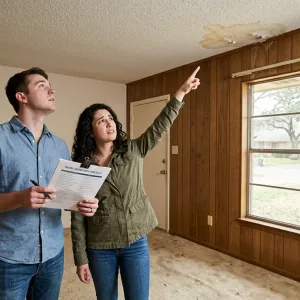
Between 85% and 95% of home inspections reveal at least one significant defect. That’s not a reason to panic — it’s a reason to pay attention. Buyers who skip inspections entirely, or who receive a report and don’t know how to interpret what they’re reading, frequently face $5,000 to $20,000 or more in unexpected repair costs within three to five years of closing. In the DFW market, where expansive clay soils, extreme summer heat, and frequent hail storms create a unique set of structural and mechanical challenges, understanding what your inspection report is actually telling you isn’t optional — it’s the difference between a smart purchase and a costly mistake.
This guide breaks down the most common and serious red flags found in real estate inspector reports across Fort Worth, Weatherford, Justin, Southlake, and the surrounding DFW metroplex. You’ll learn which findings are genuine deal-breakers, which are negotiating tools, and which are minor issues you can address after closing — without fear, and without regret.
Key Takeaways
- 85–95% of home inspections reveal at least one significant defect — most are negotiable, not automatic deal-breakers.
- DFW’s expansive clay soils cause foundation issues in 15–25% of inspections; always get a structural engineer’s opinion before walking away.
- Roof defects appear in 25–35% of DFW inspections; hail damage and age are the primary culprits, with replacement costs ranging from $8,000 to $20,000+.
- HVAC failures are critical in DFW’s extreme heat — a non-functional AC system is both a safety and livability issue.
- Electrical hazards (outdated panels, aluminum wiring, knob-and-tube wiring) are common in older Fort Worth homes and can prevent financing or insurance.
- Categorize findings into three tiers: safety hazards, major system failures, and cosmetic issues — then negotiate accordingly.
- Specialist add-ons like sewer scopes and thermal imaging can reveal hidden problems worth thousands in negotiation leverage.
- Your inspection contingency period (typically 7–14 days in Texas) is your only window to act — use it wisely.
Why Home Inspection Red Flags Matter in DFW
Most buyers understand that a home inspection is important. Fewer understand just how much is riding on their ability to interpret the findings. The home inspection process in Texas is governed by strict TREC standards, but the report itself doesn’t come with a user manual. A 40-page document full of deficiencies, photos, and technical language can feel overwhelming — and that overwhelm leads to bad decisions.
In the DFW market specifically, several regional factors make inspection findings more consequential than they might be elsewhere. The expansive clay soils that underlie most of the metroplex expand and contract dramatically with moisture changes, creating foundation movement in 15–25% of inspections. Summers that regularly exceed 95°F push HVAC systems to their limits, accelerating wear and failure. Severe weather — particularly the hail storms that track through North Texas — causes significant roof damage that isn’t always visible from the street.
Add to that the mix of housing stock: older neighborhoods in Fort Worth may have homes built in the 1940s through 1970s with aging electrical systems, galvanized plumbing, and deferred maintenance that has compounded over decades. Newer developments in Weatherford, Justin, and Roanoke bring their own challenges around builder quality and code compliance. No matter where you’re buying, the inspection findings you receive are specific to that home, that neighborhood, and those regional conditions.
The inspection contingency period — typically 7 to 14 days in Texas — is your only formal window to act on what the inspection reveals. Once that window closes, you’ve accepted the home in its current condition. Understanding what you’re reading isn’t just helpful; it’s time-sensitive. The buyers who navigate this process best are the ones who come in knowing which findings warrant immediate specialist evaluation, which ones are negotiating chips, and which ones they can simply budget for post-closing.
Most buyers feel overwhelmed when they see a long list of inspection issues. The good news: not all findings are deal-breakers. Learning to prioritize and understand severity is exactly what this guide will help you do. A thorough inspection report is a tool — not a verdict on whether you should buy the home.
Understanding TREC Standards: What Inspectors Must (and Won’t) Check
Before you can interpret a report, you need to understand what the inspector was required to do — and where their scope ends. In Texas, all home inspectors must be licensed by the Texas Real Estate Commission (TREC) and operate under the Texas Standards of Practice (SoP). You can verify any inspector’s license status and check for disciplinary actions at trec.texas.gov. If an inspector can’t provide a TREC license number, that’s an immediate red flag.
A full inspection under TREC’s SoP covers nine major categories: structural systems, roofing, exterior, interior, electrical, plumbing, HVAC, insulation, and ventilation. The inspector evaluates each system and reports conditions as deficient, satisfactory, or unsafe. Critically, inspectors are not required to inspect inaccessible areas, systems that aren’t present, or perform invasive testing beyond visual examination. They also carry Errors and Omissions (E&O) insurance — typically with a minimum of $1 million in coverage — which protects you if a licensed inspector negligently misses a major issue.
When your inspector marks something as “deficient,” it means the system or component is not functioning as intended or poses a safety concern. It doesn’t automatically mean the home is unsafe or a bad purchase — severity varies widely, and your inspector should explain each deficiency in plain language. A deficient GFCI outlet and a deficient electrical panel are both “deficient,” but they represent very different levels of concern.
What ‘Deficient’ Really Means on Your Report
A deficient rating means the system or component isn’t functioning as intended or presents a safety concern. It does not automatically mean “deal-breaker” — the severity varies enormously. A deficient smoke detector is a $20 fix. A deficient electrical panel may require a $3,000 upgrade. Your inspector should explain each deficiency in plain language, not just mark a checkbox. If your report is full of technical jargon with no plain-language explanation, that’s a problem with the report itself.
The Limits of a Visual Inspection
Inspectors cannot see inside walls, under concrete slabs, or behind finished surfaces. Hidden issues — like old wiring behind drywall, plumbing leaks under a slab, or deteriorating sewer lines underground — may not be discoverable through a standard visual inspection. This is precisely why specialist add-ons like sewer scopes and thermal imaging exist, and why they’re particularly valuable for older homes in established Fort Worth neighborhoods. You can review what a thorough home inspection report looks like to understand what level of detail and explanation you should expect.
Foundation Issues: The #1 DFW Red Flag
No other inspection finding generates more anxiety among DFW buyers — and for good reason. Foundation problems appear in 15–25% of DFW inspections, a rate significantly higher than the national average, driven directly by the region’s expansive clay soils. These soils absorb water and swell during wet periods, then shrink and crack during drought — a cycle that repeats year after year and gradually stresses the concrete slabs and pier-and-beam foundations that most homes in the area sit on.
The critical thing to understand about foundation findings is that severity exists on a wide spectrum. Minor hairline cracks — less than 1/8 inch wide — are often cosmetic and don’t require repair. They’re a normal result of concrete curing and minor soil movement. What you’re watching for are the warning signs of active, significant movement: cracks wider than 1/4 inch, stair-step crack patterns in brick or block, doors and windows that stick or won’t close properly, visible gaps between walls and ceilings, or floors that feel noticeably uneven underfoot.
Foundation repair costs in DFW range from $3,000 to $15,000 or more depending on the extent of the problem and the repair method required. Pier installation — the most common repair approach in this region — involves driving steel or concrete piers into stable soil below the expansive clay layer. The cost depends on how many piers are needed and where they’re placed. Before you make any decision about a home with foundation findings, a pier and beam foundation inspection or a structural engineer evaluation ($400–$800) is essential. Your home inspector can identify the presence of foundation issues; a structural engineer can tell you the cause, severity, and recommended repair approach.
DFW’s expansive clay soils mean foundation cracks appear in 15–25% of inspections. Minor cracks are often cosmetic, but significant settlement or active movement requires a structural engineer’s evaluation before you decide to walk away. Don’t let the word “foundation” send you running — get the facts first.
How to Interpret Foundation Findings
Your inspector should describe the location, size, and pattern of any cracks or settlement they observe. Active settlement — meaning the foundation is still moving — is significantly more concerning than old, stable cracks that haven’t changed in years. Pier-and-beam foundations, which are common in older Fort Worth homes built before the 1970s, require a different evaluation approach than the slab-on-grade construction typical of newer homes. Pier-and-beam foundations actually offer some advantages in DFW’s clay soil environment because they allow for some movement, but they also require inspection of the crawl space, wood framing, and pier condition — areas that can hide moisture damage and pest activity.
When to Walk Away vs. Negotiate
Walk away if the structural engineer identifies major structural failure, widespread active settlement across multiple areas of the home, or if repair costs exceed 10% of the home’s purchase price and the seller refuses to negotiate. Negotiate if the issues are minor, the settlement appears stable, and the repair costs are manageable. A seller credit toward foundation repair is often preferable to asking the seller to complete the work — it gives you control over contractor selection and quality. Always get the structural engineer’s written report before making a final decision, and never rely solely on a foundation repair company’s assessment, since they have a financial incentive to recommend repairs.
If you’re evaluating a DFW home and concerned about foundation or structural issues, understanding what you’re looking at is the first step. Journey Home Inspections specializes in identifying regional issues like foundation movement and can help you make an informed decision with a clear, plain-language report.
Roof Defects: Age, Damage, and Replacement Costs
Roof defects are the most frequently flagged major system issue in DFW inspections, appearing in 25–35% of reports. The combination of intense summer heat, UV exposure, and the region’s well-documented hail activity creates conditions that age roofs faster than in most parts of the country. A roof that might last 20–25 years in a milder climate may reach end-of-life in 15–18 years in North Texas.
Most asphalt shingles — the dominant roofing material in DFW — have a rated lifespan of 20–30 years, but that rating assumes moderate climates. In DFW, any roof older than 15–18 years deserves careful scrutiny. A general home inspection includes a roof evaluation, but the inspector’s ability to assess the roof depends on access and visibility. Steep pitches or second-story roofs may be evaluated from the ground or with binoculars, which can limit what’s detectable.
Roof replacement in DFW costs $8,000 to $20,000 or more depending on the size of the home, the roofing material, and the complexity of the roof design. This makes roof condition one of the most significant financial considerations in any home purchase. If the roof is near end-of-life or shows evidence of hail damage, you’re looking at a major expense that needs to be factored into your offer price or negotiated as a credit.
One important step that many buyers overlook: ask the seller whether any insurance claims have been filed for hail or wind damage. Prior claims can affect your ability to obtain homeowner’s insurance on the property, and undisclosed prior damage that was improperly repaired can create problems that don’t surface until the next major storm.
Red Flag Roof Conditions
Visible sagging or dips in the roofline are among the most serious findings — they indicate structural issues in the roof framing or significant water damage to the decking underneath. Moss or algae growth signals moisture retention and potential underlying damage to the shingles and decking. Curled, cracked, or missing shingles are clear signs of age and weather exposure. Improper flashing around chimneys, vents, skylights, or where the roof meets a wall is one of the most common sources of water intrusion — and one of the most frequently missed issues in older homes. Granule loss (the small aggregate coating on asphalt shingles) is another indicator of age; heavy granule accumulation in gutters suggests the shingles are deteriorating.
Negotiating Roof Issues
If the roof is near end-of-life, requesting a repair credit or price reduction is almost always preferable to asking the seller to replace it before closing. Seller-completed repairs often involve the lowest-cost contractor, and you have no control over material quality or workmanship. Get a written estimate from a licensed roofing contractor — ideally two or three estimates — to establish a concrete number for your negotiation. If the roof shows hail damage, a roofing contractor can also document the damage in a format that supports an insurance claim, which may factor into your negotiation strategy.
HVAC System Failures: Costly in DFW’s Extreme Heat
In most parts of the country, a failing HVAC system is an inconvenience. In DFW, where summer temperatures regularly exceed 95°F and heat index values can push past 105°F, a non-functional air conditioning system is a genuine safety issue — particularly for families with elderly members, young children, or anyone with respiratory conditions. HVAC problems appear in 20–30% of DFW inspections, with extreme heat stress on older units being the primary cause.
HVAC systems typically last 10–15 years under normal conditions. In DFW’s climate, systems that run continuously for six or more months per year may reach the end of their effective lifespan closer to the 10-year mark. Any system older than 12 years should be evaluated carefully, regardless of whether it’s currently operational. A system that’s running today may fail during the first serious heat wave after you close. A thorough HVAC system evaluation during the inspection can identify early warning signs before they become full failures.
HVAC replacement costs in DFW range from $5,000 to $10,000 or more for a standard residential system, depending on the size of the home, the type of system, and whether ductwork needs to be replaced or modified. This makes HVAC condition a significant negotiation point — particularly if the system is at or near end-of-life even if it’s currently functional.
Signs of HVAC Trouble
Watch for these indicators during your walk-through and in the inspection report: the system won’t turn on or cycles on and off frequently (short-cycling); weak airflow or uneven cooling throughout the home with some rooms significantly warmer than others; unusual noises like grinding, squealing, or rattling from the unit; visible leaks or moisture around the air handler or condenser; and refrigerant lines that show signs of frost or ice buildup, which indicates a refrigerant leak or airflow problem. If the system is 12 or more years old, budget for potential replacement regardless of current condition.
Repair vs. Replace Decision
Minor repairs — refrigerant top-up, thermostat replacement, capacitor replacement — typically cost $300 to $800 and can extend a system’s life meaningfully if the underlying equipment is in good condition. However, if repair costs exceed 50% of replacement cost, or if the system is already past its expected lifespan, replacement is almost always the better financial decision. Request a formal estimate from a licensed HVAC contractor to support your negotiation. Don’t rely on the inspector’s general cost range — you need a specific number to negotiate effectively.
Electrical System Red Flags: Safety First
Electrical deficiencies appear in 20–30% of DFW inspections, with older Fort Worth homes — particularly those built before 1980 — showing the highest rates of significant electrical issues. Unlike foundation or roof problems, electrical hazards don’t always make themselves known gradually. Unsafe electrical systems can cause fires and electrocution with little warning, which is why electrical findings that affect safety are always treated as high-priority regardless of cost.
Beyond the safety concern, outdated or unsafe electrical systems can create serious practical problems: insurance companies may refuse to write a policy on a home with certain types of wiring or panels, and lenders may decline financing if the electrical system doesn’t meet minimum safety standards. An electrical system inspection is a core component of any full home inspection, but the visual nature of the inspection means that some electrical issues — particularly those hidden inside walls — may require a licensed electrician to fully evaluate.
Deal-Breaker Electrical Issues
Several specific electrical conditions are widely recognized as serious red flags that go beyond simple deficiencies:
- Knob-and-tube wiring (pre-1950s): This older wiring system lacks a ground wire and can’t safely handle modern electrical loads. Many insurance companies refuse to write policies on homes with active knob-and-tube wiring, making it both a safety and a financing concern.
- Federal Pacific Electric (FPE) panels: These panels, installed widely from the 1950s through the 1980s, have a documented history of breaker failures that can lead to electrical fires. Replacement is strongly recommended by most electrical professionals.
- Aluminum wiring (1960s–1970s): Aluminum wiring expands and contracts differently than copper at connection points, creating a fire hazard at outlets, switches, and panel connections. Professional evaluation and remediation (either replacement or installation of approved connectors) is required.
- Exposed live wires, improper grounding, or evidence of electrical fires: These are immediate safety concerns that must be addressed before closing.
Electrical panel upgrades typically cost $1,500 to $4,000 or more. Full rewiring of a home can cost significantly more depending on the size and complexity of the project. These are not DIY projects — always hire a licensed electrician for evaluation and repair.
When to Call an Electrician
If your inspector flags any of the issues listed above, or notes overloaded circuits, double-tapped breakers, lack of GFCI outlets in bathrooms and kitchens, or improper grounding, hire a licensed electrician for a detailed evaluation before your option period expires. The electrician can provide a specific repair estimate and advise on safety and code compliance — both of which you’ll need for negotiation. Lack of GFCI outlets in wet areas is a code violation and a safety concern; it’s also one of the more affordable fixes, typically costing $100–$300 to correct.
Plumbing Problems: Water Intrusion and Pipe Failures
Plumbing issues appear in 20–30% of DFW inspections, ranging from minor leaks under sinks to significant pipe failures and sewer line problems. The age of the home is the biggest predictor of plumbing risk: homes built before 1980 may have galvanized steel pipes that are prone to corrosion and failure, while homes built between 1978 and 1995 may have polybutylene pipes — a material that was widely used during that period but is now known to be prone to failure and is no longer accepted by most building codes.
Galvanized steel pipe replacement costs $2,000 to $5,000 or more depending on the extent of the system. Polybutylene pipe replacement is similarly priced. Sewer line issues — including cracks, tree root intrusion, and blockages — can cost $3,000 to $10,000 or more to repair, depending on the location and severity of the problem. A thorough plumbing system assessment during your inspection can identify visible issues, but the sewer line itself — which runs underground from the home to the municipal connection — is not visible during a standard inspection.
Water stains on ceilings, walls, or in closets are always worth investigating. They indicate past or ongoing leaks, and the source needs to be identified before closing. A stain that’s been painted over doesn’t mean the problem has been fixed — it may mean it’s been hidden.
Signs of Plumbing Trouble
Key plumbing red flags to watch for in your inspection report and during your walk-through include: slow drains or frequent clogs throughout the home (not just one fixture); sewage odors inside or outside the home; low water pressure or discolored water from multiple fixtures; visible water stains, soft spots in flooring, or musty odors that suggest water intrusion; and rust-colored water or rust staining around pipe connections, which indicates galvanized pipe corrosion. Any of these warrant further investigation — ideally before your option period expires.
Sewer Scope Add-On: When It’s Worth It
A sewer scope inspection ($300–$500) uses a camera inserted into the main sewer line to inspect for cracks, tree root intrusion, pipe collapse, or blockages. It’s one of the most consistently valuable add-ons available, particularly for homes older than 30 years or those with mature trees near the sewer line. Older Fort Worth neighborhoods with aging sewer infrastructure are especially good candidates for this add-on. A sewer scope can reveal problems that would cost $3,000 to $10,000+ to repair — making the $300–$500 investment an easy decision when the risk is present. If issues are found, you have documented evidence to support a negotiation for repair credit before closing.
Water damage and mold are serious issues that require expert evaluation. If your inspection reveals signs of water intrusion or mold, getting a professional assessment is critical to understanding the scope and cost of remediation before you commit to closing.
Water Intrusion and Mold: The Hidden Threat
Evidence of water intrusion or active mold is among the most serious findings any inspection can reveal. Water damage can originate from multiple sources — roof leaks, plumbing failures, foundation cracks, poor drainage around the home’s perimeter, or condensation from an improperly functioning HVAC system. The challenge is that water travels: a leak that starts in one location may cause damage in a completely different area of the home, and by the time visible evidence appears, the underlying damage may be extensive.
Mold is the secondary consequence of unaddressed moisture. It poses real health risks — particularly for individuals with respiratory conditions, allergies, or compromised immune systems — and it can spread rapidly once established if the moisture source isn’t eliminated. Mold remediation costs range from $500 to $5,000 or more depending on the extent of contamination; severe cases involving structural materials or large areas of the home can cost significantly more. The water damage and mold detection component of a thorough inspection is one of the areas where inspector experience and attention to detail matters most.
Red Flags for Water Damage
Water damage red flags include: water stains on ceilings, walls, or in crawl spaces (especially if they show multiple rings, indicating repeated episodes); soft, spongy, or discolored drywall or flooring that suggests water saturation; musty or moldy odors anywhere in the home, including in closets, basements, or crawl spaces; peeling paint or wallpaper, warped wood trim, or rust stains around pipe penetrations; and efflorescence (white mineral deposits) on concrete or masonry walls in basements or crawl spaces, which indicates water migration through the structure.
Mold Testing and Remediation
If your inspector observes visible mold, musty odors, or significant evidence of water intrusion, mold testing ($200–$500) can identify the type and extent of contamination. Not all mold is equally hazardous, but any active mold growth indicates an ongoing moisture problem that must be addressed — not just the mold itself, but its source. Remediation involves removing contaminated materials, cleaning affected surfaces with appropriate agents, and addressing the moisture source to prevent recurrence. If the moisture source cannot be reliably addressed — for example, a foundation crack that allows groundwater intrusion — that can make the mold problem effectively unresolvable without major structural work, which may make the property a genuine deal-breaker.
Structural Issues Beyond Foundation: When to Call a Structural Engineer
Foundation movement gets most of the attention in DFW inspections, but structural concerns can extend well beyond the foundation itself. Sagging rooflines, settling walls, damage from severe weather events, pest damage, and the cumulative effects of deferred maintenance can all compromise the structural integrity of a home in ways that require professional evaluation beyond what a standard home inspection can provide.
A structural integrity assessment by a licensed structural engineer ($400–$800) is the appropriate next step whenever your inspector flags any of these concerns. The inspector identifies the presence of a potential issue; the structural engineer determines its cause, severity, and the appropriate repair approach. These are different professional roles, and conflating them leads to bad decisions — either walking away from a home with manageable issues or proceeding with a purchase that has serious underlying problems.
Common Structural Red Flags
Beyond foundation cracks, watch for: sagging or uneven rooflines that indicate roof framing issues or significant water damage to the structural decking; doors and windows throughout the home that don’t close properly or have visibly uneven gaps in their frames (a sign of structural movement, not just settling); visible cracks in load-bearing walls, particularly diagonal cracks or stair-step patterns in masonry; and evidence of pest damage, particularly termite activity, which can compromise wood framing significantly before it becomes visible. DFW is an active termite zone, and termite damage in structural members is a serious finding that requires both pest treatment and structural evaluation.
When to Hire a Structural Engineer
Hire a structural engineer if your inspector flags sagging, settling, cracks in load-bearing walls, evidence of pest damage to structural members, or if you notice doors and windows sticking throughout the home, uneven floors, or gaps between walls and ceilings during your walk-through. The engineer’s report gives you a professional opinion on severity, identifies causes, and recommends specific repairs — all of which you can use to negotiate repairs, credits, or price reductions. The $400–$800 cost of a structural engineer evaluation is almost always worth it when significant structural concerns are present.
How to Prioritize Inspection Findings: Safety, Systems, and Cosmetics
One of the most common mistakes buyers make after receiving an inspection report is treating every finding with equal weight. A 40-page report with 60 line items can feel catastrophic — until you realize that 45 of those items are minor maintenance issues, code updates, or cosmetic concerns that have no meaningful impact on the home’s safety or value. The skill is in the triage. A comprehensive home inspection should come with a clear summary that helps you understand which findings matter most — and a good inspector will walk you through that prioritization.
The most useful framework is a three-tier system: safety hazards, major system failures, and cosmetic or minor issues. Each tier requires a different response.
Tier 1: Safety Hazards (Deal-Breaker Potential)
Safety hazards must be addressed before closing — full stop. These include electrical hazards (unsafe panels, exposed wiring, lack of GFCI outlets in wet areas), gas leaks or improper gas line installation, structural instability or major foundation failure, and active mold or severe water intrusion. If the seller refuses to address Tier 1 issues, walking away is often the right decision. These aren’t negotiating chips — they’re conditions that make the home unsafe or uninsurable in its current state.
Tier 2: Major System Failures (Negotiable)
Major system failures affect livability and resale value but are typically negotiable. A roof near end-of-life, an aging HVAC system, plumbing failures or sewer line issues, and foundation problems that require professional repair all fall into this category. These are the findings where contractor estimates become essential — you need a concrete number to negotiate with, not a general range. Request repairs, credits, or price reductions based on documented repair costs. If the cumulative cost of Tier 2 repairs exceeds 10–15% of the home’s purchase price, that’s a signal to reconsider whether the deal still makes financial sense.
Tier 3: Cosmetic or Minor Issues (Usually Not Deal-Breakers)
Minor cracks in drywall or concrete, worn paint or flooring, slow drains, missing caulk around fixtures, cosmetic roof wear, and similar items are Tier 3 findings. These are normal in any home that’s been lived in and don’t represent meaningful financial risk. You can address them post-closing at your own pace, or negotiate a small credit to cover the cost. Spending significant negotiation capital on Tier 3 issues — particularly if you have more serious Tier 1 or Tier 2 findings to address — is a tactical mistake that can damage the negotiation dynamic unnecessarily.
Don’t rely solely on your inspector’s general cost ranges. Contact licensed contractors for formal quotes on major repairs — roof, HVAC, electrical, plumbing, and foundation. These estimates give you concrete numbers for negotiation and help you understand true costs. Two or three estimates for the same repair also protect you from outlier pricing.
Negotiating After the Inspection: Your Options and Strategy
Once you have your inspection report and a clear sense of which findings matter most, you have three primary negotiation options: request that the seller complete specific repairs before closing, request a closing cost credit to cover repairs you’ll handle post-closing, or request a price reduction that reflects the cost of necessary repairs. Each approach has advantages and trade-offs, and the right choice depends on the specific findings, the seller’s situation, and your own preferences.
Understanding the inspection contingency period is critical here. In Texas, the option period (typically 7–14 days) gives you the right to terminate the contract for any reason and receive your option fee back. Once the option period expires, you’re committed to the purchase unless the seller materially breaches the contract. This means your negotiation needs to happen quickly — and that’s why getting contractor estimates and specialist evaluations during the option period is so important.
Repair Request Strategy
Requesting repairs is most appropriate for safety-related issues that require professional expertise — electrical hazards, gas line problems, structural concerns. When you request repairs, be specific: identify exactly what needs to be fixed based on the inspector’s findings, and require a re-inspection after repairs are completed to verify the work quality. The risk with seller-completed repairs is that sellers may use the lowest-cost contractor available, and the quality of the work may be questionable. For this reason, many buyers prefer credits over repairs for anything other than safety-critical issues.
Credit or Price Reduction Strategy
A closing cost credit gives you money at closing to apply toward repairs you’ll manage post-closing. This approach is often preferred because you control contractor selection and quality. A price reduction achieves a similar financial outcome but affects the loan amount and appraised value — which can have implications for financing. Get formal contractor estimates to justify the credit amount you’re requesting; a vague request for “roof credit” is much easier for a seller to push back on than a request for “$12,500 credit based on three contractor estimates for roof replacement.” Your real estate agent can help you frame the request in a way that’s reasonable and well-documented.
Navigating inspection findings and negotiation can feel overwhelming, especially on a tight timeline. A thorough, clearly documented inspection report from a professional inspector is your most powerful tool for informed decision-making and successful negotiation.
Specialist Add-Ons: When to Invest in Extra Inspections
A standard home inspection is a visual assessment of accessible systems and components. It’s comprehensive within its scope, but that scope has limits. Specialist add-ons extend the inspection’s reach into areas and systems that a standard visual inspection can’t fully evaluate — and in many cases, they provide the most valuable information of the entire inspection process.
The specialized inspection services available in DFW include sewer scopes, thermal imaging, mold testing, termite and wood-destroying insect (WDI) inspections, pool and spa inspections, and septic system inspections. Each serves a specific purpose, and the decision about which add-ons to include should be based on the age and condition of the home, its location, and any specific concerns raised during the standard inspection.
A sewer scope ($300–$500) or thermal imaging ($150–$300) might seem like an extra expense on top of an already significant inspection cost. But these add-ons routinely reveal issues worth $3,000 to $10,000 or more in repairs — and they provide the documented evidence you need to negotiate. For older homes or those with signs of water damage, these add-ons often pay for themselves many times over.
Sewer Scope: When It’s Essential
A sewer scope inspection is strongly recommended for any home older than 30 years, any home with mature trees near the sewer line, or any home where the standard inspection reveals signs of drainage issues. The camera reveals what no visual inspection can: cracks in the pipe, tree root intrusion, pipe bellies (low spots where waste accumulates), and blockages. In older Fort Worth neighborhoods where the sewer infrastructure may date back 50 or more years, a sewer scope is close to essential. The $300–$500 cost is minimal compared to the $3,000–$10,000+ cost of sewer line repair or replacement.
Thermal Imaging: Detecting Hidden Issues
Thermal imaging uses an infrared camera to detect temperature variations in walls, ceilings, and floors that indicate heat loss (insulation deficiencies), moisture intrusion, and electrical hot spots. It’s particularly valuable for identifying roof leaks that haven’t yet caused visible water staining, wall moisture from plumbing leaks or condensation, and electrical connections that are overheating — a fire risk that’s completely invisible to the naked eye. At $150–$300, thermal imaging is one of the most cost-effective add-ons available, particularly for homes older than 20 years or those where the standard inspection raises questions about moisture or insulation. If your home has a pool or spa, a dedicated pool inspection ($100–$250) is also worth including to evaluate equipment condition and safety compliance.
Termite and wood-destroying insect (WDI) inspections ($75–$150) are often required by lenders and are always a good idea in DFW, where termite activity is common. A WDI inspection evaluates the home for evidence of termites, carpenter ants, and other wood-destroying insects — and any evidence of active infestation or prior damage should be taken seriously, particularly if the damage affects structural members.
Frequently Asked Questions: Home Inspection Red Flags in DFW
Foundation issues are extremely common in DFW due to the region’s expansive clay soils, but severity is everything. Minor hairline cracks are often cosmetic and may not require any repair at all. Significant settlement, widespread cracking, or evidence of ongoing movement is a different matter — those findings warrant a structural engineer’s evaluation ($400–$800) before you make any decision. Foundation repair costs range from $3,000 to $15,000 or more, which makes this a major negotiation point, but it’s rarely a reason to walk away without first getting a professional opinion on severity and repairability.
True deal-breakers typically involve severe structural issues (major foundation failure, significant roof collapse risk), widespread safety hazards (unsafe electrical systems like Federal Pacific panels or aluminum wiring, major gas leaks), extensive active water intrusion or mold, or completely failed major systems — particularly HVAC in DFW’s extreme heat. The financial dimension matters too: if the cumulative cost of addressing serious findings exceeds 10–15% of the home’s purchase price and the seller refuses to negotiate meaningfully, that’s when walking away makes the most financial sense.
No — in Texas, sellers are not legally required to fix any inspection items unless a specific repair clause has been negotiated into the purchase contract. The inspection contingency (option period) gives you the right to renegotiate terms, request repairs, ask for a credit, or terminate the contract based on the findings — but it doesn’t obligate the seller to comply. This is why your negotiation strategy and your willingness to walk away if necessary are so important. A seller who refuses to address safety-critical issues is telling you something important about how they’ve managed the property.
Focus first on safety concerns — electrical hazards, gas leaks, structural instability — then on major system failures affecting roof, HVAC, foundation, or plumbing. Evidence of significant water intrusion or pest damage also deserves immediate attention. Cosmetic issues and minor system defects (slow drains, worn caulk, minor drywall cracks) are generally low priority and can be addressed post-closing. A good inspector will provide a summary that helps you prioritize findings, and your real estate agent can offer guidance on what’s typical for the neighborhood and price range.
Major unresolved foundation movement confirmed by a structural engineer, evidence of significant structural instability, widespread active water damage or mold with no addressable moisture source, unsafe electrical systems that the seller won’t remediate, major roof failure or imminent replacement with no seller concession, or a completely failed HVAC system in DFW’s extreme heat climate — these are the findings that most commonly lead buyers to walk away. The key is that the decision should be based on documented professional opinions and repair costs, not on the initial shock of seeing the finding in the report.
Generally, no — and you shouldn’t rely on them to. Inspectors are trained to identify and report deficiencies, not to estimate repair costs. They may offer general cost ranges for common issues, which can be helpful for initial context, but formal contractor estimates are what you need for negotiation. Relying on an inspector’s cost range rather than actual contractor quotes can lead to significant negotiation errors — either leaving money on the table or making demands that aren’t supported by real market pricing. Always get two or three contractor estimates for any major repair before finalizing your negotiation position.
Get a Thorough DFW Home Inspection You Can Trust
Understanding inspection findings is crucial — but getting a thorough, professional inspection in the first place is even more important. Journey Home Inspections specializes in identifying the issues that matter most to DFW buyers: foundation movement driven by clay soils, roof damage from hail and heat, aging electrical and plumbing systems in older Fort Worth homes, and the HVAC stress that comes with North Texas summers.
You deserve a report that explains findings in plain language, prioritizes what matters most, and gives you the information you need to negotiate with confidence. Whether you’re buying in Fort Worth, Weatherford, Justin, Southlake, or anywhere across the DFW metroplex, Journey Home Inspections is here to help you make an informed decision — without fear, and without regret.
Schedule Your Inspection Today
Journey Home Inspections | Fort Worth, TX | Serving DFW, Weatherford, Justin, Southlake, Westlake, Argyle, Trophy Club, Roanoke & surrounding areas