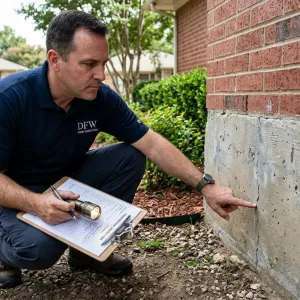
Key Takeaways
- Fort Worth’s expansive clay soil expands and contracts with moisture changes, making foundation problems more common here than in many other Texas markets — buyers must treat foundation inspection as a non-negotiable step.
- Not all cracks are equal: hairline cracks under 1/8 inch are often cosmetic, while stair-step brick cracks, horizontal cracks, or any crack wider than 1/4 inch that is actively growing signals a serious structural concern.
- Foundation repair costs in Fort Worth typically range from $3,000 to $25,000 for minor issues and can exceed $100,000 for major structural failures — catching problems before closing protects your finances and your negotiating position.
- Interior warning signs — sticking doors, sloping floors, and drywall cracks radiating from window corners — are often the first visible evidence of foundation movement and should never be dismissed as normal settling.
- Trust Journey Home Inspections for TREC-licensed expertise, same-day detailed reporting, and 4,000+ items checked on every inspection — visit Journey Home Inspections to protect your investment before you close.
What Foundation Red Flags Should Every Fort Worth Home Buyer Watch For?
Foundation problems are among the costliest repairs a homebuyer can face, often running $10,000 to $100,000+ depending on severity. In Fort Worth’s clay-heavy soil and variable moisture conditions, foundation issues are particularly common — including settling cracks, water intrusion, and structural shifts. Knowing which warning signs demand immediate professional attention can save you from inheriting a money pit.
Below, we break down the most critical foundation red flags, what causes them in the Fort Worth area, and how to evaluate whether a foundation issue is cosmetic or catastrophic.
Journey Home Inspections
Same-Day Detailed Report — 4,000+ Items Checked
Core Service Programs:
- Buyer & Seller Home Inspections for pre-purchase, pre-listing, and full general inspections covering 4,000+ items
- New Construction & Phase Inspections for new builds, phase checks, and 11-month builder warranty inspections
- Specialty Inspections for pool & spa, septic, well, irrigation, and pier & beam foundation systems
Why Choose Journey Home Inspections:
- ✓ Trusted by customers with a perfect 5.0-star Google rating across 79 verified reviews
- ✓ Family-owned, faith-based, and serving North Texas since 2016
- ✓ Led by Bryan Hughes — TREC-licensed (#21772) and insured
- ✓ InterNACHI Certified Professional Inspector
- ✓ 4,000+ items checked on every inspection — roof to foundation
- ✓ Same-day reports with photos, clear findings, and plain-language explanations
- ✓ Thermal imaging and drone technology on every inspection
Understanding Fort Worth’s Unique Foundation Challenges
Fort Worth sits on some of the most foundation-unfriendly soil in Texas. The region’s expansive clay — often called “black gumbo” — absorbs water and swells dramatically during wet periods, then shrinks and cracks during droughts. That constant push-and-pull creates relentless pressure on concrete slabs and pier-and-beam foundations alike. Unlike areas with stable sandy or rocky soils, Fort Worth homes are essentially resting on a slow-moving surface that never fully settles.
The region’s rainfall pattern makes this worse. North Texas cycles between extended droughts and heavy rain events, sometimes within the same season. Each swing causes the soil to shift, and over years and decades, that movement accumulates into measurable foundation displacement. Older homes — particularly those built before 1980 — often lack the modern post-tension slab reinforcement and vapor barriers that help newer construction resist these forces. Large trees planted too close to the foundation compound the problem further: their roots draw moisture from the surrounding soil, causing localized drying and settling directly beneath the structure. Understanding this local context is the first step toward reading foundation warning signs accurately.
Foundation Anxiety Is Normal — And Smart
Feeling nervous about foundation issues is completely justified; they are among the most expensive repairs a homeowner can face. Your caution shows you are thinking like a savvy buyer protecting your largest investment.
Visible Cracks: When to Worry and When to Relax
Not every crack in a foundation or wall means disaster — but knowing how to read them is essential. Hairline cracks less than 1/8 inch wide in poured concrete are common and generally reflect normal curing and minor thermal expansion. These are cosmetic in most cases and do not indicate structural failure on their own.
The cracks that demand attention follow specific patterns. Stair-step cracks running along mortar joints in brick veneer are a classic sign of differential settlement — meaning one section of the foundation is moving more than another. Diagonal cracks wider than 1/4 inch, particularly those that widen at one end, suggest the foundation is rotating or shifting unevenly. Any crack that has visibly grown since you first noticed it is an active problem, not a stable one. Horizontal cracks are the most serious of all: they indicate lateral soil pressure pushing against the foundation wall, which can lead to structural collapse if left unaddressed. If you see horizontal cracking during a walkthrough, treat it as an immediate red flag requiring professional evaluation — not a cosmetic touch-up. For buyers evaluating older Fort Worth properties, a pier and beam foundation inspection can reveal issues that slab-focused assessments may miss entirely.
Water Intrusion and Moisture Damage: The Silent Destroyer
Water is the most underestimated threat to a foundation in the Fort Worth area. When drainage fails — whether from improper grading, clogged gutters, or inadequate downspout extensions — water pools against the foundation perimeter and begins its slow, destructive work. The damage often builds invisibly for years before it becomes obvious.
One of the clearest early indicators is efflorescence: the white, chalky mineral residue that appears on foundation walls when water moves through the concrete and deposits dissolved salts on the surface. It looks harmless, but it tells you that water is actively migrating through the structure. Wet crawl spaces or basements after rainfall, mold growth, musty odors, and rust stains on foundation walls all point to chronic moisture exposure that is compromising the concrete over time. Standing water around the foundation perimeter — even temporarily after rain — signals a grading or drainage failure that will accelerate foundation movement if not corrected. Buyers should also check whether gutters discharge water away from the home; even a well-built foundation will deteriorate if it is being saturated repeatedly. A comprehensive general home inspection evaluates drainage, grading, and moisture conditions alongside structural components.
Structural Distress Signals: Doors, Windows, and Floors
Foundation movement rarely announces itself with a single dramatic crack. More often, it shows up gradually through the interior of the home — in the way doors stick, floors slope, and drywall separates. These are the signs that buyers most commonly overlook because they seem like minor annoyances rather than structural warnings.
When a foundation shifts, the framing above it shifts too. Doors and windows that no longer close properly, show visible gaps around their frames, or have visibly out-of-square openings are telling you the structure has moved. Sloping or uneven floors — especially in older Fort Worth homes — suggest differential settlement, where one part of the foundation has dropped more than another. Interior drywall cracks that radiate diagonally from the corners of doors and windows are among the most reliable indicators of foundation movement; they follow the path of least resistance as the framing racks. Gaps between walls and ceilings, or between baseboards and floors, mean the frame is shifting relative to the foundation beneath it. None of these signs should be dismissed as “the house is just old.” They are the home’s way of communicating that something structural is happening below grade. Buyers researching what these issues cost to address will find useful context in this Fort Worth home inspection cost breakdown.
Bowing, Leaning, or Severely Cracked Walls: Critical Red Flags
Some foundation warning signs move beyond “get an engineer to look at this” and into “do not proceed without a full structural evaluation.” Bowing or bulging foundation walls are in this category. When soil pressure — amplified by water saturation — exceeds what the wall can resist, it begins to deform inward. This is not a cosmetic issue; it is a sign that the wall is approaching its structural limit and could fail.
Leaning exterior walls or visible separation between the house structure and its foundation are emergency-level concerns. Multiple large cracks wider than 1/2 inch, or any crack that is visibly growing between visits, indicate active foundation failure — not historic settling that has since stabilized. Concrete spalling, where the surface of the foundation is flaking or crumbling away, combined with deep cracking, points to advanced structural compromise that may require piering, underpinning, or wall anchoring to correct. These repairs are among the most expensive in residential construction, often running $15,000 to $100,000 or more depending on scope. Buyers who discover these conditions during inspection have every right to walk away or negotiate aggressively — but only if they know what they are looking at. Reviewing common home inspection red flags and deal-breakers can help you understand how foundation issues compare to other major defects.
Don’t Ignore Active Cracks or Water Damage
If you notice cracks that are visibly growing, widening, or accompanied by water seepage, do not wait for the next inspection cycle. Request an immediate structural engineer evaluation; these are signs of ongoing foundation movement that will worsen without intervention.
What to Do If You Discover Foundation Red Flags
Discovering foundation concerns during the inspection period is stressful — but it is also the moment you have the most leverage and the most options. The worst thing a buyer can do is ignore the findings or assume they will stabilize on their own. Foundation problems do not resolve without intervention; they worsen over time as soil continues to move and water continues to intrude.
If your inspector identifies significant cracks, bowing, or moisture intrusion, the next step is a structural engineer’s evaluation. An engineer can assess severity, determine whether movement is active or historic, and provide a written report that quantifies the risk. Armed with that report and repair estimates from licensed foundation contractors, you have a clear picture of the true cost of remediation — and a documented basis for renegotiation. Many sellers will reduce the purchase price or agree to repair credits rather than lose a buyer and restart the process. Use the inspection contingency window strategically: gather estimates, consult your agent, and make a data-driven decision. The goal is not to walk away from every home with a foundation issue — it is to know exactly what you are buying and at what price. Buyers who want to understand the full inspection process before scheduling can explore the Journey Home Inspections FAQ for answers to common questions.
Use Foundation Issues as Negotiating Leverage
If the inspection reveals foundation concerns, you have leverage. Many sellers prefer to reduce the purchase price or agree to repairs rather than lose a buyer. Request repair estimates and use them to renegotiate terms before your contingency expires.
Why Journey Home Inspections is the Right Choice for Fort Worth Homebuyers
When foundation issues are on the table, the quality of your inspection matters enormously. Bryan Hughes, TREC-licensed inspector (#21772) and InterNACHI Certified Professional Inspector, has evaluated more than 4,000 homes across Fort Worth, Weatherford, Southlake, Roanoke, and the surrounding North Texas area. That depth of experience in Fort Worth’s clay-soil environment means he knows what active foundation movement looks like versus historic settling — a distinction that can mean the difference between a smart negotiation and a costly mistake.
Journey Home Inspections delivers same-day detailed reports with photos and plain-language explanations, so you have the information you need before your inspection contingency expires. Every inspection covers 4,000+ items from roof to foundation, with thermal imaging and drone technology included as standard — not as an upsell. The team has earned a perfect 5.0-star Google rating across 79 verified reviews, reflecting a consistent track record of honest, thorough assessments that prioritize the buyer’s protection over a quick sign-off. Family-owned and faith-based since 2016, Journey Home Inspections brings the same integrity to every inspection that you would expect from a trusted neighbor.
Schedule your foundation inspection with Journey Home Inspections today
Frequently Asked Questions
Foundation repair costs in Fort Worth typically range from $3,000 to $25,000 for minor issues like crack sealing or spot pier repairs, and $15,000 to $100,000 or more for major problems such as full piering, underpinning, or extensive water remediation. The exact cost depends on the severity of the damage, the size of the affected area, and the repair method required. Always obtain multiple quotes from licensed foundation contractors before agreeing to any scope of work, and pair contractor estimates with a structural engineer’s independent assessment for the most accurate picture.
Most lenders will approve a loan on a home with minor, non-structural cracks, but significant foundation issues can trigger a loan denial or require repair before closing. FHA loans are particularly strict — appraisers are trained to flag foundation defects, and the lender may require a structural engineer’s report before proceeding. If the appraisal identifies concerns, the seller may need to make repairs as a condition of financing. Disclose all known foundation issues to your lender upfront to avoid surprises late in the transaction.
For homes with no known foundation issues, a professional inspection at the time of purchase is typically the baseline. However, homeowners in Fort Worth and surrounding areas with expansive clay soil should monitor their foundations annually — particularly after extended droughts or significant rainfall events, which accelerate soil movement. If you notice new cracks appearing, doors or windows that suddenly stick, or floors that seem to have shifted, schedule an inspection promptly rather than waiting for the next routine check. Early detection is always less expensive than deferred repair.
Foundation settling is a normal process that occurs as soil compacts under a home’s weight over time — it typically produces minor, stable cracks that do not grow or worsen. Foundation failure is active, progressive movement that causes structural damage: bowing walls, large diagonal cracks that are widening, water intrusion through new openings, or doors and windows that are increasingly difficult to operate. Settling is generally cosmetic and manageable; failure requires professional repair to stop the progression and restore structural integrity. The key distinction is whether the movement is historic and stable or ongoing and worsening.
Journey Home Inspections stands out through Bryan Hughes’ TREC licensing (#21772) and InterNACHI Certification, combined with hands-on expertise in Fort Worth’s clay-soil foundation challenges developed across 4,000+ home inspections. The family-owned, faith-based team delivers same-day detailed reporting with photos and plain-language findings — so you have answers before your contingency window closes. With a perfect 5.0-star Google rating across 79 verified reviews, the track record speaks for itself. Schedule your foundation inspection with Journey Home Inspections today to get the clarity and confidence you need before closing.
Ready for a Foundation Inspection in Fort Worth?
Foundation problems in Fort Worth’s clay-soil environment can escalate quickly — and the best time to catch them is before you close, not after. Journey Home Inspections gives you same-day detailed findings, honest assessments, and the expert knowledge to make a confident, informed decision about your purchase. Don’t let a hidden foundation issue become your problem after the keys change hands.
*Pricing, service availability, and inspection details mentioned in this article are accurate as of the date of publication and are subject to change. A home inspection reflects a property’s condition at the time of inspection and is not a warranty or guarantee. Please contact us directly to schedule an inspection of your specific property.