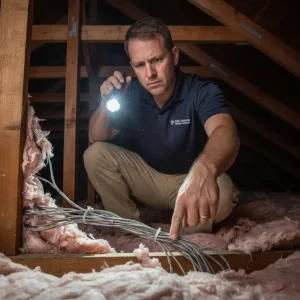
Key Takeaways
- Homes built between 1965 and 1973 are the primary aluminum wiring risk window — approximately 57% of Hurst housing units were built before 1980, placing a significant share of local homes in this category.
- The CPSC reports that unmitigated aluminum wiring is 55 times more likely to develop fire hazard conditions at connections compared to copper wiring — but three CPSC-approved remediation methods (COPALUM, AlumiConn, and full copper rewire) restore safety and insurability.
- Remediation costs in the DFW market range from roughly $3,000–$16,000 for connector methods on a mid-size home, up to $60,000+ for a full rewire on a larger property — all work requires a TDLR-licensed electrician and a City of Hurst electrical permit.
- Leaving aluminum wiring unaddressed risks fire, insurance surcharges or denials, reduced resale value, and higher future remediation costs — proactive remediation converts a material defect into a resolved issue.
- Trust Journey Home Inspections for thorough, expert-level electrical detection and same-day reporting backed by a perfect 5.0-star Google rating — visit Journey Home Inspections to learn how we help DFW homeowners make confident decisions.
What Should You Do If Aluminum Wiring Is Found During Your Home Inspection in Hurst, TX?
Discovering aluminum wiring during a home inspection is a serious but manageable concern—not an automatic deal-breaker. Homes built between 1965 and 1973 commonly contain aluminum branch circuit wiring, which carries a 55 times higher risk of fire hazard conditions than copper wiring according to the Consumer Product Safety Commission (CPSC). The good news: CPSC-approved remediation methods like COPALUM crimp connectors, AlumiConn mechanical connectors, or full copper rewiring are proven, code-compliant solutions that restore safety and insurability.
Understanding your remediation options, local costs, regulatory requirements, and negotiation strategies will help you move forward with confidence.
Journey Home Inspections
Same-Day Detailed Report — 4,000+ Items Checked
Core Service Programs:
- Buyer & Seller Home Inspections for pre-purchase, pre-listing, and full general inspections covering 4,000+ items
- New Construction & Phase Inspections for new builds, phase checks, and 11-month builder warranty inspections
- Specialty Inspections for pool & spa, septic, well, irrigation, and pier & beam foundation systems
Why Choose Journey Home Inspections:
- ✓ Trusted by customers with a perfect 5.0-star Google rating across 79 verified reviews
- ✓ Family-owned, faith-based, and serving North Texas since 2016
- ✓ Led by Bryan Hughes — TREC-licensed (#21772) and insured
- ✓ InterNACHI Certified Professional Inspector
- ✓ 4,000+ items checked on every inspection — roof to foundation
- ✓ Same-day reports with photos, clear findings, and plain-language explanations
- ✓ Thermal imaging and drone technology on every inspection
Why Aluminum Wiring Is a Concern in Hurst and the DFW Metroplex
You’re Not Alone—This Is a Common Discovery
Finding aluminum wiring during a home inspection can feel overwhelming, but you’re in good company. Approximately 57% of homes in Hurst were built before 1980, placing many in the aluminum wiring era. Thousands of DFW homeowners have navigated this exact situation and moved forward successfully with remediation and confident home purchases.
Hurst and the surrounding Tarrant County mid-cities — North Richland Hills, Euless, and Bedford — experienced their most intense residential development during the 1960s and 1970s. That era overlaps precisely with the period when aluminum branch circuit wiring was used as a cost-saving alternative to copper. According to U.S. Census data, approximately 57% of housing units in Hurst were built before 1980, meaning a substantial portion of local homes fall squarely in the aluminum wiring risk window.
The broader DFW growth story amplifies the issue. Between July 2022 and July 2023, the DFW-Arlington area added 152,598 residents — the second-highest population gain in the country. That kind of demand pushes older homes back into the market at a rapid pace, exposing more buyers to aluminum wiring discoveries. If you’re shopping for a home in Hurst or the mid-cities, there’s a meaningful chance this finding will appear on your inspection report. Knowing what it means — and what to do next — is the difference between a confident negotiation and an unnecessary panic.
For a broader look at what Hurst-area home inspections typically uncover and cost, the Hurst, TX home inspection cost guide offers useful context on what to expect throughout the process.
Understanding Aluminum Wiring: What It Is and Why It Fails
Aluminum branch circuit wiring was installed in American homes primarily between 1965 and 1973 when copper prices spiked and builders sought cheaper alternatives. The wire itself — running through your walls — isn’t inherently dangerous. The problem lives at the connection points: outlets, switches, light fixtures, and junction boxes where aluminum meets a device or another conductor.
Aluminum is softer than copper and oxidizes more readily. When aluminum oxidizes, it forms a layer of aluminum oxide at the connection point. That oxide layer is a poor conductor, which creates resistance. Resistance generates heat. Heat builds silently over months or years inside wall cavities and junction boxes, eventually reaching temperatures capable of igniting surrounding insulation and building materials. There’s often no visible warning — no flickering lights, no burning smell — until a serious problem has already developed.
The CPSC quantified this risk clearly: homes wired with aluminum branch circuit wiring are 55 times more likely to develop fire hazard conditions at connections compared to homes wired with copper. That statistic is the foundation of the CPSC’s strong remediation recommendations and the reason Texas insurers treat unmitigated aluminum wiring as an elevated risk.
CPSC-Approved Remediation Methods: Your Three Main Options
Red Flag: The ‘Wire Nut’ Solution
If an electrician suggests simply adding wire nuts or pigtailing aluminum wires with standard copper wire and non-rated connectors, stop immediately. This is not CPSC-approved, not code-compliant under the NEC, and extremely dangerous. Only COPALUM, AlumiConn, or full rewiring are acceptable remediation methods.
Three remediation approaches are recognized by the CPSC as safe, code-compliant solutions. All three are permitted under the National Electrical Code (NEC) Article 110.14(B) when performed by a TDLR-licensed electrician. Your choice depends on budget, home configuration, and long-term goals.
COPALUM Crimp Connector Method
COPALUM is a proprietary system owned by TE Connectivity. Copper pigtails are permanently crimped onto aluminum wires using a specialized high-pressure tool and a UL-listed sleeve, creating a low-resistance, permanent connection. Only factory-authorized, COPALUM-certified installers can legally perform this work — confirm certification before hiring. The CPSC endorses this method as one of the two preferred permanent repairs.
In the DFW market, expect to pay roughly $50–$100 per connection point. For a 1,500–2,500 sq ft home with 125–200 connection points, total costs typically run $6,250–$20,000. Larger homes with 200–350+ connections can reach $35,000 or more.
AlumiConn Mechanical Connector Method
AlumiConn connectors splice copper pigtails onto aluminum wires using a mechanical (non-crimp) design. No proprietary equipment is required, making this method more widely available among licensed DFW electricians. The CPSC also endorses AlumiConn as a permanent repair when installed correctly — proper torque is critical to performance.
Per-connection costs run $40–$80, making AlumiConn slightly less expensive than COPALUM in most cases. For a 1,500–2,500 sq ft home, expect $5,000–$16,000. Homes over 2,500 sq ft can reach $28,000 or more depending on connection count and accessibility.
Full Copper Rewire
A full rewire replaces every aluminum branch circuit with new copper wiring throughout the home. It’s the most comprehensive solution and completely eliminates aluminum wiring as a future concern. Insurers typically offer the most favorable rates after a full rewire, and resale value benefits are strongest. The tradeoffs: highest upfront cost, most disruptive installation (walls and ceilings must be opened), and the longest project timeline.
In the DFW market, a full rewire on a 1,500–2,500 sq ft home typically costs $15,000–$40,000. Homes over 2,500 sq ft can reach $60,000 or more. Factor in additional costs for drywall repair and painting, which are almost always required.
Aluminum Wiring Remediation Costs in the Hurst and DFW Market (2026)
Get Multiple Quotes Early in the Process
During peak real estate seasons (spring/summer), qualified electricians in DFW can have long wait times. Obtain detailed quotes from at least two to three licensed contractors as soon as aluminum wiring is discovered. This gives you negotiation leverage with the seller and ensures you’re not caught off-guard by availability or pricing.
| Remediation Method | 1,000–1,500 sq ft | 1,500–2,500 sq ft | 2,500+ sq ft |
|---|---|---|---|
| COPALUM Crimp | $3,750–$12,500 | $6,250–$20,000 | $10,000–$35,000+ |
| AlumiConn Mechanical | $3,000–$10,000 | $5,000–$16,000 | $8,000–$28,000+ |
| Full Copper Rewire | $8,000–$25,000 | $15,000–$40,000 | $25,000–$60,000+ |
DFW labor costs for skilled electrical work run at or slightly above the national median, driven by strong market demand, a competitive skilled labor pool, and ongoing new construction activity that pulls electricians away from remediation work. Several hidden costs catch homeowners off-guard: City of Hurst electrical permit fees, drywall repair and painting (especially after a full rewire), panel upgrades if the existing panel is outdated or undersized, and re-inspection fees. Any contractor who suggests skipping the permit is a serious red flag — walk away immediately.
Post-storm demand surges — common in DFW given the region’s severe weather — can also drive up pricing and extend wait times for qualified electricians. Plan ahead, especially if you’re working within a real estate transaction timeline.
Texas Licensing, Permits, and Regulatory Requirements for Aluminum Wiring Work
Every aluminum wiring remediation project in Texas must be performed by a TDLR-licensed Electrical Contractor (TECL) with a Master or Journeyman Electrician on staff. Before signing any contract, verify the contractor’s TECL number at tdlr.texas.gov — confirm the license is active and check for any disciplinary actions or complaints on record. This takes two minutes and can save you from a costly mistake.
An electrical permit from the City of Hurst Building Department is mandatory for all remediation work — no exceptions. The permit triggers a required final inspection by a city electrical inspector, who verifies code compliance and issues an approval document. Texas currently enforces the 2023 National Electrical Code (NEC). Article 110.14(B) is the key provision: it mandates that only connectors specifically identified for aluminum-to-copper connections — COPALUM and AlumiConn — are code-compliant for pigtailing methods. Standard wire nuts are explicitly not acceptable.
For insurance purposes, document everything: the electrical permit, the final inspection approval, and a detailed contractor invoice that includes the TECL number and specifies the remediation method used. If a contractor performs unsafe or unlicensed work, you have recourse through a TDLR complaint and Texas’s Deceptive Trade Practices-Consumer Protection Act (DTPA).
Homes in Tarrant County with pier-and-beam foundations may have different accessibility considerations than slab-foundation homes — if your property has a pier-and-beam structure, a pier and beam foundation inspection alongside your electrical assessment can give you a complete picture of the home’s condition before remediation begins.
Insurance, Resale Value, and the True Cost of Inaction
Many Texas homeowner’s insurance providers will surcharge, restrict coverage, or decline policies entirely for homes with unmitigated aluminum wiring. Insurers view the 55-times elevated fire hazard risk as a material underwriting concern. To bind or renew coverage without restrictions, you’ll need to provide documented proof of CPSC-approved remediation: the permit, the final city inspection approval, and a licensed contractor invoice with TECL number.
On the resale side, unmitigated aluminum wiring is consistently treated as a material defect by buyers, lenders, and real estate agents. It increases days on market, invites aggressive price reduction requests, and can derail mortgage approvals entirely. Lenders often require documented remediation before approving financing on affected homes — adding another layer of complexity to an already time-sensitive transaction.
Proactive remediation flips the narrative. A home with properly documented, CPSC-approved aluminum wiring remediation moves from “material defect” to “resolved issue” — a much stronger position in any negotiation. The cost of inaction — potential fire, insurance denial, reduced resale value, and future remediation costs inflated by rising labor rates — consistently outweighs the cost of addressing it now.
How to Find and Vet a Qualified Electrician for Aluminum Wiring Remediation in Hurst
Start with TDLR verification — every time, without exception. Go to tdlr.texas.gov, enter the contractor’s TECL number, and confirm the license is active with no disciplinary history. If you’re considering COPALUM, confirm the electrician holds factory-authorized certification from TE Connectivity — this is a manufacturer-specific credential, not just a general electrical license.
Collect detailed written quotes from at least two or three qualified electricians. Compare not just price, but scope of work, remediation method, timeline, warranty terms, and whether drywall repair is included. Ask directly: “Will you pull all necessary permits with the City of Hurst?” and “What warranty do you provide on labor and materials?” Legitimate contractors answer these questions clearly and without hesitation.
Watch for these red flags: suggestions to skip permits, claims that wire nuts or non-rated connectors are acceptable, pressure to choose a full rewire when connector methods would be appropriate, or unwillingness to provide written quotes or credential documentation. Ask for references from other DFW homeowners who had aluminum wiring remediation completed — and actually call them.
For additional perspective on how home inspectors in the North Richland Hills and mid-cities area document electrical findings and what buyers typically encounter, the North Richland Hills home inspection cost breakdown provides useful regional context.
Why Journey Home Inspections Is the Right Choice for Hurst Homeowners
When aluminum wiring is at stake, the quality of your inspection report determines everything that follows — your negotiation position, your remediation planning, and your peace of mind. Journey Home Inspections has earned a perfect 5.0-star Google rating across 79 verified reviews, reflecting a consistent standard of thoroughness and client care that Hurst and DFW homeowners have come to rely on.
Every inspection is led by Bryan Hughes, TREC-licensed inspector (#21772) and InterNACHI Certified Professional Inspector. Bryan and his team check 4,000+ items per inspection — roof to foundation — and deliver same-day reports with photos, clear findings, and plain-language explanations. When aluminum wiring is discovered, the report documents exactly what was found, where, and what it means, giving you the specific information you need to negotiate with a seller or begin planning remediation.
As a family-owned, faith-based business serving North Texas since 2016, Journey Home Inspections is built on transparency and client education. The goal isn’t just to identify problems — it’s to make sure you understand your options and feel equipped to act. That commitment shows up in every report, every follow-up conversation, and every review left by a client who walked away from their inspection feeling informed rather than overwhelmed.
Schedule Your Home Inspection with Journey Home Inspections today and get the clarity you need to make confident decisions about aluminum wiring and every other aspect of your home.
Frequently Asked Questions
Not necessarily. Aluminum wiring is a common finding in Hurst-area homes built between 1965 and 1973, and it’s manageable with CPSC-approved remediation. The right move is to obtain quotes from two or three licensed DFW electricians, understand your options — COPALUM, AlumiConn, or full rewire — and use those quotes to negotiate with the seller for a repair credit or completed remediation before closing. Many homes with properly remediated aluminum wiring are fully safe, insurable, and excellent purchases.
Both COPALUM crimp connectors and AlumiConn mechanical connectors are CPSC-recommended and code-compliant under the 2023 NEC when installed correctly by a qualified, licensed electrician. A full copper rewire is also an excellent option that completely eliminates aluminum wiring. The best method for your home depends on your budget, the home’s configuration and accessibility, and your long-term comfort level. For COPALUM specifically, confirm the electrician holds factory-authorized certification from TE Connectivity before proceeding.
Many Texas insurers will surcharge, restrict, or decline coverage for homes with unmitigated aluminum wiring due to the elevated fire risk. To ensure full insurability and avoid premium penalties, you’ll need to provide documented proof of CPSC-approved remediation: the City of Hurst electrical permit, the final inspection approval, and a detailed contractor invoice that includes the TECL number and specifies the remediation method used. Some insurers may also request a statement of COPALUM certification if that method was used.
The primary risk is a dramatically elevated fire hazard — CPSC data shows unmitigated aluminum wiring is 55 times more likely to develop fire hazard conditions at connections, often with no visible warning signs until serious damage has occurred. Beyond fire, delays can lead to insurance surcharges or outright coverage denial, significantly reduced resale value, mortgage approval complications, and higher future remediation costs driven by inflation and rising DFW labor rates. Proactive remediation is consistently the safest and most financially prudent choice.
Journey Home Inspections stands apart with a perfect 5.0-star Google rating across 79 verified reviews, TREC-licensed inspector Bryan Hughes (#21772), and InterNACHI Certified Professional Inspector credentials. Every inspection covers 4,000+ items with same-day reporting, thermal imaging, and drone technology — delivering findings in plain language that actually help you act. As a family-owned, faith-based business serving North Texas since 2016, the priority is always client education and transparency, not just handing over a checklist. When aluminum wiring is discovered, you’ll receive clear documentation and guidance to support your next steps — whether that’s negotiating with a seller or planning remediation. Schedule Your Home Inspection today and get the expert clarity you need.
Aluminum Wiring Found in Your Hurst Home? Let’s Get You Answers.
Discovering aluminum wiring doesn’t have to derail your home purchase or leave you guessing about your next move. Journey Home Inspections provides thorough electrical documentation, same-day reporting, and the clear guidance you need to negotiate confidently and plan remediation with the right information in hand. Whether you’re buying, selling, or already in your home, we’re here to help you move forward with clarity.
*Pricing, service availability, and inspection details mentioned in this article are accurate as of the date of publication and are subject to change. A home inspection reflects a property’s condition at the time of inspection and is not a warranty or guarantee. Please contact us directly to schedule an inspection of your specific property.