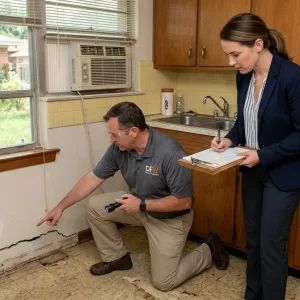
Key Takeaways
- DFW’s expansive clay soils make foundation movement extremely common—minor settling is normal, and buyers need an agent who can explain the difference between cosmetic cracks and structural concerns.
- Breaking an inspection report into three categories—cosmetic, maintenance, and structural/safety—gives nervous buyers a clear mental framework for deciding what to negotiate and what to accept.
- In 2026’s balanced DFW market, homes are taking 60–105 days to sell, giving buyers genuine leverage to request repairs, credits, or price reductions based on inspection findings.
- Specialist follow-up reports (structural engineer, roofing contractor, licensed electrician) are due-diligence tools, not red flags—a $300–$500 evaluation can save thousands in post-closing surprises.
- Trust Journey Home Inspections for TREC-licensed expertise, 4,000+ items checked, and same-day reports backed by a perfect 5.0-star rating — visit Journey Home Inspections to protect your buyer’s investment.
How Do You Explain a Home Inspection Report to a Nervous Buyer?
The key is to translate technical findings into plain language, contextualize issues within the local market and housing stock, and position yourself as the buyer’s advocate and guide. A nervous buyer isn’t afraid of the inspection itself—they’re afraid of the unknown, of making a costly mistake, or of being blindsided by hidden problems. By breaking down the report into digestible categories, explaining what’s normal wear versus what requires action, and offering clear next steps, you transform anxiety into confidence. In today’s balanced DFW market, buyers have more time and leverage than ever to thoroughly evaluate inspection findings and negotiate repairs or credits.
Here’s how to master this conversation and turn inspection day into a trust-building milestone.
Journey Home Inspections
Same-Day Detailed Report — 4,000+ Items Checked
Core Service Programs:
- Buyer & Seller Home Inspections for pre-purchase, pre-listing, and full general inspections covering 4,000+ items
- New Construction & Phase Inspections for new builds, phase checks, and 11-month builder warranty inspections
- Specialty Inspections for pool & spa, septic, well, irrigation, and pier & beam foundation systems
Why Choose Journey Home Inspections:
- ✓ Trusted by customers with a perfect 5.0-star Google rating across 79 verified reviews
- ✓ Family-owned, faith-based, and serving North Texas since 2016
- ✓ Led by Bryan Hughes — TREC-licensed (#21772) and insured
- ✓ InterNACHI Certified Professional Inspector
- ✓ 4,000+ items checked on every inspection — roof to foundation
- ✓ Same-day reports with photos, clear findings, and plain-language explanations
- ✓ Thermal imaging and drone technology on every inspection
Understand the Local Housing Stock and Common Inspection Findings in DFW
It’s Normal to Feel Overwhelmed by an Inspection Report
Inspection reports are dense, technical documents full of jargon and findings. Feeling anxious or confused is completely normal—that’s exactly why you have an agent to help translate and prioritize.
Before you can guide a buyer through an inspection report, you need to understand what’s typical for the homes they’re buying. North Texas has a distinct set of geological and climatic conditions that shape nearly every inspection report in the region. Knowing these patterns cold lets you confidently say, “This is normal for DFW” versus “This is something we need to dig into.”
Foundation Movement and Expansive Clay Soils
More than 50% of North Texas sits on Vertisol-series clay that swells when wet and shrinks when dry. This constant movement is the number-one driver of foundation cracks, sticking doors, and gaps in walls and ceilings—even in well-maintained homes across Fort Worth, Weatherford, and Justin. Buyers often panic the moment they see “foundation issues” in a report, but minor settling is an expected reality in this region, not an automatic deal-breaker.
The critical distinction is between cosmetic cracks—hairline fractures that are non-structural—and structural concerns like cracks wider than a quarter inch, recurring cracks, or movement affecting load-bearing walls. A thorough pier and beam or slab foundation inspection will document which category applies, giving you and your buyer a clear starting point for any conversation with a structural engineer.
HVAC Age and Replacement Costs
DFW summers regularly push past 100°F, and that heat puts HVAC systems under extreme, sustained stress. Most units last 8–12 years under normal conditions; in North Texas, the upper end of that range is optimistic. Inspectors frequently flag systems that are still functional but nearing end-of-life—a 15-year-old unit may cool the house today but fail within months of closing. Help your buyer understand whether a flagged HVAC means “budget for replacement in the next few years” or “negotiate a credit now,” based on the unit’s age, maintenance history, and current performance.
Older Electrical and Plumbing Systems
Pre-1970s homes in established Fort Worth neighborhoods—Near Southside, Ryan Place, Arlington Heights—often retain original wiring and plumbing. Knob-and-tube wiring, aluminum branch circuits, and galvanized pipes are common findings that aren’t automatic deal-breakers but do require honest conversation about upgrade costs and timelines. Newer construction in rapidly growing communities like Justin and Weatherford presents a different set of concerns: improper framing, wiring errors, and plumbing slope issues that can surface even in brand-new homes. Understanding new construction inspection findings specific to Justin, TX helps you set accurate expectations for buyers in those communities.
Prepare the Buyer Before the Inspection Report Arrives
Use the Option Period to Your Advantage
In today’s balanced DFW market, you have 7–10 days (or more, if negotiated) to review the inspection, order specialist reports, and decide whether to negotiate repairs or walk away. Don’t rush—this is your due diligence window.
The most effective thing you can do for a nervous buyer is set expectations before the report lands in their inbox. When buyers know what to expect, they’re far less likely to spiral when they see a 50-page document full of findings.
Start with a simple truth: every home has issues. The inspection’s job is to identify them—not to pass judgment on the property or your buyer’s decision. Clarify the difference between cosmetic issues, deferred maintenance, and structural or safety concerns before the report arrives, so those categories already exist in the buyer’s mind when they start reading. Remind them that in 2026’s balanced DFW market, homes are averaging 60–105 days on market—they have time and leverage to negotiate repairs or credits without fear of losing the deal. According to 2024 data, 17.2% of deals fell through during the inspection period, but the vast majority of those involved major undisclosed problems, not routine findings. Set the tone early: “We’re going to review this together, and I’ll help you decide what matters and what doesn’t.” That single sentence does more to reduce anxiety than any amount of technical explanation.
Break Down the Report into Three Categories: Cosmetic, Maintenance, and Structural
A 50-page inspection report is overwhelming by design—it has to be comprehensive. Your job is to impose structure on it so your buyer can process findings without shutting down. The three-category framework does exactly that.
Cosmetic issues—worn paint, minor caulking gaps, dated fixtures—are expected in older homes and rarely affect safety or value. Maintenance items—a roof nearing end-of-life, an aging HVAC, deteriorating exterior caulking—are predictable costs that every homeowner eventually faces. Buyers should budget for these, not panic about them. Structural and safety concerns—foundation movement affecting load-bearing walls, electrical hazards, active mold—require negotiation or professional follow-up before closing.
Walk through the report section by section with your buyer, labeling each finding out loud. “This is cosmetic—we’re not going to negotiate over it.” “This is a maintenance item—let’s get a cost estimate.” “This one we need to take seriously.” That running commentary transforms a wall of technical findings into a manageable action list. For buyers who want a deeper reference on reading reports independently, the first-time buyer’s guide to reading inspection reports walks through the critical-versus-cosmetic distinction in plain language.
Use Plain Language to Explain Inspection Findings Without the Jargon
Inspectors are trained to document findings with technical precision. That’s appropriate for the report—but it’s not how you should relay those findings to a buyer who’s already anxious. Your role is translator.
When the report says “efflorescence on the foundation wall,” you say “white mineral deposits that indicate past moisture exposure—common in this area, and something we’ll monitor.” When it says “the roof is at end-of-serviceable-life,” you say “the roof is about 15–20 years old and will likely need replacement in the next 3–5 years—let’s factor that into our negotiation.” When it says “grading slopes toward the foundation,” you say “the yard drains toward the house instead of away from it, which can cause water to pool against the foundation—a relatively straightforward fix.” Ask your buyer to point out specific findings that concern them, then address each one in plain terms. Answer the question asked, then pause. Resist the urge to over-explain—too much information at once compounds anxiety rather than relieving it.
Address the Emotional Concerns Behind the Questions
When a buyer asks “Is the foundation okay?”, they’re not really asking about soil mechanics. They’re asking: “Am I making a huge mistake?” That’s the question you need to answer first.
Validate the concern before providing context. “Foundation movement is a real consideration in DFW, and it’s smart that you’re asking about it” lands very differently than jumping straight into an explanation of clay soils. Once the buyer feels heard, they’re ready to receive information. Then provide context: “This home shows minor settling, which is normal for the area and age. We can get a structural engineer’s opinion if you want certainty, but based on what I’m seeing, this isn’t a deal-breaker.” Remind them of their leverage: “In today’s market, you have time to get a specialist report and negotiate repairs or credits if issues are confirmed.” And position yourself clearly as their advocate: “My job is to help you understand exactly what you’re buying and make sure you’re comfortable with it—whatever you decide.” That framing shifts the dynamic from “agent pushing a deal” to “trusted guide helping me make an informed decision.”
Know When to Recommend a Specialist and How to Frame It
Red Flags That Warrant a Specialist Report
If the inspection flags foundation movement affecting load-bearing walls, active mold, electrical hazards, or a roof in poor condition, order a specialist evaluation before negotiating. These issues can be costly and require professional assessment to determine scope and repair cost.
Recommending a specialist report is one of the most powerful tools in your post-inspection toolkit—but only if you frame it correctly. The wrong framing: “We need to get a structural engineer because the foundation looks bad.” The right framing: “Let’s get a structural engineer’s second opinion so we have concrete numbers before we negotiate.” One sounds like alarm; the other sounds like strategy.
Foundation concerns warrant a structural engineer’s evaluation. Electrical or plumbing issues may require a licensed contractor’s assessment to estimate repair costs accurately. Roof condition can be evaluated by a roofing contractor to determine remaining lifespan and whether repairs or full replacement are needed—a finding that directly affects insurability in North Texas. For buyers concerned about a roof finding, the Fort Worth buyer’s guide to uninsurable roofs explains what that designation means and what options exist. In DFW’s balanced 2026 market, buyers have the time and leverage to order these follow-up reports without pressure. Frame the cost-benefit plainly: a $300–$500 specialist evaluation could save thousands in negotiation or prevent a surprise repair bill six months after closing.
Negotiate Repairs, Credits, or Price Reductions Based on Inspection Findings
Buyer leverage has genuinely returned to DFW. Homes are taking 60–105 days to sell in 2026—a dramatic shift from the under-21-day average at the 2021–2022 market peak. Inventory has climbed to approximately five months of supply, approaching the threshold of a fully balanced market. That means buyers can request repairs, credits toward closing costs, or price reductions without the same fear of losing the deal that defined the past few years.
When prioritizing negotiations, focus on structural concerns, safety issues, and major systems—foundation, HVAC, roof, and electrical—rather than cosmetic items. Get contractor estimates to support your position with concrete numbers rather than guesses. Be transparent with your buyer about the seller’s likely response: they may counter, they may refuse, and your buyer should have a walk-away number in mind before negotiations begin. According to 2024 data, 17.2% of deals fell through during the inspection period—meaning buyers are willing to walk away from problematic properties, and sellers know it. That knowledge is leverage. Agents who want a deeper look at how inspection findings affect the decision to proceed can reference the post on when buyers back out after inspection in Texas for additional context on the legal and practical dynamics involved.
Why Journey Home Inspections Is the Right Choice for DFW Buyers and Agents
Every strategy in this guide depends on one thing: having an inspection report you can trust. Journey Home Inspections delivers exactly that. Family-owned and faith-based since 2016, Journey Home Inspections brings 8+ years of DFW-specific expertise to every property they inspect—led by TREC-licensed inspector Bryan Hughes (#21772), an InterNACHI Certified Professional Inspector who understands expansive clay soils, aging electrical systems, and the full range of challenges unique to North Texas homes in Fort Worth, Weatherford, Justin, Southlake, Roanoke, and the surrounding communities.
With a perfect 5.0-star Google rating across 79 verified reviews, Journey Home Inspections has earned the trust of hundreds of DFW families and the agents who serve them. Every inspection covers 4,000+ items—roof to foundation—using thermal imaging and drone technology, with same-day reports that include photos and plain-language explanations. That combination of depth and clarity gives you and your buyer exactly what you need to negotiate confidently during the option period, when time and information are everything.
Schedule your buyer’s home inspection with Journey Home Inspections
Frequently Asked Questions
Cosmetic issues—worn paint, minor caulking gaps, dated fixtures—are expected wear and rarely affect safety or property value. Structural problems, such as foundation movement affecting load-bearing walls, active electrical hazards, or confirmed mold, require negotiation or professional follow-up before closing. Maintenance items like an aging HVAC or a roof nearing end-of-life fall in between—predictable costs that buyers should budget for rather than treat as emergencies. Your inspector will document and categorize findings, but your agent can help you prioritize which ones to act on and which to accept.
Foundation movement is extremely common in North Texas because more than 50% of the region sits on expansive Vertisol-series clay that swells and shrinks with moisture changes. Minor hairline cracks are normal settling and don’t indicate a structural problem. Wider cracks—a quarter inch or more—recurring cracks, or cracks affecting load-bearing walls are a different matter and warrant a structural engineer’s evaluation before you negotiate or close. In today’s balanced DFW market, buyers have the time and leverage to order a specialist report and negotiate repairs or credits based on the findings.
Not necessarily—every home has issues, and the inspection’s job is to surface them so you can make an informed decision. According to 2024 data, 17.2% of deals fell through during the inspection period, but the vast majority of those involved major undisclosed problems, not routine findings. Use the inspection report as a negotiation tool: request repairs, ask for credits toward closing costs, or seek a price reduction that reflects the cost of necessary work. In DFW’s current balanced market, you have genuine leverage to make those requests without losing the deal.
Most HVAC systems last 8–12 years under normal conditions, but DFW’s extreme summers—regularly exceeding 100°F—accelerate wear significantly. A 15-year-old unit may still be cooling the house today but could fail within months of closing, leaving a new owner with a $5,000–$12,000 replacement bill. If the inspector flags an aging system, get a licensed HVAC contractor’s assessment to determine whether immediate replacement is needed or whether the unit has a few more years of reliable service. From there, you can negotiate a credit toward replacement or ask the seller to address it before closing.
Journey Home Inspections combines 8+ years of DFW-specific expertise with TREC licensing and InterNACHI Certification, led by inspector Bryan Hughes (#21772). They check 4,000+ items per inspection using thermal imaging and drone technology, and deliver same-day reports with photos and plain-language explanations—critical in today’s market where the option period is your primary window for negotiation. With a perfect 5.0-star Google rating across 79 verified reviews, Journey Home Inspections has earned the trust of hundreds of DFW families and the agents who represent them. Schedule your home inspection with Journey Home Inspections today and give your buyer the clarity they need to move forward with confidence.
Ready to Give Your DFW Buyer a Report They Can Trust?
A nervous buyer becomes a confident buyer when the inspection report is thorough, clear, and delivered by someone who knows North Texas homes inside and out. Journey Home Inspections checks 4,000+ items, delivers same-day reports with plain-language findings, and brings 8+ years of DFW-specific expertise to every property—so you have everything you need to negotiate and close with confidence.
*Pricing, service availability, and inspection details mentioned in this article are accurate as of the date of publication and are subject to change. A home inspection reflects a property’s condition at the time of inspection and is not a warranty or guarantee. Please contact us directly to schedule an inspection of your specific property.