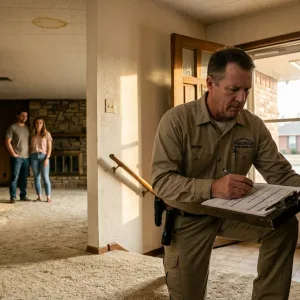
Buyers who waive home inspections in the DFW market discover an average of $10,000 to $14,000 in unexpected post-closing defects. That’s not a worst-case scenario — that’s the average. And in North Richland Hills, where the median home was built in 1986 and sits on some of the most expansive clay soil in Tarrant County, the stakes are even higher.
Consider a buyer who, caught up in a competitive multiple-offer situation in NRH just a few years ago, waived their inspection contingency to make their offer more attractive. They won the house — and then spent the first eight months of ownership dealing with a shifting pier-and-beam foundation, a 22-year-old HVAC system that failed in July, and a sewer line with significant root intrusion. Total repair bill: just over $18,000. None of it was disclosed. None of it had to be, once they signed at closing.
Here’s the good news: the NRH market has shifted. Buyers have regained leverage. Inspection contingencies are back on the table. And this guide is designed to give you everything you need to use that leverage wisely — what inspections cost in this specific market, what to look for in an inspector, how Texas licensing works, and which providers have earned strong local reputations. Let’s get into it.
Key Takeaways
- Standard home inspection costs in North Richland Hills range from $300 to $550+ depending on square footage, with the most common price point falling between $350–$450 for the typical NRH home.
- The median NRH home was built in 1986 — meaning aging foundations, HVAC systems, roofing, and plumbing are the norm, not the exception.
- Texas is one of the most strictly regulated states for home inspectors; all inspectors must hold an active TREC license and carry a minimum of $100,000 in E&O insurance.
- Buyers who skip inspections in the DFW market face an average of $10,000–$14,000 in surprise post-closing repair costs.
- Foundation-related deficiencies appear on over 60% of home inspection reports in the NRH area due to the region’s expansive clay soil.
- You should schedule your inspection immediately upon contract execution — especially between May and August when inspector availability tightens significantly.
- New construction homes are not immune to code violations or builder oversights; phased inspections are strongly recommended.
Why Home Inspections Matter More in North Richland Hills Than Ever
For a stretch of several years, the NRH real estate market was so competitive that buyers were routinely waiving inspection contingencies just to get an offer accepted. In that environment, skipping the inspection felt like a calculated risk. In 2026, it’s simply a bad decision — and the market no longer demands it.
Days on market have increased. Sellers are negotiating again. Buyers who present well-documented inspection findings are successfully securing credits and price reductions. The era of “take it or leave it” in NRH has largely passed, and that means the option period — and the professional home inspection that happens within it — is your most powerful financial tool in this transaction.
But the urgency isn’t just about market conditions. It’s about the homes themselves. North Richland Hills has a projected 2026 population of approximately 71,731 residents, and over 67% of its housing units are detached single-family homes. The median construction year for those homes is 1986. That means the typical home a buyer is purchasing in NRH is 40 years old — and 40-year-old homes come with 40-year-old systems.
We’re talking about HVAC units that may be approaching or exceeding their 15–20 year lifespan. Roofing materials from the late 1980s and early 1990s that are at or past their expected service life. Cast iron and galvanized plumbing that corrodes from the inside out. And perhaps most critically for this region: foundations built on some of the most expansive clay soil in North Texas.
Local engineering data suggests that a vast majority of older homes in Tarrant County will experience some degree of foundation movement over time. Foundation-related deficiencies — including secondary symptoms like brick cracking, sticking doors, and uneven floors — appear on over 60% of home inspection reports in the NRH area. That’s not a reason to avoid buying here. It’s a reason to go in with eyes open and a thorough inspection report in hand.
One more timing note: the DFW real estate market peaks between May and August, and during those months, inspector availability in North Richland Hills tightens considerably. If you’re under contract during peak season, you need to schedule your inspection on day one of your option period — not day four. Waiting even 48 hours can mean losing your preferred inspector to another buyer’s transaction.
Understanding Home Inspection Costs in North Richland Hills
One of the most common questions buyers ask before scheduling is simply: “How much is this going to cost?” The honest answer is that it depends — but not in a frustrating, evasive way. Inspection pricing in NRH follows a logical structure based primarily on square footage, with predictable add-ons for specialized services. Understanding the breakdown removes the sticker shock and helps you budget accurately.
For context, the national average for a home inspection is approximately $350, according to data from InterNACHI and HomeAdvisor. In Texas, the average runs slightly higher at $350–$450, driven by the complexity of local foundation evaluations and HVAC assessments in major metros like DFW. In North Richland Hills specifically, you’ll find pricing that aligns closely with those DFW averages — and for good reason. The homes here require more thorough evaluation than a newer, simpler structure in a different region.
The true return on investment is worth emphasizing here: a $400 inspection that uncovers $12,000 in deferred maintenance gives you the documented evidence you need to negotiate a seller credit that pays for the inspection many times over. That’s not a hypothetical — it’s the consistent experience of buyers who use their home inspection services strategically.
Pricing by Home Size: What to Budget
Here’s how inspection pricing breaks down by square footage in the NRH and broader Tarrant County market for 2026:
- Under 1,500 sq ft: $300–$350 — typical for condos, townhomes, and smaller single-family homes
- 1,500–2,500 sq ft: $350–$450 — the most common price range for NRH homes, and the sweet spot for most buyers in this market
- 2,500–3,500 sq ft: $450–$550 — larger family homes with more systems to evaluate, more roof surface to assess, and more time required
- Above 3,500 sq ft: $550+ — often calculated at an additional 10–15 cents per square foot beyond the base rate
Most buyers purchasing in NRH will fall into that $350–$450 range, which is the most common price point for the area’s typical single-family home. Budget toward the higher end if your home is older, has a pool, or includes additional structures like a detached garage or workshop.
Add-On Services and Specialized Inspections
A standard TREC inspection covers the visible and accessible systems of the home — but it doesn’t cover everything. Several specialized add-on services are commonly recommended for NRH buyers, and budgeting for them upfront prevents surprises:
- Sewer scope inspection ($150–$250): Evaluates underground plumbing lines for cracks, blockages, or root intrusion. Given the age of NRH’s housing stock and the prevalence of mature trees, this is one of the most valuable add-ons available. An underground plumbing evaluation can reveal issues that would cost $8,000–$15,000 to repair if discovered post-closing.
- Thermal imaging ($100–$150): Detects hidden moisture intrusion, insulation voids, and electrical hot spots invisible to the naked eye. Some premium inspectors include this as a standard service rather than an add-on.
- Pool and spa inspection ($100–$150): Evaluates pump systems, filtration equipment, and structural integrity. If your NRH home has a pool, this is non-negotiable. You can learn more about what’s involved in a pool and spa inspection before you schedule.
- Sprinkler/irrigation system inspection ($50–$75): Common in NRH due to the region’s dry climate and the prevalence of established landscaping. An irrigation system inspection evaluates coverage, head condition, and controller function.
- Radon testing ($100–$200): Measures radioactive gas levels; recommended in Texas, particularly for homes with basements or below-grade spaces.
- Mold screening/testing ($200–$350): Requires a separate Texas Department of Licensing and Regulation (TDLR) mold assessment license — distinct from a standard home inspection license.
Also budget for potential hidden costs: re-inspection fees ($100–$150) to verify that a seller completed agreed-upon repairs, rush scheduling premiums ($50–$100) if your option period is tight, and possible travel fees if you hire an inspector based outside of Tarrant County. Most inspectors require payment before releasing the final report, and standard payment methods include credit cards, Zelle, and online payment portals.
How NRH’s Housing Stock Affects Inspection Complexity and Cost
Understanding what an inspector is actually looking for in a North Richland Hills home — and why it takes the time it does — helps buyers appreciate the value of a thorough evaluation rather than viewing it as a checkbox exercise.
The majority of NRH homes were built in the 1970s and 1980s, an era of residential construction that frequently featured materials and methods that have since been identified as problematic. Inspectors working in this market spend significant time evaluating systems that simply don’t exist in newer construction — and they do so knowing that what they find will directly impact a buyer’s decision on a $370,000+ investment.
Here’s what makes older NRH homes more complex to inspect:
Foundation systems: The region’s expansive clay soil is the defining challenge of North Texas real estate. Clay soil absorbs moisture and expands dramatically, then contracts during dry periods. This cycle of expansion and contraction exerts enormous pressure on foundations over decades. Inspectors spend extra time taking elevation measurements across multiple points of the home, assessing structural settlement patterns, and identifying secondary symptoms like sticking doors, cracked brick veneer, and sloping floors. For homes with pier-and-beam foundations — common in pre-1970s construction in the area — a dedicated pier and beam foundation inspection provides an even more detailed structural assessment.
Electrical systems: Homes built in the 1970s and 1980s frequently feature electrical panels that have since been recalled or flagged as fire hazards — Federal Pacific Stab-Lok panels being the most notorious example. These panels are known to fail to trip under overload conditions, creating serious fire risk. Lack of GFCI (Ground Fault Circuit Interrupter) protection in bathrooms, kitchens, and exterior outlets is also endemic to this era of construction and must be flagged as a safety deficiency in every TREC-compliant report.
Plumbing: Cast iron drain lines and galvanized supply pipes were standard in homes built before the mid-1980s. Cast iron corrodes from the inside out over time, leading to restricted flow, cracking, and eventual failure. Galvanized pipes accumulate mineral deposits that reduce water pressure and can introduce rust into the water supply. Neither issue is visible without a sewer scope or access to the plumbing lines — which is exactly why these add-on services are so valuable in this market.
HVAC systems: Older HVAC equipment is common in NRH homes, with many units approaching or exceeding their 15–20 year expected lifespan. An inspector evaluating an aging system will assess its operational condition, note its approximate age, check for proper refrigerant levels, and flag any signs of heat exchanger failure or combustion issues. A system that’s “still running” at 18 years old is not the same as a system in good condition.
Roofing: Asphalt shingle roofs from the 1980s and 1990s are frequently at or past their expected service life. Inspectors evaluate shingle condition, flashing integrity, ventilation adequacy, and signs of prior repair or improper installation. Negative exterior drainage and improper grading — endemic to the NRH area — contribute to foundation moisture problems and must be carefully documented. A thorough roof evaluation is a critical component of any inspection in this market.
In Texas housing stock built before 1990 — which describes the majority of NRH homes — inspectors uncover an average of 10 to 15 reportable deficiencies per property. That’s not a sign that the home is unsalvageable. It’s a normal finding for a 40-year-old home, and it’s exactly the kind of documented information that empowers buyers to negotiate from a position of knowledge. A detailed home inspection report translates those findings into clear, actionable information.
If you’re purchasing an older home in North Richland Hills and want to understand what a thorough inspection looks like, that’s exactly what our detailed inspection reports are designed to answer. We walk you through every finding and explain what it means for your home — in plain English, without the jargon.
Texas Licensing Requirements and Inspector Credentials
Texas is one of the most strictly regulated states in the country for home inspectors — and that’s genuinely good news for buyers. The licensing framework that governs inspectors in this state is rigorous, consumer-focused, and actively enforced. Understanding it helps you hire with confidence and know exactly what protections you have if something goes wrong.
Performing a residential inspection in Texas requires an active license issued by the Texas Real Estate Commission (TREC). The highest tier of licensure — the Professional Real Estate Inspector designation — requires candidates to complete up to 394 hours of core real estate and inspection education, participate in extensive field training under a licensed sponsor, and pass both a state and national examination. This is not a weekend certification course. It represents a substantial investment of time and expertise.
TREC also mandates that all active Professional Real Estate Inspectors maintain a minimum of $100,000 per occurrence in Errors and Omissions (E&O) insurance. This coverage protects you as a consumer in the event that an inspector negligently misses a material defect that leads to significant financial loss. It’s a meaningful safety net — and it’s one reason why hiring an unlicensed or out-of-state inspector is never worth the cost savings.
Texas home inspections are governed by the TREC Standards of Practice (SOP), which differ from national guidelines issued by organizations like InterNACHI or ASHI. The TREC SOP dictates a standardized reporting format — the REI 7-6 form — that all licensed inspectors must use. This form clearly defines what must be inspected, what must be reported as “Deficient,” and what falls outside the scope of a standard inspection. It creates consistency and accountability across every inspection conducted in the state.
Recent regulatory updates for 2025–2026 have emphasized stricter reporting requirements on specific roofing components — including unsealed starter course tabs — and have clarified that inspectors cannot perform hydrostatic plumbing tests unless they also hold a separate Texas plumbing license. These updates reflect TREC’s ongoing commitment to keeping the SOP current with evolving construction standards and consumer protection needs.
If a buyer discovers a major defect that was negligently omitted from a report, there are real avenues for recourse. You can file a formal complaint with TREC, which investigates and can levy fines or revoke licenses. Texas consumers are also protected under the Deceptive Trade Practices Act (DTPA), which allows for the recovery of damages in cases of gross negligence or misrepresentation. According to TREC’s 2023 enforcement data, only 86 of the agency’s 6,307 enforcement cases involved real estate inspectors — a remarkably low number that reflects the high professional standards maintained by the industry.
For buyers who want to understand how these professional standards translate into a real inspection experience, the frequently asked questions about home inspections on our site covers many of the most common regulatory and process questions in plain language.
How to Verify Your Inspector’s License and Credentials
Before you hire any inspector in North Richland Hills, take five minutes to verify their credentials. Here’s exactly how:
- Visit trec.texas.gov and navigate to the “Licensee Search” tool.
- Enter the inspector’s name or license number to access real-time data on license status, expiration dates, and any formal complaints or disciplinary actions.
- Check specifically for any history of TREC enforcement actions — even minor complaints can reveal patterns of unprofessional conduct.
- Confirm the inspector maintains the required $100,000 E&O insurance coverage. You can ask the inspector directly for a certificate of insurance.
- Ask the inspector for their TREC license number before booking, and treat any hesitation to provide it as a red flag.
This verification step takes less time than reading a Yelp review — and it’s infinitely more reliable.
⚠️ What Happens If You Skip the Inspection?
Buyers who waive inspections in the DFW market discover an average of $10,000–$14,000 in unexpected post-closing defects. The most common surprises: foundation failures, hidden roof damage, undisclosed plumbing leaks, and end-of-life HVAC systems that fail within the first summer of ownership.
Once you close, you own the home “as-is.” The seller has no legal obligation to fix anything discovered after closing. The inspection contingency is your only leverage to renegotiate price, request seller credits, or walk away with your earnest money intact.
In 2026’s more balanced NRH market, waiving an inspection is no longer necessary to win a bidding war. Buyers have regained negotiating power — use it.
Top 5 Home Inspectors Serving North Richland Hills: Compared and Reviewed
Finding the right inspector in a market like NRH isn’t just about price. It’s about finding someone with the local knowledge to recognize what’s normal for a 1985 home on clay soil versus what’s a genuine structural concern — and the communication skills to explain the difference clearly. The five providers below have earned strong local reputations and serve North Richland Hills and the surrounding Tarrant County area. All are TREC-licensed professionals with no significant disciplinary red flags identified in the research process.
Journey Home Inspections
Location: Fort Worth, TX (serves North Richland Hills and all of Tarrant County)
Journey Home Inspections has built its reputation on something that’s rarer than it should be in this industry: the ability to explain complex findings in plain English, without making buyers feel overwhelmed or talked down to. Customers consistently praise the quality of report photography, the clarity of written explanations, and the inspector’s patience during walkthroughs.
The differentiator here is the educational focus. First-time buyers in particular frequently describe their inspection experience as genuinely empowering — they leave understanding their home, not just holding a PDF they can’t interpret. Pricing is competitive with market rates, and the fee structure is transparent with no hidden costs. You can read more about the team’s approach on the Journey Home Inspections about page.
“I felt like I actually understood my home after the inspection. They explained everything without making me feel stupid for asking questions.” — Consistent theme across buyer reviews.
TexInspec
Location: 6709 Meadow Crest Dr, North Richland Hills, TX 76180
Founded in 1985, TexInspec brings something genuinely unique to the table: they’ve been inspecting Tarrant County homes since many of those homes were newly built. That historical knowledge of the region’s specific 20th-century construction practices — the materials used, the shortcuts taken, the common failure points — is difficult to replicate and genuinely valuable when evaluating a home from that era.
TexInspec has hundreds of positive reviews highlighting prompt scheduling and thorough reporting, and they appear frequently in local Facebook and Nextdoor recommendation threads. The main consideration: as a larger company, buyers work with various staff inspectors rather than a single owner-operator, so the experience can vary somewhat depending on who is assigned to your inspection.
Inspect360
Location: 8074 Precinct Line Rd, Colleyville, TX 76034 (serves North Richland Hills)
Inspect360’s differentiator is coordination. If you need a standard inspection, a sewer scope, a termite inspection, and a pool evaluation all within your option period, Inspect360 manages that complexity under one umbrella — one phone call, one scheduling conversation, one point of contact. For buyers who are juggling multiple moving parts during a transaction, that convenience has real value.
They’re highly regarded on local Reddit real estate threads for professionalism and transparent communication. Pricing is in the mid-to-premium range, but buyers generally feel the comprehensive service coordination justifies the cost. The “360-degree” approach is more than a marketing tagline — it reflects a genuine commitment to covering all the bases.
TruVision Property Inspections
Location: 705 Charles Ct, Hurst, TX 76054 (serves North Richland Hills)
TruVision’s standout feature is thermal imaging included as a standard part of every inspection — not an add-on that costs extra. Thermal cameras detect temperature differentials that indicate hidden moisture intrusion, insulation voids, and electrical hot spots that are completely invisible during a standard visual inspection. In older NRH homes where moisture issues behind walls are common, this technology provides a meaningful advantage.
Customers consistently praise TruVision for same-day report delivery, meticulous documentation, and a communication style that’s polite and accessible rather than technical and intimidating. Pricing is competitive, and the thermal imaging inclusion makes the value proposition strong for buyers of older homes.
JBHAGAN Home Inspections
Location: North Richland Hills, TX
JBHAGAN is the quintessential owner-operator boutique inspection service. When you book with JBHAGAN, you know exactly who is showing up — the owner, with a deep background in construction and a hands-on approach to explaining what they find. That consistency and accountability from booking to final report is something larger companies simply can’t replicate.
Reviewers consistently highlight punctuality, honesty, and the inspector’s ability to contextualize structural defects in terms of actual repair feasibility — not just “this is deficient” but “here’s what it would take to fix it and whether it’s a big deal.” For buyers who want a direct relationship with the person evaluating their home, JBHAGAN delivers that experience consistently.
Ready to schedule your North Richland Hills home inspection? The sooner you book after contract execution, the better — especially during peak season. Journey Home Inspections typically schedules within 24–48 hours and delivers your report the same day, so you have maximum time within your option period to make decisions.
🚩 Red Flags When Choosing an Inspector
- Offers to perform repairs on properties they’ve inspected — this is a TREC ethics violation and a direct conflict of interest. Walk away immediately.
- Discourages you from attending the inspection — a professional inspector welcomes your presence and uses it as a teaching opportunity.
- Recommended solely by your real estate agent without independent verification — always check TREC’s licensee database yourself, regardless of who made the referral.
- Has a history of TREC complaints or enforcement actions — check trec.texas.gov before booking, not after.
- Guarantees “no major issues” or seems dismissive of potential problems — thorough inspectors identify defects honestly, even when the news is uncomfortable.
- Significantly underprices the market — a $150 inspection on a 2,200 sq ft home is not a bargain. It’s a rushed inspection with missed defects.
The Home Inspection Timeline: When to Schedule and What to Expect
The home inspection process in Texas is structured around a specific contractual window, and understanding that timeline is critical to using it effectively. Here’s how it works from contract execution to closing.
Texas real estate contracts include a standard 5–10 day “Option Period” — a buyer-friendly provision that gives you the right to terminate the contract for any reason and receive your earnest money back, provided you act within the window. The option period is when inspections happen, findings are evaluated, and negotiations take place. Once it expires, you lose that protection.
Day 1 of your option period: Schedule your inspection. Not day 2. Not day 3. Day 1. During peak season (May–August), inspectors in North Richland Hills book up quickly, and waiting even 48 hours can mean losing your preferred provider. If you’re working with a 5-day option period, you need your inspection report in hand by day 3 at the latest to leave time for follow-up evaluations and negotiations. You can schedule your North Richland Hills home inspection directly through our contact page.
The inspection itself: A standard inspection takes 2–3 hours depending on home size, age, and add-on services. The inspector evaluates the roof, exterior, foundation, interior systems, plumbing, electrical panels, HVAC equipment, attic, and crawl spaces. They document deficiencies with photographs and written descriptions using the standardized TREC REI 7-6 reporting form.
💡 Pro Tip: Attend Your Inspection and Ask Questions
Show up toward the end of the inspection — not the beginning. By that point, the inspector has already worked through the property systematically and can walk you through their findings in context. You’ll see the sticking door that indicates foundation movement, the water stain in the attic that points to a roof penetration issue, the electrical panel that needs attention.
This transforms the inspection from a document you receive into a learning experience you participate in. Buyers who attend their inspections consistently report feeling more confident during the negotiation phase — because they’ve seen the issues firsthand, not just read about them in a report.
The report: Most inspectors deliver the final report within 24 hours of the inspection. Premium providers often deliver same-day. The report will itemize every deficiency found, categorized by system, with photographs and explanations. Read it carefully — and if anything is unclear, call your inspector. A good inspector answers post-report questions without charging extra for the conversation.
After the report: You have the remainder of your option period to decide how to proceed. You can request that the seller repair specific items before closing, ask for a financial credit to handle repairs yourself, renegotiate the purchase price downward based on the findings, or — if the issues are severe enough — terminate the contract and recover your earnest money. If you discover major issues, a structural engineer ($300–$500) or a licensed HVAC contractor may be worth consulting before making your final decision.
For buyers comparing the NRH market to other Tarrant County markets, the inspection process and costs are similar to what you’d find in a Fort Worth home inspection — the same TREC standards apply, and the same clay soil challenges are present throughout the region.
🔧 What to Do If the Inspection Reveals Major Issues
Don’t panic — major findings are common in NRH’s older housing stock, and they don’t automatically mean you should walk away. You have four options when significant defects are discovered during your option period:
- Request seller repairs — ask the seller to fix the issue before closing using a licensed contractor
- Request a financial credit — take a dollar amount at closing to handle repairs yourself, on your timeline
- Renegotiate the purchase price — reduce the sale price to reflect the cost of deferred maintenance
- Walk away — terminate within the option period and recover your earnest money in full
Common NRH findings and typical credit ranges: Foundation issues — follow-up structural engineer evaluation ($300–$500) before deciding; repair costs vary widely. Roof damage — typically justifies a $5,000–$15,000 credit depending on remaining life and extent of damage. End-of-life HVAC — typically warrants a $4,000–$8,000 credit or seller replacement.
Present findings professionally through your agent, backed by the documented inspection report. Sellers respond to facts, not emotions — and a well-documented report from a TREC-licensed inspector carries real weight at the negotiating table.
New Construction and Phased Inspections in North Richland Hills
There’s a persistent misconception among buyers of new construction homes: “It’s brand new — why would I need an inspection?” The answer is straightforward. New construction homes are not immune to municipal code violations or builder oversights. In fact, local data consistently shows that new homes in the DFW area have their own set of common deficiencies that are entirely preventable — if caught before the walls are sealed and the transaction closes.
The most effective approach for new construction buyers is a phased inspection strategy. Rather than a single inspection at the end of the build, phased inspections occur at two critical stages of construction:
Pre-drywall inspection ($200–$300): This inspection occurs after framing, electrical rough-in, plumbing rough-in, and insulation are complete — but before drywall covers everything. It’s the only opportunity to evaluate the quality of these hidden systems before they’re permanently enclosed. Common findings include improperly installed insulation, incorrect electrical wiring, plumbing that doesn’t meet code, and roof sheathing issues. Once drywall goes up, these problems become expensive to diagnose and even more expensive to fix.
Final walk-through inspection ($300–$400): This inspection occurs just before closing and verifies that all systems function properly, that builder punch-list items have been completed, and that the finished home meets TREC Standards of Practice. It also establishes a documented baseline condition of the home — critical for warranty claims if issues arise later.
Even in new construction, North Richland Hills’ clay soil presents challenges. Foundation settlement can begin almost immediately after construction on expansive clay, and inspectors assess grading, drainage, and early settlement signs even in brand-new homes. Improper grading during construction — a common builder oversight — can direct water toward the foundation rather than away from it, setting up moisture problems that compound over time.
Builder warranties typically cover structural defects for 10 years and mechanical systems for 1–2 years. But warranties only cover what’s documented — and they don’t cover issues that existed at closing if you didn’t identify them. A phased inspection creates a paper trail that protects you throughout the warranty period. For buyers going through this process, our new construction phase inspection services are specifically designed to catch what builders miss at each stage of the build.
New construction buyers in the DFW area are increasingly utilizing phased inspections as standard practice — not as an optional extra. The cost of two inspections ($500–$700 total) is trivial compared to the cost of discovering a major defect after the builder’s warranty has expired.
Whether you’re buying a 40-year-old home or brand-new construction in North Richland Hills, understanding what to expect from your inspection takes the stress out of the process. Explore the full range of inspection services available, or reach out with any questions about scheduling and what’s included.
Frequently Asked Questions About Home Inspections in North Richland Hills
These are the questions buyers in the NRH market ask most often — answered directly and completely.
A standard home inspection in the DFW area typically takes 2 to 3 hours to complete. The exact duration depends on the property’s square footage, age, foundation type, and whether additional structures or add-on services — like a pool inspection or sewer scope — are included. The inspector needs this time to thoroughly evaluate the roof, exterior, interior systems, plumbing, and electrical panels. For older NRH homes with more complex systems, budget toward the higher end of that range. If you’re scheduling multiple add-on services simultaneously, the total time on-site may extend to 3.5–4 hours.
Yes — strongly recommended. Attending the inspection, ideally toward the end of the appointment, allows you to see deficiencies firsthand rather than just reading about them in a report. Walking the property with your inspector helps you understand the difference between a major structural concern and minor cosmetic wear, ask specific questions about repair feasibility and maintenance priorities, and leave the inspection feeling genuinely informed rather than anxious. Buyers who attend their inspections consistently report feeling more confident during the negotiation phase. A good inspector will welcome your presence and use it as a teaching opportunity — not a disruption.
First: don’t panic. Foundation issues are common in North Richland Hills due to the region’s expansive clay soil, and they range from minor cosmetic settlement to significant structural concerns. If a major foundation issue is found and you’re still within your Texas contract’s Option Period, you have four choices: ask the seller to repair the issue before closing, request a financial credit to cover repairs yourself, renegotiate the purchase price downward, or walk away from the transaction entirely and have your earnest money refunded. Before making any decision on a significant foundation finding, consider hiring a licensed structural engineer ($300–$500) for a follow-up evaluation — their report will give you the specific diagnosis and repair scope you need to negotiate effectively.
Absolutely — and this is one of the most important misconceptions to correct. New construction homes are not immune to municipal code violations or builder oversights. Common findings in new DFW construction include improperly installed insulation, roof defects, HVAC ducting issues, and foundation grading problems that can cause moisture issues within the first few years of ownership. Phased inspections — a pre-drywall inspection and a final walk-through inspection — allow buyers to catch these issues before walls are sealed and before the transaction closes. Builder warranties don’t cover everything, and inspections document baseline conditions that protect you throughout the warranty period. The new construction phase inspection process is specifically designed to address these risks.
No — and this prohibition exists specifically to protect you. Under TREC’s strict ethical guidelines, it is a conflict of interest for a home inspector to perform, or offer to perform, repairs on a property they have inspected within the last 12 months. This regulation ensures that your inspector provides an unbiased, objective evaluation without any financial incentive to find (or not find) specific defects. If an inspector you’re considering offers repair services or suggests they can “take care of” issues they discover, that’s a serious red flag and a potential TREC ethics violation. Verify any inspector’s status at trec.texas.gov before booking.
The homebuyer is responsible for selecting and paying for the private home inspector. This arrangement is intentional — it ensures that the inspector works exclusively for the buyer and has a clear fiduciary duty to protect the buyer’s financial interests, not the seller’s or the agent’s. Payment is generally required before or on the day of the inspection, and most inspectors in the DFW area accept major credit cards, Zelle, and online payment portals. Some larger inspection firms offer “pay at closing” arrangements through third-party escrow services, though this typically incurs an additional administrative fee. Budget for the inspection as a non-negotiable line item in your closing costs — it’s one of the highest-ROI expenditures in the entire transaction.
Schedule Your North Richland Hills Home Inspection Today
You’ve done the research. You understand what inspections cost in this market, why NRH’s older housing stock demands thorough evaluation, and what to look for in a qualified, TREC-licensed inspector. The next step is putting that knowledge to work within your option period.
At Journey Home Inspections, we believe that a great inspection isn’t just a report — it’s a conversation. We walk you through every finding in plain English, explain what it means for your specific home, and make sure you leave feeling confident about one of the largest financial decisions of your life. We typically schedule within 24–48 hours and deliver your report the same day, so you have maximum time to act within your option period.
North Richland Hills buyers deserve that kind of thorough, educational inspection experience — and that’s exactly what we’re here to provide.