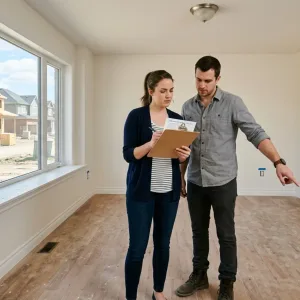
You’ve just made an offer on your dream new construction home in Justin, TX. The builder says it’s brand new, everything is under warranty, and the city already did its inspections — so you might be wondering if hiring your own inspector is really necessary. Here’s what many first-time buyers don’t realize: municipal code inspections check for minimum code compliance, not quality. They’re not looking out for you — they’re checking boxes. And builders, no matter how reputable, make mistakes. Subcontractors work fast, materials have defects, and things get missed. A new construction residential inspection isn’t paranoia — it’s one of the smartest moves a first-time buyer in Justin, TX can make.
Key Takeaways
- New construction homes are not automatically defect-free — builder errors, material defects, and code violations are common even in brand-new builds.
- There are two critical inspection windows: the pre-drywall inspection (after framing, before walls close) and the final walkthrough inspection (24–48 hours before closing).
- A professional inspector checks structural integrity, electrical systems, plumbing, HVAC, insulation, and code compliance — far beyond what a builder’s walk-through covers.
- Common defects in DFW new construction include improper grading, HVAC sizing issues, electrical code violations, and insulation gaps.
- New construction inspections in the DFW area typically cost $400–$800 — a small investment compared to discovering major defects after closing.
- Always verify your inspector holds a current Texas Home Inspector License (THIL) through the Texas Department of Licensing and Regulation (TDLR).
- Your inspection report gives you documented leverage to request repairs, credits, or price reductions from the builder before closing.
Why New Construction Homes Still Need Professional Inspections
There’s a pervasive myth in the home-buying world that new construction equals perfection. It makes sense on the surface — the home has never been lived in, everything is fresh, and the builder provided a warranty. But the reality of new construction in the Justin, TX and broader DFW market tells a different story. Builders are managing dozens of subcontractors across multiple job sites simultaneously. Electricians, plumbers, HVAC technicians, and framers are all working under tight deadlines. Mistakes happen — and they happen more often than most buyers expect.
Municipal inspections conducted by the city or county are not a substitute for a professional general home inspection. Code inspectors are checking for minimum compliance with building codes — they’re not evaluating quality, craftsmanship, or the dozens of details that can affect your comfort, safety, and long-term costs. They also don’t produce a written report you can use for negotiations or warranty claims.
Texas building codes and local Justin/Tarrant County requirements establish a floor, not a ceiling. A licensed professional inspector evaluates your home against those standards and beyond — looking at how systems are installed, whether materials are defective, and whether the work meets the quality standards you’re paying for. This is especially important in the rapidly growing Justin, TX area, where new subdivisions are being built at a pace that can strain builder oversight and quality control.
There’s also the warranty issue. Most builders offer a 1-year structural warranty and limited system warranties — but warranties have gaps, exclusions, and strict claim procedures. An inspection conducted before closing documents the baseline condition of your home, creating a paper trail that’s invaluable if you need to file a warranty claim later. Without that documentation, proving that a defect existed at the time of purchase becomes much harder.
First-time buyers are particularly vulnerable here. When you’re navigating financing, contracts, and the emotional excitement of buying your first home, it’s easy to skip the inspection — especially when the builder reassures you that everything is fine. But skipping an inspection on a new build is one of the most common and costly mistakes first-time buyers make. The good news? You don’t have to make it.
First-time buyers often worry they don’t know what to look for or whether they’re making the right decision. That’s exactly why professional inspectors exist — to be your advocate and expert guide through this critical step. You don’t need to know how to read a circuit panel or evaluate ductwork. You just need to show up and ask questions. Your inspector handles the rest.
Understanding the New Construction Inspection Timeline in Justin, TX
One of the biggest advantages first-time buyers have in new construction is timing. Unlike purchasing an existing home — where you get one inspection window before closing — new construction gives you multiple opportunities to catch problems at different stages of the build. Understanding when those windows open and how to use them is critical to protecting your investment.
Builder timelines in the DFW area typically span 4 to 6 months from groundbreaking to closing, though supply chain conditions and builder workload can extend that. Within that window, there are two primary inspection opportunities that every first-time buyer should take advantage of. The full inspection process for new construction is designed to align with these build phases — and understanding the timeline helps you stay ahead of the builder’s schedule rather than scrambling at the last minute.
The Pre-Drywall Inspection: Your First Critical Checkpoint
The pre-drywall inspection is arguably the most valuable inspection in the entire new construction process — and it’s the one most first-time buyers don’t know exists. This inspection occurs after the framing is complete but before drywall is installed. That window of time is your only opportunity to see the home’s internal systems before they’re permanently hidden behind walls and ceilings.
During a pre-drywall inspection, a licensed inspector examines the electrical rough-in (wiring, panel location, circuit layout), plumbing rough-in (supply lines, drain lines, venting), HVAC ductwork and equipment placement, and structural framing including the roof structure and load-bearing walls. Issues found at this stage are the easiest and cheapest to correct — because the walls are still open. A misrouted drain line or an improperly sized electrical circuit that would cost thousands to fix after drywall installation can be corrected in hours at this stage.
As a first-time buyer, attending the pre-drywall inspection is one of the most educational experiences you can have. You’ll see the actual skeleton of your home — the framing, the wires, the pipes — and you’ll have a licensed professional right there to explain what you’re looking at. Bring a notepad, take photos, and don’t hesitate to ask questions. This is your home, and you deserve to understand how it’s built.
Final Walkthrough: The Last Chance Before Closing
The final walkthrough inspection is scheduled 24 to 48 hours before closing. At this point, the home is complete — drywall is up, finishes are installed, appliances are in place, and all systems should be operational. This is your last opportunity to verify that everything is as it should be before you sign the closing documents and take ownership.
A professional final walkthrough inspection verifies that all builder punch-list items from previous phases have been completed, confirms that appliances, fixtures, and finishes match the contract specifications, tests all electrical outlets and switches, checks plumbing fixtures and water pressure, verifies HVAC operation, and documents any last-minute defects or incomplete work. This is not the same as the builder’s courtesy walk-through — a professional inspector is working for you, not the builder, and has no incentive to minimize findings.
This is your chance to see your home’s skeleton and ask questions about construction methods, material choices, and system installation. Bring a notepad, take photos, and don’t hesitate to ask the inspector to explain what you’re seeing. Most first-time buyers who attend this inspection leave feeling significantly more confident about their purchase — and significantly better equipped to understand the final inspection report.
What Professional Inspectors Check in New Construction Homes
A professional home inspection is far more comprehensive than most first-time buyers expect. It’s not a quick visual scan — it’s a systematic evaluation of every major system and component in the home, conducted by a licensed professional using specialized tools and a trained eye. Here’s what a thorough new construction phase inspection covers in detail.
Structural and Foundation Inspection
The structural inspection begins at the foundation and works upward. In the North Texas area, foundation performance is critically important — the expansive clay soils common throughout Tarrant County can cause significant movement if grading and drainage aren’t properly executed. Inspectors look for foundation cracks, settling, or improper grading that could allow water to pool near the foundation and cause long-term damage.
Above the foundation, inspectors evaluate the framing for defects, improper fastening, missing hardware, or structural inadequacies. The roof structure, decking, and truss installation are examined for proper installation and load capacity. Attic ventilation and insulation installation quality are also evaluated — both affect energy efficiency and moisture management in the home. For homes with pier and beam foundations, a dedicated pier and beam foundation inspection provides an even deeper evaluation of the substructure.
Electrical and Plumbing Systems
Electrical inspection covers the main panel, all wiring, outlets, switches, and code compliance throughout the home. Inspectors verify proper grounding and bonding of the electrical system, GFCI protection in all required wet areas (bathrooms, kitchen, garage, exterior), proper circuit labeling, and adequate capacity for the home’s electrical load. In new construction, common electrical defects include missing GFCI outlets, improper grounding, reversed polarity at outlets, and overloaded circuits — all of which are code violations that must be corrected.
Plumbing inspection evaluates water supply lines, drain lines, fixtures, and pressure testing. Inspectors check for proper water pressure (typically 40–80 PSI), correct slope on drain lines to ensure proper drainage, proper venting of the drain system, and accessibility of shut-off valves. Leaking fixtures, improper venting, and water pressure issues are among the most common plumbing defects found in new construction homes in the DFW area.
HVAC and Climate Control
In a North Texas climate where summer temperatures regularly exceed 100°F, HVAC performance isn’t a luxury — it’s a necessity. Inspectors evaluate whether the HVAC equipment is properly sized for the home’s square footage and layout, whether ductwork is properly sealed and insulated in unconditioned spaces (attics and crawl spaces), whether the thermostat is functional and properly calibrated, and whether refrigerant charge and airflow meet manufacturer specifications.
Undersized HVAC equipment is a surprisingly common defect in new construction — builders sometimes install systems that are technically adequate for code compliance but insufficient for the actual heating and cooling demands of the home, particularly during DFW’s extreme summer heat. An inspector can identify this issue before closing, giving you leverage to demand a properly sized system.
Ready to make sure your new construction home is built right? A professional inspection gives you the documentation and leverage you need before you sign those closing documents.
Common Defects Found in New Construction Homes in the DFW Area
Understanding what inspectors actually find in new construction homes in the DFW area helps normalize the inspection process and reduces the anxiety many first-time buyers feel. These aren’t rare or exotic problems — they’re the kinds of issues that show up regularly, even in homes built by well-regarded builders. Knowing what to expect makes the inspection report feel less alarming and more actionable.
Incomplete punch-list items are among the most common findings. Trim that isn’t fully installed, paint touch-ups that weren’t completed, caulking gaps around fixtures, or hardware that wasn’t tightened — these are minor in isolation but can add up to hours of follow-up work if not documented before closing.
Improper grading or drainage is a particularly important issue in the Justin, TX area. North Texas clay soils expand and contract significantly with moisture changes. If the lot isn’t graded to direct water away from the foundation, you can face foundation movement, water intrusion in the crawl space or garage, and landscaping damage within the first year of ownership. This is one of the most consequential defects an inspector can catch — and one of the most expensive to correct after the fact.
HVAC installation issues are frequently found in new construction, including undersized equipment, improperly sealed ductwork, refrigerant charge problems, and inadequate airflow to certain rooms. These issues directly affect your comfort and energy bills from day one.
Electrical code violations — missing GFCI outlets, improper grounding, reversed polarity, or overloaded circuits — show up regularly in new construction inspections. These aren’t just code issues; they’re safety hazards that must be corrected before closing.
Plumbing defects including leaking fixtures, improper drain venting, and water pressure issues are common findings. Improperly vented drain systems can cause slow drains, gurgling sounds, and sewer gas odors — problems that are easy to fix during construction but much more disruptive to address after you’ve moved in.
Insulation gaps are another frequent finding, particularly in attics. Inadequate or improperly installed insulation directly affects your energy bills and HVAC performance. In a Texas climate, proper insulation is critical — and it’s much easier to correct before the attic access panels are finished and the home is occupied.
If a builder suggests you don’t need an inspection, offers incentives to skip it, or tries to limit your access to the home during construction, that’s a serious warning sign. Reputable builders welcome independent inspections because they have nothing to hide and understand that a professional inspection protects both parties. Your right to inspect is protected by your purchase agreement — and you should exercise it every time.
Critical Red Flags That Require Immediate Attention
Not all inspection findings are created equal. Some issues are minor inconveniences that can be negotiated or accepted. Others are non-negotiable — problems that must be corrected before you close, full stop. Knowing the difference empowers you to prioritize your response and avoid being talked into accepting something that could cost you significantly down the road.
Structural cracks in the foundation or framing are never “normal settling.” While hairline cracks in concrete are common and often benign, larger cracks, horizontal cracks, or cracks with displacement indicate a structural problem that must be evaluated by a structural engineer before closing. Never accept a builder’s verbal assurance that foundation cracks are normal without independent verification.
Water stains or evidence of moisture intrusion in a brand-new home indicate a problem with the building envelope, roof, or plumbing that must be identified and corrected immediately. Moisture in a new home can lead to mold growth within 24 to 48 hours — and mold remediation in a new home is both expensive and contentious from a warranty standpoint.
Electrical code violations or improper grounding are safety hazards, not cosmetic issues. An improperly grounded electrical system creates shock and fire risks. Missing GFCI protection in wet areas is a code violation that puts your family at risk. These must be corrected before closing — there is no negotiating on safety.
HVAC systems that don’t meet code or are undersized for the home will fail to maintain comfortable temperatures during DFW’s extreme summers and will run continuously, driving up your energy bills and shortening the equipment’s lifespan. If the inspector identifies an undersized system, request written documentation and demand a properly sized replacement before closing.
How to Choose a Qualified Home Inspector in Justin, TX
Choosing the right inspector is just as important as deciding to get an inspection. Not all inspectors have the same experience, credentials, or familiarity with new construction in the DFW market. Here’s what to look for when selecting a qualified home inspector for your new construction home in Justin, TX.
Texas Home Inspector License (THIL): This is non-negotiable. Every home inspector practicing in Texas must hold a current, active license issued by the Texas Department of Licensing and Regulation (TDLR). You can verify any inspector’s license status at the TDLR website — a quick search by name or license number confirms whether they’re licensed and whether any disciplinary actions have been taken. Never hire an unlicensed inspector, regardless of how experienced they claim to be.
Experience with new construction: General home inspection experience is valuable, but new construction inspections require a specific skill set. Inspectors need to understand construction sequencing, know what to look for at each phase of the build, and be familiar with the builder-specific defects common in the DFW market. Ask specifically how many new construction inspections the inspector has completed — not just how many total inspections.
Professional certifications: Membership in the American Society of Home Inspectors (ASHI) or the National Association of Home Inspectors (NAHI) indicates a commitment to professional standards and ongoing education. These organizations require members to meet experience thresholds, pass competency exams, and adhere to codes of ethics — all of which benefit you as a client.
Local market knowledge: An inspector who is familiar with Justin, TX, and the broader Tarrant County and DFW building environment understands the regional soil conditions, local code requirements, and the specific construction practices used by builders operating in this market. This local knowledge makes a real difference in the quality and relevance of the inspection findings. You can read about the importance of new construction inspections and how local expertise factors into the process.
Errors and omissions (E&O) insurance: E&O insurance protects you if the inspector misses something significant. Verify that any inspector you hire carries current E&O coverage — a reputable inspector will have no hesitation providing proof of insurance.
Questions to Ask Before Hiring an Inspector
Before you commit to an inspector, ask these specific questions:
- How many new construction inspections have you completed in the DFW area?
- Are you currently licensed by the State of Texas and a member of ASHI or NAHI?
- Do you conduct both pre-drywall inspections and final walkthrough inspections, or only the final inspection?
- What is included in your inspection report, and how quickly will I receive it after the inspection?
- Do you carry errors and omissions insurance, and can you provide proof of coverage?
- Are you familiar with the specific builders and subdivisions operating in the Justin, TX area?
An inspector who answers these questions confidently and transparently — without hesitation or vague responses — is demonstrating the professionalism you need. You can also check client reviews to see what previous buyers experienced with their inspection service.
Journey Home Inspections specializes in new construction home inspections across the DFW area, including Justin, TX. With local expertise and a commitment to thorough, transparent reporting, we’re here to help you close with confidence.
What to Expect During Your Inspection: A First-Time Buyer’s Guide
Knowing what to expect on inspection day goes a long way toward reducing anxiety. The inspection isn’t something that happens to you — it’s something you participate in. Here’s how a professional new construction inspection typically unfolds, so you can show up prepared and get the most out of the experience.
Most new construction inspections take 2 to 4 hours, depending on the size and complexity of the home. Larger homes with more systems, additional features like pools or irrigation systems, or homes with complex layouts will take longer. Plan to be present for the entire inspection — this is not the time to run errands. Your inspector will be evaluating dozens of systems and components, and having you present allows them to explain findings in real time and answer your questions as they arise.
Professional inspectors use specialized tools that go beyond the naked eye. Moisture meters detect hidden water intrusion behind walls and under flooring. Electrical testers verify outlet polarity, grounding, and GFCI function. Thermal imaging cameras can reveal insulation gaps, moisture, and electrical hot spots that aren’t visible otherwise. This equipment is part of what separates a professional inspection from a casual walk-through.
After the inspection, you’ll receive a detailed written report — typically within 24 to 48 hours. The report will include descriptions of all findings, photos documenting each issue, severity classifications, and recommended actions. Reports are organized by system (electrical, plumbing, HVAC, structural, etc.), making it easy to understand what was found and prioritize your response. For a deeper look at what the full inspection experience covers, the inspection FAQ page is a helpful resource.
What Happens During the Pre-Drywall Inspection
At the pre-drywall inspection, your inspector will examine the framing, electrical rough-in, plumbing rough-in, and HVAC ductwork — all the systems that will be hidden once drywall goes up. You’ll see the home’s internal systems in a way you’ll never see again after construction is complete. This is the ideal time to ask questions about construction methods, material choices, and whether what you’re seeing matches what was specified in your contract.
Any defects found at this stage can be corrected before the next phase of construction — which is why this inspection is so valuable. A misrouted pipe, an improperly sized wire, or a framing defect that would require tearing out finished walls to fix later can be corrected in hours at this stage. The pre-drywall inspection is where the greatest value-to-cost ratio in the entire inspection process lives.
What Happens During the Final Walkthrough Inspection
At the final walkthrough inspection, the home is complete and all systems are operational. Your inspector will test every electrical outlet and switch, check all plumbing fixtures and water pressure, verify HVAC operation and thermostat functionality, inspect the roof and exterior, and document any incomplete items or defects. This inspection produces the report you’ll use to negotiate final repairs or credits with the builder before closing.
It’s worth noting that the final walkthrough inspection also verifies that any defects found during the pre-drywall inspection were actually corrected. Builders sometimes note corrections on a punch list but fail to complete them before closing — your inspector will catch this and document it for you.
Reports are organized by system and severity level. Safety issues must be addressed before closing — these are non-negotiable. Major defects should be corrected or credited. Minor items may be acceptable depending on your priorities and negotiating position. Your inspector should explain findings in plain language, and you should never hesitate to ask for clarification on anything in the report. A good inspector is your educator, not just your evaluator.
Understanding Your Inspection Report and Next Steps
Receiving your inspection report can feel overwhelming at first — especially if it’s 40 or 50 pages with dozens of findings. But understanding how to read and use the report is what transforms an inspection from a document into a tool. The report is organized to help you prioritize, and with a little guidance, it becomes a clear action plan for the final steps before closing.
Reports are organized by system — electrical, plumbing, HVAC, structural, roofing, exterior, interior, and so on. Each finding includes a description of the issue, its location in the home, a severity classification, and a recommended action. Photos accompany most findings, making it easy to understand exactly what the inspector observed. The value of a professional home inspection is most visible when you’re sitting across the table from a builder with a documented report in hand.
Interpreting Severity Levels
Safety concerns are the highest-priority findings — electrical hazards, structural issues, or code violations that pose a risk to occupants. These must be corrected before closing, period. There is no negotiating on safety issues, and any builder who pushes back on correcting a documented safety hazard is a builder you should be concerned about.
Major defects are systems or components that are not functioning as intended or represent significant quality issues — an HVAC system that can’t maintain temperature, a roof with installation defects, or structural framing that doesn’t meet code. These warrant repair requests, written repair estimates, and timelines before you agree to close.
Minor items are cosmetic issues, incomplete punch-list items, or non-critical recommendations. Paint touch-ups, minor caulking gaps, or a door that doesn’t latch perfectly fall into this category. These may be acceptable, negotiable, or simply things to monitor — your inspector will help you understand the appropriate response.
Negotiating Repairs and Credits with the Builder
Builders expect some defects and typically have a punch-list process built into their closing timeline. What they don’t expect is a first-time buyer with a 40-page professional inspection report and a clear list of documented issues. That report gives you leverage — and leverage is exactly what you need when negotiating with a builder who has a financial incentive to close as quickly as possible.
For safety and code issues, request immediate correction before closing — these are non-negotiable. For major defects, request written repair estimates, timelines, and confirmation of completion before you sign. If the builder’s track record on quality gives you concern, consider requesting a credit at closing rather than relying on their repairs — a credit puts cash in your pocket to hire your own contractors for the work.
Get everything in writing. Verbal agreements with builders are worth nothing at closing. Any repair commitments, credits, or timelines should be documented in a written addendum to your purchase agreement, signed by both parties. Your real estate agent can help facilitate this — but the inspection report is the foundation that makes it possible.
Inspection reports give you documented evidence to negotiate with the builder. Request written repair estimates, timelines, or credits for major defects. Get all agreements in writing before closing. As a first-time buyer, you may feel like you have less power in the negotiation — but a professional inspection report levels the playing field significantly. You have more leverage than you think, and a good inspector will help you understand how to use it.
Builder Warranties and What They Don’t Cover
Builder warranties are often presented as a comprehensive safety net — proof that you’re protected long after closing. The reality is more nuanced. Builder warranties have specific coverage periods, exclusions, and claim procedures that can leave buyers without recourse if they don’t understand the fine print. Knowing what your warranty actually covers — and what it doesn’t — is essential for protecting your investment.
What Builder Warranties Typically Cover
Most builders in the DFW area offer a 1-year workmanship warranty covering defects in construction quality, a 2-year systems warranty covering major mechanical systems (HVAC, plumbing, electrical), and a 10-year structural warranty covering major structural defects. Manufacturer defects in appliances and fixtures are typically covered by the manufacturer’s own warranty rather than the builder’s warranty.
Roofing defects are covered by a combination of the builder’s workmanship warranty and the roofing manufacturer’s material warranty — but coverage terms vary significantly. Always request written warranty documentation from your builder before closing and read it carefully.
What Builder Warranties Exclude
Builder warranties typically exclude normal settling or minor drywall cracks (which builders often cite as a reason to dismiss legitimate structural concerns), maintenance-related issues like filter changes or refrigerant recharges, damage from improper use or lack of maintenance, cosmetic issues like paint touch-ups or minor trim gaps, and any issues discovered after the warranty period expires.
This is where a professional inspection becomes invaluable for warranty purposes. If your inspector documents a defect before closing — with photos, a written description, and a severity classification — you have clear evidence that the issue existed at the time of purchase. Without that documentation, a builder can claim that a defect developed after closing due to normal settling or maintenance neglect, potentially voiding your warranty claim. The inspection report is your warranty protection documentation.
Texas Building Code and Local Justin, TX Requirements for New Construction
New construction in Justin, TX is governed by a layered regulatory framework that includes state-level building codes, local ordinances, and energy efficiency standards. Understanding this framework helps you appreciate what professional inspectors are verifying — and why code compliance matters beyond just passing municipal inspections.
The Texas Building Code (TBC) is based on the International Building Code (IBC) with Texas-specific amendments. Tarrant County and the City of Justin enforce these codes through the permit and inspection process — but as noted earlier, municipal inspections check for minimum compliance, not quality. The Texas Energy Code, which governs insulation R-values, air sealing requirements, and window performance, is particularly relevant in a climate where heating and cooling costs represent a major portion of homeownership expenses.
Local requirements in the Justin area may include specific grading and drainage standards designed to address North Texas clay soil conditions, flood mitigation requirements for lots in or near flood-prone areas, and setback and easement requirements that affect how the home is positioned on the lot. A professional inspector familiar with the Justin, TX market understands these local requirements and verifies compliance as part of the inspection. For a detailed comparison of how new construction inspections differ from existing home inspections, the article on new construction vs. existing home inspection requirements in Texas provides helpful context.
Key Code Requirements Inspectors Verify
- Electrical: Proper grounding and bonding, GFCI protection in all required locations, adequate circuit capacity for the home’s electrical load, and proper panel labeling.
- Plumbing: Proper venting of the drain system, backflow prevention devices where required, water pressure regulation within acceptable ranges (40–80 PSI), and accessible shut-off valves.
- HVAC: Proper equipment sizing per Manual J calculations, ductwork sealing and insulation in unconditioned spaces, refrigerant charge verification, and proper thermostat installation.
- Energy efficiency: Insulation R-values meeting Texas Energy Code requirements, air sealing at all penetrations, and window performance ratings per the energy code.
- Structural: Foundation design appropriate for soil conditions, framing adequacy per load calculations, and roof structure designed for local wind and snow load requirements.
Understanding the code requirements that apply to your new home is part of what a professional inspection covers — ensuring your builder is meeting all local and state standards before you take ownership.
Cost of Inspections and How to Budget for This Critical Step
One of the most common reasons first-time buyers skip inspections is cost — particularly when they’re already stretched by a down payment, closing costs, and moving expenses. But when you put inspection costs in context, the math is straightforward: a few hundred dollars now versus potentially tens of thousands in repairs later.
New construction inspections in the DFW area typically range from $400 to $800 depending on the size and complexity of the home. A 2,000-square-foot home will generally be at the lower end of that range; a 4,000-square-foot home with multiple HVAC systems, a pool, or other additional features will be at the higher end. Pre-drywall inspections are often priced separately at $300 to $500, and final walkthrough inspections may be included in a package price or cost $200 to $400 as a standalone service.
To put that in perspective: a single foundation repair in North Texas can cost $5,000 to $15,000 or more. An HVAC system replacement runs $8,000 to $15,000. Electrical panel replacement costs $2,000 to $4,000. The inspection fee is a fraction of any one of these repairs — and it’s the tool that gives you the leverage to demand those repairs be made by the builder before you close.
Many buyers don’t realize they can negotiate with the builder to cover inspection costs as part of closing costs. Builders who are motivated to close — particularly at the end of a quarter or fiscal year — are often willing to offer closing cost credits. It’s worth asking your real estate agent to include inspection cost coverage in the negotiation. Even if the builder says no, the inspection is worth every dollar you pay out of pocket. For first-time homeowners who want to understand what comes after the inspection, the guide on maintenance tips for first-time homeowners is a great next read.
Frequently Asked Questions About New Construction Inspections in Justin, TX
These are the questions first-time buyers in Justin, TX ask most often about new construction home inspections. If you have a question that isn’t answered here, the full inspection FAQ covers a wide range of additional topics.
Yes, absolutely — and the answer is the same regardless of what the builder tells you. New construction homes are not automatically defect-free. Builders manage dozens of subcontractors across multiple job sites, and mistakes happen regularly. A professional inspection documents baseline conditions, identifies issues while you still have leverage to request repairs before closing, and creates a paper trail that’s invaluable for warranty claims. Skipping an inspection on a new build is one of the most common and costly mistakes first-time buyers make — and it’s entirely avoidable.
A builder’s walk-through is a courtesy check where the builder shows you the home and notes incomplete items on a punch list — it’s a sales process, not an evaluation. A professional home inspection is an independent, thorough evaluation by a licensed inspector who checks all systems, identifies defects, and provides a detailed written report with photos. The builder has a financial incentive to minimize issues and close quickly; a professional inspector has no bias and works exclusively for you. These two things are not substitutes for each other.
Schedule a pre-drywall inspection after framing is complete but before drywall installation begins — this is your window to see and evaluate all the internal systems before they’re hidden behind walls. Also schedule a final walkthrough inspection 24 to 48 hours before closing to verify that all work is complete, all systems are operational, and any previously identified defects have been corrected. Both inspections are critical, and both serve distinct purposes. Work with your builder’s project manager to understand the construction timeline so you can schedule these inspections at the right phases.
If your purchase agreement includes an inspection contingency — which it should — you can typically renegotiate, request repairs, request credits, or in some cases withdraw from the purchase if major defects are found and the builder refuses to correct them. If major defects are discovered, you have documented leverage to demand corrections before closing. However, if you’ve waived the inspection contingency (which some builders pressure buyers to do), your options are significantly limited. Always include an inspection contingency in your offer, and never waive it without fully understanding the consequences.
New construction inspections in the DFW area typically cost $400 to $800 depending on home size and complexity. Pre-drywall inspections are often priced separately at $300 to $500. This is a small investment relative to the cost of discovering major defects after closing — a single foundation repair in North Texas can run $5,000 to $15,000 or more. Many buyers successfully negotiate with builders to cover inspection costs as part of closing cost credits, so it’s always worth asking your real estate agent to include this in the negotiation.
Start by verifying that the inspector holds a current Texas Home Inspector License (THIL) through the Texas Department of Licensing and Regulation (TDLR) — this is a legal requirement and non-negotiable. Look for specific experience with new construction inspections in the DFW area, professional certifications through ASHI or NAHI, and current errors and omissions insurance. Ask how many new construction inspections they’ve completed, whether they conduct pre-drywall inspections, and how quickly they deliver written reports with photos. Local market knowledge — familiarity with Justin, TX, Tarrant County building practices, and the specific builders operating in the area — is a significant advantage that separates a good inspector from a great one.
Protect Your New Home Investment in Justin, TX
A professional new construction inspection is one of the most important steps you’ll take as a first-time homebuyer — and it’s one of the few steps where the cost is small and the potential return is enormous. You’ve worked hard to get to this point. You deserve to close with confidence, knowing that your new home has been thoroughly evaluated by an independent professional who is working for you.
Journey Home Inspections has helped hundreds of buyers across the DFW area — including Justin, Roanoke, Trophy Club, Argyle, Southlake, and beyond — navigate the new construction inspection process with clarity and confidence. Whether you need a pre-drywall inspection, a final walkthrough inspection, or both, we’re here to guide you through every step.