A first-time homebuyer in Fort Worth closes on a brand-new construction home. Everything looks perfect — fresh paint, clean appliances, a builder’s warranty in hand. Six months later, doors start sticking. Cracks appear along the drywall seams. A foundation engineer delivers the verdict: $12,000 in repairs, and the builder’s warranty won’t cover a cent because the defect wasn’t documented during construction. The pre-pour foundation phase — the one window where the problem could have been caught and corrected for free — came and went without an independent inspector ever setting foot on the site.
Now contrast that with a buyer in Weatherford who invested in all three phase inspections on her new build. During the pre-drywall phase, her inspector flagged improperly installed roof trusses and a plumbing rough-in with inadequate slope. The builder corrected both before drywall went up — at zero cost to her. She closed with confidence, knowing exactly what was inside her walls.
These two outcomes aren’t a matter of luck. They’re the direct result of understanding what home inspections actually require — and how those requirements differ dramatically depending on whether you’re buying new construction or an existing home. This guide breaks it all down for Texas buyers, with specific focus on the DFW market, TREC licensing requirements, phase inspection timing, and what you should expect to pay.
Key Takeaways
- New construction and existing homes require fundamentally different inspection approaches — treating them the same puts you at serious financial risk.
- Phase inspections for new construction occur at three critical stages: pre-pour foundation, pre-drywall (framing/rough-in), and final walkthrough.
- North Texas’s expansive clay soils make foundation inspections non-negotiable for both new and existing homes in the Fort Worth area.
- All Texas home inspectors must be licensed by TREC — verify credentials at trec.texas.gov before hiring anyone.
- Existing home inspection costs in DFW range from $375–$700+; new construction phase packages run $600–$1,200+ for all three phases.
- Buyers who skip inspections in competitive DFW markets face average repair costs of $5,000–$15,000+ within two years of ownership.
- Builder-provided inspections carry inherent conflicts of interest and should never replace an independent, TREC-licensed inspection.
Why Home Inspections Matter Differently for New vs. Existing Homes in Texas
There’s a common misconception that a home inspection is just a home inspection — that the process is essentially the same regardless of whether the house was built last year or in 1978. That thinking is one of the most expensive mistakes a Texas homebuyer can make. New construction and existing homes present entirely different categories of risk, require different evaluation frameworks, and demand different expertise from the inspector you hire.
For new construction, the inspection is fundamentally about verification: Did the builder install everything correctly? Does it comply with current building codes? Are the systems sized and connected properly? The home hasn’t had time to develop age-related wear — what you’re looking for is installation quality and code compliance, not degradation.
For existing homes, the inspection shifts to condition assessment: How well has the home held up over time? What’s been deferred or neglected? Are there signs of water intrusion, foundation movement, or aging systems approaching end of life? The focus is on what the home has experienced, not how it was built.
Texas adds its own layer of complexity. Expansive clay soils throughout North Texas — including Fort Worth, Weatherford, Justin, and the surrounding DFW suburbs — cause foundation movement as moisture levels fluctuate with the seasons. Extreme heat cycling, frequent hail events, and freeze events like Winter Storm Uri stress building materials and mechanical systems in ways that inspectors in other regions rarely encounter. These local conditions elevate the stakes for both property types and make local expertise genuinely essential.
One more thing worth stating plainly: the builder’s inspector is not your inspector. When a builder sends their own representative through the home, that person’s employer is the builder — not you. Their interest is in closing the sale and managing the builder’s liability, not in identifying every defect that might cost the builder money to fix. Exploring home inspection services in the DFW area from an independent, TREC-licensed provider is the only way to get an assessment that truly represents your interests. Research consistently shows that buyers who skip independent inspections face average repair costs of $5,000–$15,000+ within two years of ownership — costs that a thorough inspection could have prevented or at least prepared them for.
You’re Not Alone in Feeling Overwhelmed by Inspection Choices
Many first-time homebuyers in DFW don’t realize that new construction and existing homes require completely different inspection approaches. It’s entirely normal to feel uncertain about what’s necessary — that’s exactly why understanding these differences upfront is so important. The goal of this guide is to give you the clarity you need to make confident decisions, not to add to the confusion.
Understanding Phase Inspections: The New Construction Advantage
If you’re buying new construction in Texas, phase inspections are the single most powerful tool available to protect your investment. Unlike a single-visit inspection on an existing home, phase inspections are conducted at three distinct and critical moments during the construction process — moments when defects can actually be corrected before they’re hidden, hardened, or permanent.
The three phases are: pre-pour foundation (before concrete is poured), pre-drywall (after framing and rough-in systems are installed but before walls are closed), and final walkthrough (before closing). Each phase serves a specific purpose, and missing any one of them means losing a window that can never be reopened. Understanding new construction inspection phases and how they work together is essential for any buyer purchasing in the DFW new build market.
Phase inspections also give you something invaluable during the builder’s warranty period: documentation. If a problem surfaces six months after closing, having a pre-drywall report that flagged a related issue — or confirmed that the installation was correct at that stage — gives you a clear record to reference in warranty negotiations. Without that documentation, you’re arguing from memory against a builder with a legal team.
Pre-Pour Foundation Phase: The Critical First Step
The pre-pour foundation inspection happens before the concrete slab is poured — and in North Texas, it may be the most consequential inspection of the entire building process. This is where the inspector evaluates site grading, soil compaction, and moisture barrier placement. They verify the correct positioning and spacing of rebar and mesh reinforcement, check pier and beam layout if applicable, and confirm that the formwork is properly set up to support the pour.
Why does this matter so much in the Fort Worth area? Because the expansive clay soils that dominate North Texas are notoriously reactive to moisture changes. When it rains, the soil swells. During dry spells, it shrinks. A foundation that isn’t designed and reinforced correctly for these conditions will move — and once concrete is poured, correcting a foundation design error costs tens of thousands of dollars, not hundreds. The pre-pour phase is the only opportunity to catch these issues before they become permanent structural problems. For a deeper look at what this inspection covers, the pier and beam foundation inspection process provides additional context on how foundation evaluations work in this region.
Pre-Drywall Phase: Catching Hidden Defects
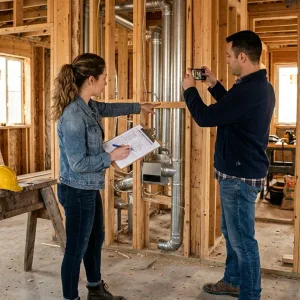
The pre-drywall inspection is often called the most information-rich phase of new construction inspections — and for good reason. At this stage, the structural framing is visible, the rough-in electrical wiring is exposed, the plumbing supply and drainage lines are accessible, the HVAC ductwork is in place, and insulation is being installed. Everything that will eventually be sealed inside your walls is right there to be evaluated.
An experienced inspector at this phase checks wall studs and roof trusses for proper installation and structural integrity, examines electrical wiring for code compliance and safe installation, tests plumbing lines for leaks and verifies proper drainage slope, reviews HVAC ductwork connections and sizing, and confirms insulation coverage in walls and attic spaces.
Common defects found at this stage include improperly cut or notched framing members, wiring that doesn’t meet code, plumbing with insufficient slope (which causes drainage problems), missing or incorrectly sized HVAC connections, and insulation gaps that will lead to energy loss and moisture issues for years. Every single one of these defects is correctable at this stage — at the builder’s expense. Once the drywall goes up, correcting them means tearing out finished walls, which is an entirely different conversation.
Final Walkthrough: Confirming Completion and Quality
The final walkthrough inspection happens just before closing — and it’s distinct from the builder’s own punch list review. While the builder’s team is checking off their internal completion checklist, your independent inspector is evaluating the home from your perspective as the buyer.
At this stage, the inspector tests all HVAC systems, plumbing fixtures, electrical outlets and panels, and installed appliances. They check builder-installed finishes — paint, flooring, drywall, trim — for quality and completeness. They identify cosmetic defects and any items that weren’t completed per the contract specifications. Unlike an existing home inspection, the focus here isn’t on age-related wear; it’s on confirming that what was promised was delivered, and that everything is functioning as it should before you sign the closing documents and the builder’s warranty clock starts ticking.
⚠ Builder Inspections Are Not Independent Inspections
Builders’ warranty inspections may be free, but they carry a fundamental conflict of interest. The builder’s inspector works for the builder — not for you. Their job is to manage the builder’s liability, not to identify every defect that might cost the builder money to fix. Always hire an independent, TREC-licensed inspector to protect your interests. This is not optional; it’s the difference between knowing what you’re buying and hoping for the best.
Buying new construction in Fort Worth, Weatherford, or surrounding DFW areas? Journey Home Inspections specializes in coordinating phase inspections with builders at exactly the right moments in the construction timeline.
Existing Home Inspections: What Inspectors Evaluate
When you’re buying an existing home in the DFW area, the inspection process looks quite different from new construction phase inspections. Instead of multiple site visits timed around construction milestones, you get one comprehensive inspection — typically lasting two to four hours depending on the home’s size and age — that covers every visible and accessible system and component of the property.
The inspector’s mindset shifts from “Was this installed correctly?” to “How is this performing after years of use?” They’re evaluating condition, not installation quality. They’re looking at how the home has aged, what maintenance has been deferred, and what systems are approaching the end of their useful life. A comprehensive home inspection for existing properties covers structural components, exterior elements, roofing, plumbing, electrical, HVAC, insulation, and interior systems — all in a single visit that produces a detailed written report.
Inspectors also look for evidence of previous problems: signs of past water intrusion in attics or crawlspaces, staining that suggests old leaks, repairs that were done incorrectly or without permits, and pest damage that may have been concealed. In North Texas, foundation movement is a consistent concern — the same expansive clay soils that make pre-pour inspections critical for new construction also cause settlement and shifting in older homes over time.
Common Defects Found in DFW Existing Homes
After thousands of inspections across Fort Worth, Weatherford, Roanoke, Southlake, and surrounding areas, certain defects appear with remarkable consistency in existing DFW homes. Foundation movement and settlement top the list — the expansive clay soils that characterize this region cause ongoing stress to slab foundations, and many homes show varying degrees of movement that require evaluation and sometimes remediation.
Aging HVAC systems are another frequent finding. Texas summers are brutal, and air conditioning systems that run nearly year-round have shorter effective lifespans than those in milder climates. An inspector evaluating a 12-year-old HVAC system in a Fort Worth home is assessing a unit that has worked significantly harder than a same-age unit in, say, Seattle. Electrical panel deficiencies, outdated wiring configurations, and plumbing leaks or corrosion round out the most common findings. Roof condition — particularly hail damage and improper repairs — is also a major focus given the frequency of severe hail events across North Texas.
Age-Related Considerations by Era
The era in which a home was built tells an experienced inspector a great deal about what to look for. Pre-1980s homes in Fort Worth and surrounding areas may have outdated electrical systems — think Federal Pacific or Zinsco panels, aluminum wiring, or two-prong ungrounded outlets throughout. Galvanized steel plumbing pipes from this era are prone to corrosion and reduced water flow. Original HVAC units are long past their service life. And depending on the construction date, there may be concerns about asbestos-containing materials or lead paint.
Homes built between the 1980s and early 2000s present a different profile: systems that are aging but not necessarily obsolete, materials that were standard for their era but may now show wear, and foundation issues that have had decades to develop from soil movement. Homes built from the 2000s onward are generally in better shape systemically, but they’re not without issues — construction defects from the building boom years, early-stage wear patterns, and the cumulative effect of North Texas weather events all warrant careful evaluation.
Understanding the inspection history and any warranty claims on a home can also be valuable context. The different types of inspections available — including add-ons like sewer scope, thermal imaging, and pool inspections — can be particularly valuable for older properties where hidden issues are more likely.
Texas Home Inspector Licensing and TREC Requirements
Texas takes home inspector licensing seriously, and as a buyer, understanding the regulatory framework protects you. All home inspectors in Texas must be licensed by the Texas Real Estate Commission (TREC) — the same state agency that oversees real estate agents and brokers. There are no exceptions, and hiring an unlicensed inspector exposes you to significant risk with limited legal recourse.
TREC maintains a tiered licensing system with three levels: Apprentice Inspector, Real Estate Inspector, and Professional Real Estate Inspector (PRI). Each tier requires progressively more education, supervised experience, and demonstrated competency. All licensed inspectors — at every tier — must carry minimum Errors & Omissions (E&O) insurance of $100,000 per occurrence and $300,000 aggregate, plus a $5,000 surety bond. This insurance exists specifically to protect you if an inspector’s negligence results in financial harm.
TREC’s Standards of Practice (SOP) define the minimum requirements for what must be inspected: structural components, exterior elements, roofing, interior systems, plumbing, electrical, HVAC, and insulation and ventilation. These standards apply to both new construction and existing home inspections, though as we’ve discussed, the evaluation context differs significantly between the two. Working with TREC-licensed home inspectors in Fort Worth ensures you’re protected by both the state’s regulatory framework and the inspector’s professional insurance coverage.
Understanding the TREC License Tiers
The Apprentice Inspector tier requires 140 qualifying education hours and mandates that all inspections be conducted under the supervision of a licensed Professional Real Estate Inspector. This is the entry level — apprentices are learning the trade under direct oversight.
The Real Estate Inspector tier requires 270 qualifying hours and completion of at least 20 supervised inspections. Inspectors at this level can conduct inspections more independently but still have some supervision requirements for certain upgrades. The Professional Real Estate Inspector (PRI) designation is the highest tier, requiring 270+ education hours, 40 supervised inspections, and demonstrated competency across all inspection categories. PRIs have the fewest supervision requirements and represent the most experienced tier of Texas home inspectors.
All tiers require passing TREC examinations, background checks, and maintaining current E&O insurance. TREC also requires continuing education to maintain licensure — inspectors must stay current with changes to building codes, materials, and inspection standards.
How to Verify Inspector Credentials in Texas
Verifying an inspector’s credentials takes about sixty seconds and is worth doing before you hand over any money. Visit trec.texas.gov and use the License Holder Search tool. You can search by the inspector’s name or license number. The results will show you their license status (Active, Inactive, Expired, or Suspended), their license tier, and any disciplinary actions on record.
Disciplinary actions are public record for good reason — TREC receives hundreds of complaints annually against inspectors, with the most common categories being negligent or incomplete inspections, failure to report significant defects (especially foundation or roof issues), failure to deliver reports promptly, and violations of the Standards of Practice. If an inspector has disciplinary history, you should know about it before they walk through your home.
Beyond the TREC search, ask inspectors directly for their license number and proof of current E&O insurance before hiring. Any inspector who hesitates to provide this information is a red flag. You can also review their sample reports to assess the quality and clarity of their documentation — a thorough report with photos, clear descriptions, and prioritized findings is what you should expect.
✓ Verify Your Inspector’s Credentials in 60 Seconds
Go to trec.texas.gov, use the License Holder Search tool, and search by inspector name or license number. Check that their license is Active and review any disciplinary actions. This takes one minute and protects you from unlicensed or problematic inspectors. It’s one of the simplest and most impactful steps you can take before hiring anyone.
Journey Home Inspections is TREC-licensed and carries full E&O insurance. Whether you need new construction phase inspections or a comprehensive existing home evaluation across DFW, the credentials and experience are there to back up every report.
Pricing and Costs: What You’ll Pay for Inspections in DFW
Home inspection costs in the DFW area reflect a combination of factors: the home’s size and complexity, the type of inspection required, and the inspector’s experience and reputation. Understanding what you’re likely to pay — and what you’re getting for that investment — helps you budget appropriately and avoid the false economy of choosing the cheapest option available.
For existing homes, DFW inspection pricing generally breaks down by square footage. Homes under 1,500 square feet typically run $375–$475. Homes in the 1,500–2,500 square foot range — which covers a large portion of the DFW existing home market — run $425–$575. Larger homes over 2,500 square feet start at $500 and can exceed $700 depending on complexity, age, and additional systems. These prices are for a standard general inspection and are comparable to or slightly above the Texas state average, reflecting the DFW area’s higher cost of living and strong market demand.
For new construction, phase inspection packages covering all three stages (pre-pour foundation, pre-drywall, and final walkthrough) typically range from $600–$1,200+ when bundled. Individual phases run $200–$350 for pre-pour foundation, $250–$400 for pre-drywall, and $200–$350 for the final walkthrough. The higher cost relative to a single existing home inspection reflects the multiple site visits, builder coordination required, and the specialized knowledge these inspections demand. Reviewing inspection pricing and service packages in detail helps you understand exactly what’s included before you commit.
The return on investment here is not subtle. The average inspection fee of $400–$700 routinely uncovers defects with repair costs of $2,000–$10,000 or more. Buyers who skip inspections in competitive DFW markets face average repair costs of $5,000–$15,000+ for undiscovered major defects within two years of ownership. The math is straightforward: a $500 inspection that prevents a $10,000 surprise isn’t an expense — it’s one of the best financial decisions you’ll make in the home-buying process.
Breaking Down New Construction Phase Costs
When you’re budgeting for new construction phase inspections, think of each phase as a separate investment with its own specific value. The pre-pour foundation inspection ($200–$350) is arguably the highest-value inspection per dollar spent — catching a foundation design error before the concrete is poured can save you $10,000–$25,000+ in future repairs. In North Texas, where expansive clay soils make foundation performance critical, this phase is non-negotiable.
The pre-drywall inspection ($250–$400) is where the most defects are typically found and where the most money is saved. Framing errors, plumbing rough-in issues, wiring problems, and insulation gaps are all correctable at this stage at the builder’s expense. After drywall, they become your expense. The final walkthrough inspection ($200–$350) confirms completion and quality, giving you documentation before the warranty period begins.
Many inspection companies offer bundle discounts when all three phases are scheduled together — this is worth asking about, as it can reduce the total cost while ensuring continuity of the inspector’s knowledge across all three phases of your specific build.
Hidden Costs and Add-On Services Worth Considering
Beyond the standard inspection, several add-on services are worth considering depending on your property type and specific concerns. A sewer scope inspection ($100–$250) evaluates the condition of the drainage system from the home to the main sewer line — particularly valuable for existing homes where tree root intrusion or pipe deterioration may not be visible otherwise. Thermal imaging ($75–$150) uses infrared technology to detect moisture intrusion, insulation gaps, and electrical hot spots that are invisible to the naked eye.
Radon testing ($125–$200) is increasingly requested by buyers who understand the health implications of elevated radon levels. Pool and spa inspections ($50–$100) are essential if the property includes a pool — a separate evaluation that covers the pool structure, equipment, and safety features. WDI/termite inspections ($25–$75) assess wood-destroying insect activity and damage. If the builder makes corrections after your phase inspection, a re-inspection ($150–$300) confirms those corrections were made properly. Journey Home Inspections also offers pool and spa inspections as part of a comprehensive property evaluation.
Want transparent pricing for new construction phase packages or existing home inspections in Fort Worth, Weatherford, or surrounding DFW areas? Journey Home Inspections offers detailed service packages with clear pricing so you can plan your budget with confidence.
Local Market Context: DFW Growth and Inspection Demand
The Dallas-Fort Worth metroplex is one of the fastest-growing regions in the country, and the western and northern suburban corridors — Fort Worth, Weatherford, Justin, Roanoke, Trophy Club, Argyle, and surrounding communities — are at the center of that growth. Master-planned communities are expanding rapidly, new housing developments are breaking ground continuously, and major national builders including D.R. Horton, Lennar, and Pulte Homes are among the most active in the region.
New construction represents 30–40% or more of total market share in many of these rapidly developing suburban areas, a proportion that has remained elevated as existing home inventory tightened and development continued aggressively. Annual new home starts across DFW consistently exceed tens of thousands of units. This volume of new construction activity creates both opportunity and risk for buyers — the opportunity to purchase a home built to current codes with modern systems, and the risk that construction quality varies significantly across builders and even across individual projects from the same builder.
For buyers in these markets, home inspections in Fort Worth and surrounding areas are not a formality — they’re a critical layer of protection in a market where construction is moving fast and builder accountability depends heavily on documented evidence. The demand for qualified inspectors experienced in new construction phase inspections is high, particularly during peak building seasons.
Expansive Clay Soils and Foundation Concerns
North Texas’s expansive clay soils are a defining characteristic of the region’s construction environment — and a primary reason why foundation inspections carry such weight here. These soils swell significantly when wet and contract when dry, creating a cycle of movement that stresses foundations in ways that soils in other parts of the country simply don’t. The effect is amplified by the region’s climate: wet springs followed by hot, dry summers create dramatic moisture fluctuations in the soil throughout the year.
For new construction, proper foundation design — including adequate reinforcement, correct pier placement, and appropriate soil compaction — is the first line of defense against this movement. The pre-pour foundation inspection verifies that these design elements are in place before the concrete is poured. For existing homes, inspectors evaluate the degree of foundation movement that has already occurred, assess its severity, and determine whether it represents a stable condition or an ongoing risk. Foundation issues can cost $5,000–$25,000+ to repair, making early detection genuinely essential — not just financially, but for the long-term structural integrity of the home.
Weather-Related Inspection Priorities in North Texas
Beyond soil conditions, North Texas weather creates a demanding environment for homes and their systems. The extreme heat cycling — temperatures regularly exceeding 100°F in summer, with significant day-night swings — stresses roofing materials, caulking and sealants, and HVAC systems. An air conditioning unit in Fort Worth works substantially harder than one in a more temperate climate, which is why HVAC condition and remaining useful life are such critical inspection findings in this market.
Hail is a frequent reality across DFW, and its impact on roofing, siding, and window seals can be significant. Inspectors in this region are specifically trained to evaluate hail damage patterns and distinguish between cosmetic impact and functional damage that compromises the roof’s ability to protect the home. Winter Storm Uri in 2021 was a stark reminder of what freeze events can do to plumbing systems and HVAC equipment — and inspectors now pay particular attention to pipe insulation, freeze protection measures, and the condition of HVAC systems that were stressed by that event. For new construction, inspectors verify that weather-resistant materials and systems are properly installed to withstand these conditions from day one.
📅 Pro Tip: Schedule Phase Inspections Early in the Building Timeline
During peak season (May–August), experienced inspectors book up quickly across the DFW market. Schedule your pre-pour foundation inspection as soon as the builder confirms foundation work is about to begin — don’t wait until the week before the pour. Missing this phase because of scheduling delays is a costly and avoidable mistake.
Why Expansive Clay Soils Matter for Your DFW Home
North Texas has expansive clay soils that swell when wet and shrink when dry, causing foundation movement that’s cyclical and ongoing. This is why foundation inspections are non-negotiable in this region — both for new construction (to ensure proper design and reinforcement) and for existing homes (to assess the severity of any movement and associated risks). No other single inspection element has more financial consequence in this market.
Key Differences: New Construction vs. Existing Home Inspection Scope
To make this concrete, it helps to put the two inspection types side by side. Both require TREC licensing and adherence to the Standards of Practice — but the evaluation context, the timing, the focus areas, and the strategic value of the findings are fundamentally different.
New construction inspections verify compliance with current building codes and confirm that new systems are installed correctly. The inspector is asking: “Did the builder do this right?” Existing home inspections evaluate condition and performance based on age, use, and wear. The inspector is asking: “How is this holding up, and what’s it going to need?” Both questions matter enormously — they’re just different questions about different things. Accessing specialized inspection services for new and existing homes from an inspector experienced in both property types ensures you get the right evaluation for your specific situation.
New construction inspections provide leverage during the builder’s warranty period — documented defects found during phase inspections give you a clear record for warranty claims. Existing home inspections provide leverage during purchase negotiations — documented defects give you grounds to request price reductions, seller credits, or repairs before closing. Both forms of leverage are valuable, but only if the inspection is done thoroughly and documented properly.
New Construction Inspection Focus Areas
For new construction, the inspector’s attention is directed at installation quality and code compliance across several critical categories. Structural components — framing, roof trusses, load-bearing walls — are evaluated for proper installation and structural integrity. Electrical, plumbing, and HVAC systems are assessed for code compliance and correct sizing. The inspector verifies that mechanical systems are properly connected and that insulation meets coverage requirements. Builder quality and attention to detail are also evaluated — not just whether something was done, but whether it was done correctly.
Documentation is a critical output of new construction inspections. Detailed reports from each phase create a paper trail that supports warranty claims, establishes a baseline for the home’s condition at closing, and provides evidence if disputes arise with the builder later. This documentation has real financial value that extends well beyond the inspection date.
Existing Home Inspection Focus Areas
For existing homes, the inspector’s focus shifts to condition, remaining useful life, and safety. HVAC systems are evaluated not just for function but for age and efficiency — a system that works today may be two years from failure. Plumbing is checked for leaks, corrosion, and outdated materials. Electrical panels are assessed for safety hazards, capacity, and code compliance. The roof is evaluated for condition, remaining life, and evidence of hail damage or improper repairs.
Inspectors also look for evidence of deferred maintenance — the accumulated small neglects that compound into larger problems over time. Signs of previous water intrusion, pest damage, or unpermitted work are documented and assessed for their implications. The goal is to give you a complete, honest picture of the home’s current condition and what it will likely need over the next several years, so you can make an informed decision about whether the purchase price reflects that reality.
Red Flags: When to Worry About Inspector Quality and Builder Cooperation
Not all inspectors are created equal, and not all builders make the inspection process easy. Knowing the red flags on both sides helps you protect yourself before problems arise.
On the inspector side: an inspector who is unwilling or unable to perform phase inspections on new construction is a significant red flag. Phase inspections are standard practice for new builds in Texas — any inspector experienced in new construction should be comfortable coordinating with builders and conducting multi-phase evaluations. Similarly, an inspector who lacks specific knowledge of North Texas soil conditions and their implications for foundation inspection is not the right choice for a DFW new build. Inspectors who deliver reports late, lack current E&O insurance, or have disciplinary actions on their TREC record should be avoided. Working with experienced home inspectors who understand DFW construction standards eliminates most of these risks from the outset.
On the builder side: a builder who refuses reasonable access for independent phase inspections is a serious warning sign. Most major DFW builders — D.R. Horton, Lennar, Pulte, and others — allow independent inspectors access for phase inspections, because they understand it’s standard practice and because refusing creates legal and reputational risk. A builder who pushes back hard against independent inspections may be concerned about what an objective evaluation will find. Buyers should understand the builder’s access policy before signing a purchase agreement, and document any access issues that arise.
Builder-provided “warranty inspections” deserve special mention here. These inspections are not independent assessments — they’re conducted by representatives whose employer is the builder. The fundamental conflict of interest means that even a well-intentioned builder inspector may not identify or report every defect that an independent inspector would. Never rely on a builder’s inspection as a substitute for your own independent evaluation. The cost difference is minimal; the protection difference is enormous.
Builder Access and Coordination: What to Expect
One of the practical questions buyers often have about new construction phase inspections is how the logistics actually work. How do you coordinate with a builder who’s managing multiple projects and dozens of subcontractors? What happens if the builder’s timeline shifts? How much notice does the inspector need?
The good news is that most major DFW builders have established processes for accommodating independent inspectors at each phase. The key is proactive communication and advance scheduling. Most inspectors need 24–48 hours notice to coordinate with builder schedules, and during peak building seasons (May–August), that lead time may need to be longer. Booking your inspector early — ideally as soon as the builder confirms the construction timeline — ensures you don’t miss a critical phase due to scheduling conflicts.
Your purchase agreement may specify the builder’s policy on independent inspections. Review this carefully before signing, and if the policy is unclear or restrictive, address it before you’re committed. Some builders have preferred third-party inspectors they recommend — these may be legitimate independent inspectors, or they may have relationships with the builder that create subtle conflicts of interest. Verify any recommended inspector’s credentials and independence before accepting the builder’s suggestion. An inspector experienced in coordinating phase inspections with builders in DFW will be familiar with these dynamics and can help you navigate them effectively.
Document everything. If a builder delays access, changes the timeline without notice, or creates obstacles to your independent inspection, keep a written record. This documentation may be relevant to warranty claims or legal disputes later. Your rights as a buyer include the ability to have the home you’re purchasing independently evaluated — don’t let builder pressure or time constraints cause you to waive that right.
How to Choose the Right Inspector for Your Situation
Choosing the right inspector is not just about finding someone with a license — it’s about finding someone whose specific experience and expertise match your property type and the local market conditions you’re dealing with. Here’s how to approach that decision systematically.
Start with credentials. Verify the inspector’s TREC license at trec.texas.gov and check for any disciplinary actions. Confirm that their E&O insurance ($100,000+ per occurrence) and surety bond ($5,000+) are current. This is the baseline — any inspector who can’t meet these requirements shouldn’t be on your list.
For new construction, prioritize inspectors with experience in construction management, building codes, or specialized certifications in foundation or framing inspection. Ask specifically about their experience with phase inspections in DFW and their familiarity with local soil conditions. An inspector who has done hundreds of pre-pour foundation inspections in North Texas clay soil brings knowledge that a general inspector simply can’t match. For existing homes, look for inspectors with strong diagnostic capabilities — thermal imaging, experience identifying aging system issues, and familiarity with the specific defects common to DFW homes of various eras.
Ask for references from recent clients with similar property types, and follow up on them. Ask about reporting quality — a thorough inspection is only as valuable as the report that documents it. Look for clear, photo-documented findings with prioritized recommendations, not a generic checklist. Interview at least two or three inspectors before making a decision, and don’t let price alone drive your choice. The difference between a $400 inspection and a $550 inspection is meaningless compared to the difference between a thorough inspection and an incomplete one.
You can read about the approach and background of qualified home inspectors with DFW expertise to understand what experience and local knowledge look like in practice. Reviews from past clients are also a valuable resource — the inspection reviews and client feedback from Journey Home Inspections reflect the experience of real buyers who faced the same decisions you’re navigating now.
“The right inspector isn’t just someone who walks through your home — they’re someone who understands what to look for, knows the local conditions that create risk, and can communicate their findings clearly enough that you can make confident decisions with the information they provide.”
Frequently Asked Questions: New Construction vs. Existing Home Inspections in Texas
Do I really need a home inspection for a brand new house in Texas?
Yes, absolutely — and this is one of the most important things to understand as a new construction buyer in Texas. Even brand-new homes can have installation errors, code violations, and builder quality issues that aren’t visible to the untrained eye. An independent inspection protects you by documenting defects early, when they can still be corrected at the builder’s expense, and gives you leverage during the builder’s warranty period if issues surface after closing. Builder-provided inspections carry inherent conflicts of interest and should never replace an independent, TREC-licensed inspection. The cost of skipping an inspection — averaging $5,000–$15,000+ in unexpected repairs within two years — far exceeds the cost of the inspection itself.
What are phase inspections for new construction, and are they worth the cost?
Phase inspections are conducted at three critical stages of the construction process: pre-pour foundation (before concrete is poured), pre-drywall (after framing and rough-in systems are installed but before walls are closed), and final walkthrough (before closing). They are absolutely worth the cost because they allow defects to be identified and corrected at each stage before they’re concealed or become permanent — at the builder’s expense, not yours. Phase inspection packages in DFW typically run $600–$1,200+ for all three phases, a fraction of what a single uncorrected defect might cost after closing. They also provide documentation that strengthens warranty claims and gives you negotiation leverage with the builder throughout the process.
Can my builder’s warranty inspection replace an independent home inspection?
No — and this distinction matters more than many buyers realize. Builder-provided inspections carry an inherent conflict of interest: the inspector’s employer is the builder, not you, and their assessment is shaped by that relationship. An independent, TREC-licensed inspector has no financial relationship with the builder and provides an unbiased evaluation from your perspective as the buyer. Independent inspectors regularly identify issues that builder inspections miss or downplay — issues that become your financial responsibility the moment you close. Always hire your own inspector, regardless of what the builder offers or recommends.
What does a pre-drywall inspection cover in Texas new homes?
A pre-drywall inspection evaluates everything that will be concealed within the walls once drywall is installed: structural framing (wall studs, roof trusses, load-bearing walls), rough-in electrical wiring for code compliance and proper installation, plumbing supply and drainage lines for leaks and adequate slope, HVAC ductwork connections and sizing, and insulation placement in walls and attic spaces. This is the most information-rich phase of new construction inspections because everything is visible and accessible. Common defects found at this stage include improper framing cuts, wiring errors, plumbing with insufficient drainage slope, missing or undersized HVAC connections, and insulation gaps — all of which are correctable at this stage at the builder’s expense, and none of which are easily correctable after the drywall goes up.
Why is foundation inspection so important in the Fort Worth area?
North Texas has expansive clay soils that swell when wet and contract when dry, creating a cycle of foundation movement that is ongoing and cumulative. For new construction, a pre-pour foundation inspection ensures the foundation is properly designed and reinforced to mitigate this movement — catching design errors before concrete is poured is the only cost-effective way to address them. For existing homes, foundation inspection assesses the degree of movement that has already occurred, evaluates its severity, and helps determine whether it represents a stable condition or an ongoing risk. Foundation repairs in this region can cost $5,000–$25,000+, making early detection one of the highest-value outcomes of any home inspection in the DFW area.
How do I verify that a home inspector is licensed and qualified in Texas?
Visit trec.texas.gov and use the License Holder Search tool — you can search by the inspector’s name or license number. The results will show you their license status (Active, Inactive, Expired, or Suspended), their license tier (Apprentice, Real Estate Inspector, or Professional Real Estate Inspector), and any disciplinary actions on record. This search takes about sixty seconds and is one of the most important steps you can take before hiring an inspector. Beyond the TREC search, ask the inspector directly for proof of current E&O insurance ($100,000+ per occurrence) and their $5,000 surety bond — any qualified inspector will provide this information without hesitation.
Ready to Protect Your Texas Home Investment?
Whether you’re buying new construction in Fort Worth, Weatherford, or the surrounding DFW area and need phase inspections scheduled at exactly the right moments, or you’re evaluating an existing home and want a thorough, honest assessment of its condition — Journey Home Inspections is here to give you the independent, expert evaluation you deserve. We’re TREC-licensed, fully insured, and experienced in both new construction phase inspections and comprehensive existing home evaluations across the DFW market. You’ve worked hard to get to this point in the home-buying process. Let’s make sure the inspection gives you the confidence and protection you need to move forward with clarity.
Schedule Your Inspection Today
Serving Fort Worth, Weatherford, Justin, Roanoke, Southlake, Westlake, Argyle, Trophy Club, Eagle Mountain, and surrounding DFW communities.