Key Takeaways
- An estimated 45–55% of Euless homes were built before 1980, making original cast iron drain, waste, and vent systems extremely common — agents should expect to encounter this finding regularly in the Mid-Cities market.
- Cast iron pipe condition — not mere presence — is what matters. A sewer scope inspection ($250–$450) provides the live video evidence needed to assess internal deterioration and forms the foundation of any repair negotiation.
- Repair costs in the Euless/DFW market range from $1,500 for a spot repair to $40,000+ for a full under-slab repipe — agents who understand these ranges can guide clients through seller credit negotiations with confidence.
- All cast iron pipe replacement in Texas must be performed by or under a TDLR-licensed Responsible Master Plumber (RMP); verify any contractor at tdlr.texas.gov before authorizing work, and never accept a contractor who offers to skip permits.
- Trust Journey Home Inspections for thorough, same-day inspection reports backed by a perfect 5.0-star Google rating — visit Journey Home Inspections to learn how Bryan Hughes and his team protect buyers and agents across North Texas.
What Should Real Estate Agents Know About Cast Iron Pipes Found on Home Inspections in Euless, TX?
Cast iron drain pipes are a common finding in Euless homes built before 1980, and their presence alone isn’t a deal-breaker—but their condition is critical. An estimated 45–55% of Euless homes were built before 1980, making original cast iron drain, waste, and vent (DWV) systems prevalent in the market. The key for agents is understanding when cast iron deterioration requires negotiation, what repair costs look like, and how to protect clients through proper inspection and contractor vetting.
Here’s what every Euless real estate agent needs to know to confidently handle cast iron findings and guide clients toward informed decisions.
Journey Home Inspections
Same-Day Detailed Report — 4,000+ Items Checked
Core Service Programs:
- Buyer & Seller Home Inspections for pre-purchase, pre-listing, and full general inspections covering 4,000+ items
- New Construction & Phase Inspections for new builds, phase checks, and 11-month builder warranty inspections
- Specialty Inspections for pool & spa, septic, well, irrigation, and pier & beam foundation systems
Why Choose Journey Home Inspections:
- ✓ Trusted by customers with a perfect 5.0-star Google rating across 79 verified reviews
- ✓ Family-owned, faith-based, and serving North Texas since 2016
- ✓ Led by Bryan Hughes — TREC-licensed (#21772) and insured
- ✓ InterNACHI Certified Professional Inspector
- ✓ 4,000+ items checked on every inspection — roof to foundation
- ✓ Same-day reports with photos, clear findings, and plain-language explanations
- ✓ Thermal imaging and drone technology on every inspection
Why Cast Iron Pipes Are So Common in Euless Homes
Euless is a mature Mid-Cities community, and its housing stock reflects that history. An estimated 45–55% of homes were built before 1980, with approximately 25–35% predating 1970. That age profile means original cast iron DWV systems are not an occasional curiosity — they’re a routine feature of the Euless market. Industry estimates suggest that 30–45% of homes in Euless and Northeast Tarrant County still have their original cast iron drain systems in place.
The Mid-Cities area — Hurst, Euless, Bedford — sits at the geographic center of the DFW metroplex, offering established neighborhoods, good schools, and freeway access that buyers consistently value. Median home age in Euless runs 40–50 years, and older homes transact frequently because they offer relative affordability compared to newer outer-suburb construction. That demand isn’t slowing. Price pressure across DFW continues pushing buyers toward established communities, which means agents will keep encountering cast iron findings on a regular basis.
Tarrant County’s expansive clay soils add a local wrinkle that accelerates deterioration. These soils undergo constant shrink-swell cycles with seasonal moisture changes, stressing rigid cast iron joints and causing separation over time. Unlike regions of Texas with more stable sandy soils, Euless homes face an environment that actively works against aging underground pipe systems.
You’re Not Alone in Facing Cast Iron Issues
Cast iron pipe findings are extremely common in Euless’s established neighborhoods. Agents who understand the issue and guide clients through it professionally build trust and close more deals.
Understanding Cast Iron Pipe Failure Modes in the DFW Area
Knowing that a home has cast iron pipes is only the starting point. What matters is understanding how those pipes fail — because the failure mode determines the severity, the repair method, and ultimately the negotiation strategy.
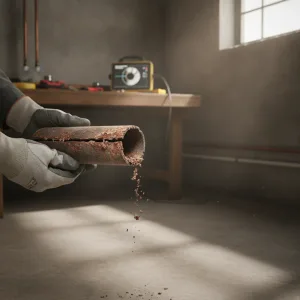
Corrosion pitting and internal deterioration are the most prevalent failure mode in DFW. After 40–70 years of exposure to wastewater chemistry and soil interaction, the interior surface of cast iron becomes rough and pitted, restricting flow and creating surfaces where scale accumulates. Scale buildup from this internal corrosion is often the first symptom homeowners notice — frequent slow drains and recurring clogs that don’t respond to standard clearing.
Joint separation and offset are particularly common in DFW due to the expansive clay soils discussed above. As the ground moves, pipe joints shift and open, creating ledges inside the line where debris catches and roots exploit the gap. Root intrusion follows naturally — tree roots aggressively seek moisture from deteriorated joints and cracks, and once inside, they grow until they cause blockages or structural damage to the pipe wall.
Industry data from sewer scope inspections across DFW indicates that a combination of corrosion, joint separation, and root intrusion appears in 70–90%+ of older cast iron systems. For agents, this means that when cast iron is flagged on a pre-1980 home, the odds of finding at least one significant failure mode on a camera scope are high — and that’s exactly why the scope matters so much.
Cast Iron Repair and Replacement Costs in the Euless Market
Cost clarity is one of the most powerful tools an agent can bring to a negotiation. Here’s how the numbers break down in the current Euless and DFW market.
| Repair Scope / Method | Per Linear Foot | Typical Project Range |
|---|---|---|
| Spot repair (isolated damage) | N/A | $1,500–$4,500+ per section |
| Section replacement (open-cut) | $50–$150 (yard) / $100–$300 (under slab) | $4,000–$10,000+ |
| Trenchless pipe bursting | $100–$250 | $7,000–$25,000+ |
| Trenchless CIPP lining | $80–$250 | $5,000–$15,000+ |
| Full house repipe (under slab) | Varies by complexity | $15,000–$40,000+ |
These figures don’t tell the complete story. Hidden costs routinely catch buyers and agents off guard: the sewer scope itself ($250–$450), permits ($75–$250+), concrete cutting and restoration after under-slab work (often thousands of dollars not included in the initial plumbing quote), landscaping repair, and interior finish work if access through walls or floors is required. When budgeting for a repair credit request, agents should factor these ancillary costs into the total ask.
Cost Drivers and Negotiation Dynamics in Euless
Several factors push cast iron repair costs toward the higher end of those ranges in Euless specifically. Slab foundations — the dominant foundation type in the area — significantly increase costs because concrete must be cut, removed, and restored after any under-slab pipe work. Two-story homes add complexity through vertical stack access. More bathrooms and fixtures mean more branch lines to address. Severe root intrusion makes excavation harder and increases pipe damage. Pipe depth is a multiplier at every stage.
DFW plumbing labor rates are comparable to or slightly higher than the Texas state average, driven by strong demand for skilled trades and the region’s high volume of aging housing stock. That context matters when evaluating contractor bids — a quote that seems unusually low deserves scrutiny.
In negotiation, sellers often open with credits on the lower end of repair estimates. Buyers who arrive with two or three detailed written quotes from TDLR-licensed plumbers have the leverage to push for credits closer to actual project costs. The DFW market in 2026 is more balanced than the seller-dominated conditions of 2020–2022, giving buyers more room to negotiate meaningful concessions on significant findings like cast iron deterioration.
One number agents should keep front of mind: a $10,000–$15,000 repipe today can escalate to $30,000–$60,000 or more within three to five years if deteriorating cast iron causes slab damage, foundation settlement, interior water damage, or mold. Framing deferred repair in those terms helps both buyers and sellers understand why resolving the issue at closing is in everyone’s interest. For agents working with investors, the investor home inspection perspective on deferred maintenance applies directly here.
Licensing, Permits, and Contractor Verification in Texas
Cast iron pipe replacement in Texas must be performed by or under the direct supervision of a Responsible Master Plumber (RMP) — a license issued by the Texas Department of Licensing and Regulation (TDLR). Verifying a contractor’s credentials before authorizing any work is a straightforward process: go to tdlr.texas.gov, navigate to the license search tool, select “Plumbing,” and enter the plumber’s name or RMP license number. Check for active status and review any disciplinary history. This takes two minutes and protects your clients from unlicensed work with no regulatory recourse.
A plumbing permit is always required for cast iron pipe replacement in Euless. The licensed RMP pulls the permit from the City of Euless Building Department, and the work is subject to both rough-in and final municipal inspections to confirm compliance with the adopted International Plumbing Code. Permits aren’t bureaucratic overhead — they’re the mechanism that ensures the work was done correctly and gives buyers documentation they can rely on at future resale.
Reputable contractors carry General Liability insurance (typically $1 million minimum) and Worker’s Compensation insurance. Always request current proof of both before work begins. Agents should also coach buyers to get detailed written quotes — not verbal estimates — that specify scope, materials, labor, permits, and any restoration work.
Red Flags When Evaluating Plumbing Contractors
Watch for contractors who offer to skip permits, demand cash-only payment, provide vague verbal estimates, or refuse to show proof of insurance. These are signs of unlicensed or unscrupulous work that leaves your clients with no recourse.
What Home Inspectors and Sewer Scopes Reveal About Cast Iron Drain Systems
Understanding what a home inspector can and cannot assess is essential for agents advising clients on next steps. A general home inspection covers visible, accessible components of the plumbing system — inspectors can identify the presence of cast iron pipes, observe accessible sections for visible corrosion or leaks, and test functional flow at fixtures. What they cannot do is see inside underground or concealed drain lines.
Under TREC Standards of Practice (Section 535.229), Texas home inspectors must report observable conditions that adversely affect DWV system performance — visible corrosion, active leaks, slow drains, or signs of improper piping. When conditions suggest deterioration or blockages in concealed portions of the system, inspectors are required to recommend a specialized sewer scope inspection or evaluation by a licensed plumber. That recommendation is the signal for agents to act.
A sewer scope — a plumber’s camera inspection — costs $250–$450 and provides live video of the pipe’s interior. It reveals hidden corrosion, cracks, root intrusion, joint separation, and collapses that no visual inspection can detect. Sewer scope findings are the most reliable basis for repair estimates and give buyers concrete, documented evidence to support negotiation requests. Agents who understand this distinction can explain it clearly to clients rather than leaving them to interpret inspection report language on their own. This is also relevant context when helping clients understand why inspections matter even on as-is purchases.
The Sewer Scope Is Your Negotiation Superpower
A $250–$450 sewer scope inspection provides concrete video evidence of pipe condition, giving your buyer powerful leverage in repair negotiations. Always recommend one when cast iron is flagged on older homes.
Why Choose Journey Home Inspections for Euless Home Inspections
When cast iron pipes show up on an inspection report, the quality of that report determines everything that follows. Journey Home Inspections brings a perfect 5.0-star Google rating across 79 verified reviews to every inspection — a track record built on thoroughness, honesty, and same-day reporting that agents and buyers can act on immediately.
TREC-licensed inspector Bryan Hughes (#21772) is an InterNACHI Certified Professional Inspector who checks 4,000+ items on every inspection, from roof to foundation, with thermal imaging and drone technology included as standard. That level of documentation means plumbing system findings — including cast iron DWV observations and recommendations for further evaluation — are clearly reported with the detail needed to support informed repair requests and seller negotiations.
Journey Home Inspections is family-owned, faith-based, and has been serving North Texas since 2016. For Euless real estate agents representing buyers in homes with aging plumbing systems, that combination of credentials, technology, and local expertise means your clients receive a report they can rely on — not a checkbox exercise. Explore the full range of inspection services available for buyers, sellers, and investors across the DFW area.
Frequently Asked Questions
Not necessarily — the mere presence of cast iron isn’t a deal-breaker, but the condition of those pipes is critical. A sewer scope inspection is the only way to know whether the system is functioning adequately or showing significant deterioration, active leaks, or collapse. Advise your buyer to weigh the documented repair costs against their budget and the seller’s willingness to negotiate a meaningful credit before making any decision about walking away.
A home inspector identifies visible cast iron pipes and can note their approximate age, observable corrosion, or functional drainage issues — but cannot see inside underground or concealed lines. A plumber’s sewer scope inserts a specialized camera directly into the drain system, providing live video of the pipe’s interior that reveals hidden corrosion, cracks, root intrusion, joint separation, and collapses. These are two entirely different levels of assessment, and a scope is always warranted when cast iron is flagged on a home over 40 years old.
No — the presence of cast iron plumbing alone is not an automatic disqualifier for FHA or VA financing. Both loan programs require the property to meet “safe, sound, and sanitary” conditions, so if the cast iron system is actively failing, leaking, or causing sewage backup, the lender will require repairs before approving the loan. A system that is aging but functional will typically not trigger a lender condition on its own, though buyers should still address deterioration during the option period rather than inheriting the problem post-closing.
Start by recommending a sewer scope inspection immediately — don’t wait for the option period to compress. Once you have camera findings, direct your buyer to get two or three written quotes from TDLR-licensed plumbers, verify each contractor’s RMP license at tdlr.texas.gov, and confirm they carry current liability and workers’ comp insurance. Use those documented quotes to negotiate a seller credit that reflects actual project costs — including permits, concrete restoration, and any landscaping repair — rather than accepting the seller’s first offer, which is typically on the low end of the range.
Journey Home Inspections holds a perfect 5.0-star Google rating across 79 verified reviews — a level of consistent client satisfaction that reflects genuine care for every inspection, not just the easy ones. TREC-licensed inspector Bryan Hughes (#21772) is an InterNACHI Certified Professional Inspector who checks 4,000+ items per inspection with same-day reporting, thermal imaging, and drone technology included on every job. The company has been family-owned and faith-based since 2016, serving North Texas with the kind of transparency and thoroughness that real estate agents can rely on when plumbing findings like cast iron need to be clearly documented and communicated. Schedule your home inspection with Journey Home Inspections today and give your clients the clarity they need to make confident decisions.
Navigating Cast Iron Findings in Euless? Get a Report You Can Negotiate With.
Cast iron pipe findings don’t have to derail a transaction — but they do require thorough documentation and a clear-eyed assessment of the system’s condition. Journey Home Inspections delivers same-day reports with the detail and professionalism that Euless real estate agents and their clients need to negotiate from a position of knowledge, not guesswork.
*Pricing, service availability, and inspection details mentioned in this article are accurate as of the date of publication and are subject to change. A home inspection reflects a property’s condition at the time of inspection and is not a warranty or guarantee. Please contact us directly to schedule an inspection of your specific property.