Key Takeaways
- DFW home inspectors most commonly flag foundation movement, roof framing damage, load-bearing wall issues, and crawl space failures—with repair costs ranging from $3,000 for minor fixes to $75,000+ for extensive structural intervention.
- North Texas’s expansive Blackland Prairie clay soils make foundation problems the region’s #1 structural concern, affecting an estimated 30–50% of DFW homes over their lifetime.
- In the current 2026 DFW market, buyers have increased negotiation leverage—those who obtain 2–3 repair quotes and document findings typically recover 70–100% of estimated repair costs through price reductions or seller credits.
- Texas TREC-licensed home inspectors must visually report on all accessible structural components, but they cannot offer engineering opinions—always follow up major findings with a licensed structural engineer’s assessment ($500–$1,500).
- Trust Journey Home Inspections for thorough structural assessment, same-day reporting, and a perfect 5.0-star reputation across DFW — visit Journey Home Inspections to protect your investment before you close.
What Major Structural Issues Do Home Inspectors Find in DFW Homes, and What Do They Cost to Fix?
Home inspectors in the Dallas-Fort Worth area commonly flag foundation movement, roof framing damage, load-bearing wall issues, and crawl space failures—with repair costs ranging from $3,000 for minor fixes to $75,000+ for extensive structural intervention. The DFW region’s expansive clay soils make foundation problems especially prevalent, affecting an estimated 30–50% of homes over their lifetime. Understanding what inspectors look for, what repairs actually cost, and how to negotiate on findings empowers you to make confident purchasing decisions and protect your investment.
Below, we’ll walk through the most common structural deficiencies found in DFW inspection reports, real-world repair cost ranges, regulatory safeguards, and strategic negotiation tactics.
Journey Home Inspections
Same-Day Detailed Report — 4,000+ Items Checked
Core Service Programs:
- Buyer & Seller Home Inspections for pre-purchase, pre-listing, and full general inspections covering 4,000+ items
- New Construction & Phase Inspections for new builds, phase checks, and 11-month builder warranty inspections
- Specialty Inspections for pool & spa, septic, well, irrigation, and pier & beam foundation systems
Why Choose Journey Home Inspections:
- ✓ Trusted by customers with a perfect 5.0-star Google rating across 79 verified reviews
- ✓ Family-owned, faith-based, and serving North Texas since 2016
- ✓ Led by Bryan Hughes — TREC-licensed (#21772) and insured
- ✓ InterNACHI Certified Professional Inspector
- ✓ 4,000+ items checked on every inspection — roof to foundation
- ✓ Same-day reports with photos, clear findings, and plain-language explanations
- ✓ Thermal imaging and drone technology on every inspection
The 6 Most Common Structural Issues Found in DFW Home Inspections
DFW’s unique geology and climate create a predictable set of structural vulnerabilities that experienced inspectors encounter regularly. North Texas sits on the Blackland Prairie, a belt of highly expansive clay soil that shrinks during summer droughts and swells with heavy spring rains—exerting relentless pressure on every structure above it. Add in legacy damage from the 2021 Winter Storm Uri and an aging housing stock, and you have a market where structural findings on inspection reports are the rule, not the exception. Here are the six issues inspectors flag most often.
Foundation Movement & Cracking (Most Common in DFW)
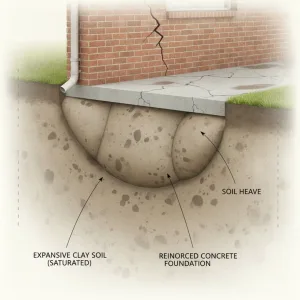
Foundation issues are the dominant structural concern in North Texas, and for good reason. Expansive Blackland Prairie clay soils shrink and swell with every moisture cycle, exerting constant upward and lateral pressure on concrete slabs. The majority of DFW homes built since the 1950s use monolithic slab foundations—efficient to construct, but particularly vulnerable to differential settlement when soil moisture changes unevenly beneath the slab.
Visible warning signs include horizontal cracks, stair-step cracks in brick veneer, uneven or sloping floors, sticking doors and windows, and bowed interior walls. The lingering legacy of Winter Storm Uri continues to surface in 2026 inspections, as rapid soil contraction during the 2021 freeze caused foundation stress that is still manifesting years later. For a deeper look at how inspectors distinguish cosmetic cracking from structural movement, the corner pop vs. structural foundation issues guide for North Texas breaks down the key differences.
Foundation Anxiety is Normal—You’re Not Alone
DFW’s expansive clay soils make foundation issues one of the most common structural concerns in the region. An estimated 30–50% of homes will require some form of foundation repair over their lifetime. If your inspection flagged foundation movement, you’re in a large cohort of homebuyers facing the same challenge—and it’s a negotiable issue.
Roof Framing & Truss Damage
Water intrusion from storm damage, improper flashing, or aging roofing materials compromises rafters and trusses over time. Wood rot, termite activity, and improper alterations—such as cutting trusses to create attic storage space—weaken the structural capacity of the entire roof system. Inspectors walk accessible attics and look for sagging members, visible rot, insect damage, and evidence of past water infiltration. Severe damage can require extensive framing replacement, making it one of the costlier structural repairs on the list. The roof inspection guide for Fort Worth structural issues covers what inspectors look for in detail.
Load-Bearing Wall Issues
Cracks, bowing, or leaning in walls that carry the weight of the structure above signal serious stress. Common causes include foundation settlement, improper removal of load-bearing walls during renovations, and age-related material deterioration. Inspectors document the location, direction, and severity of cracks and recommend structural engineer evaluation for significant findings. Repair often requires installing support beams or reconstructing wall sections—a major undertaking that can ripple into adjacent systems.
Crawl Space & Pier-and-Beam Failures
Older DFW homes built on pier-and-beam foundations are vulnerable to wood rot, inadequate support, and moisture intrusion in the crawl space. Sagging floors, uneven surfaces, and visible rot in joists or beams indicate structural compromise. Moisture control—encapsulation, improved drainage, or sump pumps—is often required alongside the structural repairs themselves. Confined crawl space access can significantly increase labor costs. Journey Home Inspections offers dedicated pier and beam foundation inspections specifically designed to assess these conditions thoroughly.
Chimney Structural Failure
Foundation movement often pulls chimneys away from the main structure, causing leaning, cracking, and separation. Deteriorated mortar, missing bricks, and damaged internal flues are common findings. A leaning chimney is not just a cosmetic problem—it poses a genuine collapse risk if left unaddressed. Repairs range from targeted tuckpointing and flashing fixes to complete reconstruction from the ground up.
Retaining Wall Collapse or Severe Leaning
Inadequate drainage, poor soil compaction, and DFW’s expansive soils are a recipe for retaining wall failure. Visible cracks, bulging faces, or severe leaning indicate imminent structural failure and safety hazards. Full reconstruction typically requires engineering design, proper drainage solutions, and excavation—costs that escalate quickly when adjacent structures or utilities are affected.
Real Repair Cost Ranges for Each Structural Issue in DFW
Knowing the financial exposure of each structural finding helps you negotiate from a position of knowledge rather than fear. The ranges below reflect 2026 DFW market pricing from local contractors, structural engineers, and industry cost data.
| Structural Issue | Minor / Entry-Level | Mid-Range | Extensive / Full Intervention |
|---|---|---|---|
| Foundation Repair | $3,000 – $7,000 | $10,000 – $25,000 | $30,000 – $75,000+ |
| Roof Framing / Truss | $500 – $2,000 | $3,000 – $8,000 | $10,000 – $30,000+ |
| Load-Bearing Wall | $1,000 – $3,000 | $5,000 – $15,000 | $20,000 – $50,000+ |
| Crawl Space / Pier-and-Beam | $2,000 – $5,000 | $7,000 – $15,000 | $20,000 – $40,000+ |
| Chimney Structural Failure | $500 – $2,000 | $3,000 – $8,000 | $10,000 – $25,000+ |
| Retaining Wall | $1,000 – $3,000 | $5,000 – $15,000 | $20,000 – $50,000+ |
The Hidden Cost of Deferring Structural Repairs
A $10,000 foundation repair ignored today can balloon to $30,000–$50,000+ within 2–5 years as localized movement spreads and triggers secondary damage—plumbing leaks, mold growth, and interior damage. Deferred structural repairs almost always cost more in the long run and can render a home unmortgageable or uninsurable.
What Drives Costs Up or Down in the DFW Market
Several factors specific to North Texas push structural repair costs higher than national averages. The highly reactive Blackland Prairie clay increases foundation repair complexity compared to more stable soil regions. Older homes command higher labor costs due to original materials, difficult access, and the need to match existing construction. Confined crawl spaces and low attic clearances require specialized equipment and additional demolition. City permits for major structural work—mandatory in Fort Worth and surrounding municipalities—add $500–$2,000+ in fees and compliance costs. And ongoing labor shortages in DFW’s skilled trades market, compounded by post-Uri demand backlogs, have driven labor rates up 5–15% annually in some sectors through 2025.
Hidden Costs Beyond the Initial Repair Quote
The repair quote is rarely the final number. A licensed structural engineer’s report—required before most major structural work can begin—runs $500–$1,500 in the DFW market. Foundation repairs frequently damage under-slab plumbing, requiring re-routing that adds $1,000–$5,000 or more, sometimes including tunneling. Water intrusion from structural cracks can trigger mold remediation costs of $500–$30,000+. Interior cosmetic repairs (cracked drywall, re-tiling, repainting) add thousands on top of the structural fix. Landscaping restoration after excavation runs $500–$5,000, and a follow-up re-inspection to verify completed work adds another $300–$800.
Financing Options for Structural Repairs
Buyers don’t always have to pay for structural repairs out of pocket. FHA 203(k) loans allow you to finance the home purchase and eligible repairs into a single mortgage. Fannie Mae HomeStyle Renovation loans offer similar flexibility with potentially more lenient property requirements. In the current DFW market, seller concessions and price reductions are the most common negotiation outcomes—and they’re increasingly available as the market has balanced from its 2022–2023 peak. Existing homeowners can leverage HELOCs, refinancing, or contractor payment plans to fund repairs when needed.
How Home Inspectors Are Licensed & What They’re Required to Report in Texas
Texas home inspectors operate under one of the more rigorous state licensing frameworks in the country. Understanding what the law requires—and what it doesn’t—helps you interpret inspection findings accurately and know when to push for additional specialist evaluation.
What TREC Standards of Practice Require Inspectors to Report On
To hold a Professional Inspector (PI) license from the Texas Real Estate Commission, inspectors must complete 150+ classroom hours, perform 100 supervised inspections, pass a state licensing exam, and carry both General Liability ($100,000 minimum per occurrence) and Errors & Omissions ($100,000 minimum per occurrence) insurance. You can verify any inspector’s license and check for disciplinary actions at trec.texas.gov.
Under TREC Standards of Practice (§535.227 et seq.), licensed inspectors must visually inspect and report on: the foundation type and any visible cracks or indications of movement; structural framing elements including roof framing, beams, and joists; walls, ceilings, and floors for visible cracks, bowing, or sagging; and doors and windows for operational issues related to structural movement. The differences between structural and general home inspection scope and coverage explains how these requirements translate into what actually appears in your report.
Legal Limits of a Visual Inspection
Inspectors are not engineers and cannot provide engineering opinions or determine the adequacy of structural systems. They cannot move personal property, lift floor coverings, disturb insulation, or enter areas that are inaccessible or pose a safety risk. Their scope ends where invasive or destructive testing would be required. When a potential structural issue exceeds what a visual inspection can resolve, TREC-compliant inspectors refer clients to licensed structural engineers for further evaluation—this is a feature of the system, not a gap.
Consumer Recourse if a Structural Issue Was Missed
If you believe a TREC-licensed inspector failed to report a visually observable structural defect, you can file a formal complaint with TREC. The commission investigates and can impose fines, license suspension, or revocation. If a financial loss resulted from the missed defect, you may pursue a claim against the inspector’s E&O insurance. In egregious cases, the Texas Deceptive Trade Practices Act (DTPA) provides additional legal remedies—consulting a real estate attorney is advisable before pursuing this route.
Choosing a Qualified Home Inspector in DFW: Red Flags & Best Practices
The DFW market has thousands of active TREC-licensed inspectors across Tarrant, Parker, Denton, and Dallas counties. Active licensure is the floor, not the ceiling. Here’s how to identify inspectors who will give you a genuinely thorough structural assessment.
Questions to Ask Before Booking an Inspector
- What is your TREC license number, and how long have you been licensed?
- What is your specific experience with foundation issues in DFW’s expansive clay soils?
- Do you walk all accessible roofs and enter all accessible attics and crawl spaces to inspect framing?
- How do you document foundation movement—do you use elevation measurement tools like a ZipLevel?
- Do you provide clear photographs of structural concerns and refer to structural engineers when findings exceed visual inspection scope?
- What are your fees, turnaround time, and what is explicitly included or excluded in your inspection scope?
Beyond the TREC PI license, look for additional credentials: the InterNACHI Certified Master Inspector (CMI) designation signals advanced experience and ethical commitment, while ASHI membership indicates adherence to standards above state minimums.
Red Flags to Avoid
Walk away from any inspector who downplays obvious foundation cracking or uneven floors without recommending a structural engineer evaluation. Failure to walk the entire accessible attic or enter a pier-and-beam crawl space is a serious omission. Boilerplate reports with generic descriptions and no property-specific photographs of structural concerns are a sign of a rushed or inexperienced inspector. Oral-only reports without written documentation offer you no legal protection. Any inspector who offers to repair issues they find has a clear conflict of interest. And significantly lower pricing than competitors without a clear explanation often signals rushed inspections or limited experience—not a deal.
Negotiation Strategy: How to Respond When Structural Issues Are Found
A structural finding on an inspection report is not a dead end—it’s a negotiation point. In the current 2026 DFW market, buyers have meaningfully more leverage than they did during the 2022–2023 peak. Sellers are more willing to negotiate on significant structural defects to keep deals together. Here’s how to use that leverage effectively.
Pro Tip: Get Multiple Repair Quotes Before Negotiating
Obtain 2–3 detailed repair quotes from licensed contractors or a structural engineer’s assessment before presenting findings to the seller. Documented costs strengthen your negotiation position and help you understand whether the issue is truly major or manageable. In the current DFW market, buyers typically recover 70–100% of estimated repair costs through negotiation.
Your three primary negotiation outcomes are: seller-paid repairs completed before closing, a direct price reduction reflecting the estimated repair cost, or a seller credit at closing that you use to fund the work yourself. Each has trade-offs. Seller-paid repairs give you less control over contractor selection; a credit or price reduction puts you in charge of the process. Document all findings in writing and provide the seller with your repair quotes to anchor the negotiation to real numbers. Set a clear response deadline and know your walk-away threshold before the conversation starts.
For buyers considering purchasing a property with known issues, the case for getting a home inspection even on as-is purchases explains why skipping the inspection in these situations is especially risky.
When to Walk Away Versus Negotiate
Walk away if repair costs exceed 10–15% of the purchase price and the seller refuses to negotiate meaningfully. Walk away if the structural issue is so severe that the home is unmortgageable or uninsurable—lenders for FHA and VA loans require properties to be structurally sound, and insurance companies can deny coverage or exclude damage categories for homes with unresolved major issues. Negotiate if the repair cost is manageable, the home otherwise meets your needs, and the seller shows genuine willingness to address the problem. Consider the long-term math: addressing structural issues at purchase locks in a known cost and protects your equity over time.
The Cost of Deferring Structural Repairs
The numbers are unambiguous. A $10,000 localized foundation repair left unaddressed can escalate to $30,000–$50,000+ within 2–5 years as movement spreads and triggers secondary damage to plumbing, walls, and finishes. Minor framing rot that costs $500 to fix today can compromise larger sections of a wall or roof system, pushing repair costs to $5,000 or more. Deferred structural repairs compound exponentially—and a home with unresolved major structural issues can become unmortgageable, severely limiting your future resale options and equity position.
Why Journey Home Inspections is the Right Choice for Weatherford & DFW Homebuyers
When a structural finding appears on your inspection report, the quality of that report determines everything that follows—your negotiation position, your understanding of the risk, and your confidence in moving forward or walking away. Journey Home Inspections has earned a perfect 5.0-star Google rating across 79 verified reviews by delivering exactly that kind of clarity, consistently.
The team is led by Bryan Hughes, TREC-licensed inspector (#21772) and InterNACHI Certified Professional Inspector, with deep expertise in DFW’s expansive clay soil environment—the exact conditions that make foundation assessment so critical in this market. Every inspection covers 4,000+ items with same-day reporting, giving you comprehensive documentation and rapid turnaround when structural findings require quick negotiation decisions. Thermal imaging and drone technology are included on every inspection, providing visibility into areas that a standard visual walkthrough might miss.
Family-owned and faith-based since 2016, Journey Home Inspections prioritizes your peace of mind over deal speed. Structural concerns are thoroughly documented, clearly explained in plain language, and accompanied by honest recommendations—including referrals to structural engineers when findings warrant specialist evaluation. That integrity is reflected in every review. You can read what past clients say on the Journey Home Inspections reviews page.
Frequently Asked Questions
Walking away is a valid option, especially when repair costs are prohibitive or the seller refuses to negotiate meaningfully. However, it’s not always necessary. Major structural issues are frequently negotiable—you can request a price reduction, seller-paid repairs, or a credit at closing to offset your costs. Your decision should be grounded in a licensed structural engineer’s report and a clear picture of the full repair scope. In many cases, buyers who approach the negotiation with documented quotes recover 70–100% of estimated repair costs.
A home inspector can flag cracks and document their characteristics, but only a licensed structural engineer can definitively determine severity. General red flags that warrant professional evaluation include horizontal cracks, cracks wider than 1/4 inch, stair-step cracks in brickwork, cracks that extend from the foundation into the framing above, and cracks accompanied by sticking doors or windows, uneven floors, or bowed walls. Any combination of these signs should prompt an engineering assessment before you proceed with a purchase decision.
No—Texas sellers are not legally required to repair structural issues identified during an inspection. However, they are required to disclose known material defects, including structural problems, on the TREC Seller’s Disclosure Notice. Once a structural issue is discovered during an inspection, it becomes a negotiation point: buyers can request repairs, a price reduction, or a closing credit, but the seller can decline. If the seller refuses to negotiate, the buyer must decide whether to proceed with the purchase or terminate the contract within the inspection contingency period.
A TREC-licensed home inspector must visually inspect and report on all readily accessible structural components—foundation type and visible cracking, framing elements, visible roof framing, load-bearing walls, and floors, ceilings, and walls for signs of distress or movement. They must report visible indicators of structural problems. However, their inspection is non-invasive: they cannot determine latent or hidden defects, cannot offer engineering opinions, and cannot access areas that are unsafe or not readily accessible. When findings suggest a structural issue beyond the scope of a visual inspection, they are required to recommend further evaluation by a licensed structural engineer.
Journey Home Inspections stands out with a perfect 5.0-star Google rating across 79 verified reviews—a track record built on thorough, honest reporting that consistently protects buyers’ interests. TREC-licensed inspector Bryan Hughes (#21772) holds InterNACHI Certified Professional Inspector credentials and brings specific expertise in DFW’s expansive clay soil conditions, where foundation assessment is the most consequential part of any structural evaluation. Every inspection covers 4,000+ items with same-day reporting, thermal imaging, and drone technology included—not as add-ons. Family-owned and faith-based since 2016, Journey prioritizes your understanding of what was found over deal speed, ensuring structural concerns are documented clearly and explained in plain language so you can make a confident decision. Schedule your home inspection with Journey Home Inspections and protect your investment with expert structural assessment.
Found Structural Issues on Your DFW Inspection Report? Get Expert Eyes on It.
Structural findings don’t have to derail your purchase—but they do require the right inspector from the start. Journey Home Inspections delivers thorough structural assessment, same-day reports, and honest guidance so you can negotiate with confidence and move forward with clarity. Serving Fort Worth, Weatherford, Southlake, Trophy Club, Argyle, and communities across DFW.
*Pricing, service availability, and inspection details mentioned in this article are accurate as of the date of publication and are subject to change. A home inspection reflects a property’s condition at the time of inspection and is not a warranty or guarantee. Please contact us directly to schedule an inspection of your specific property.