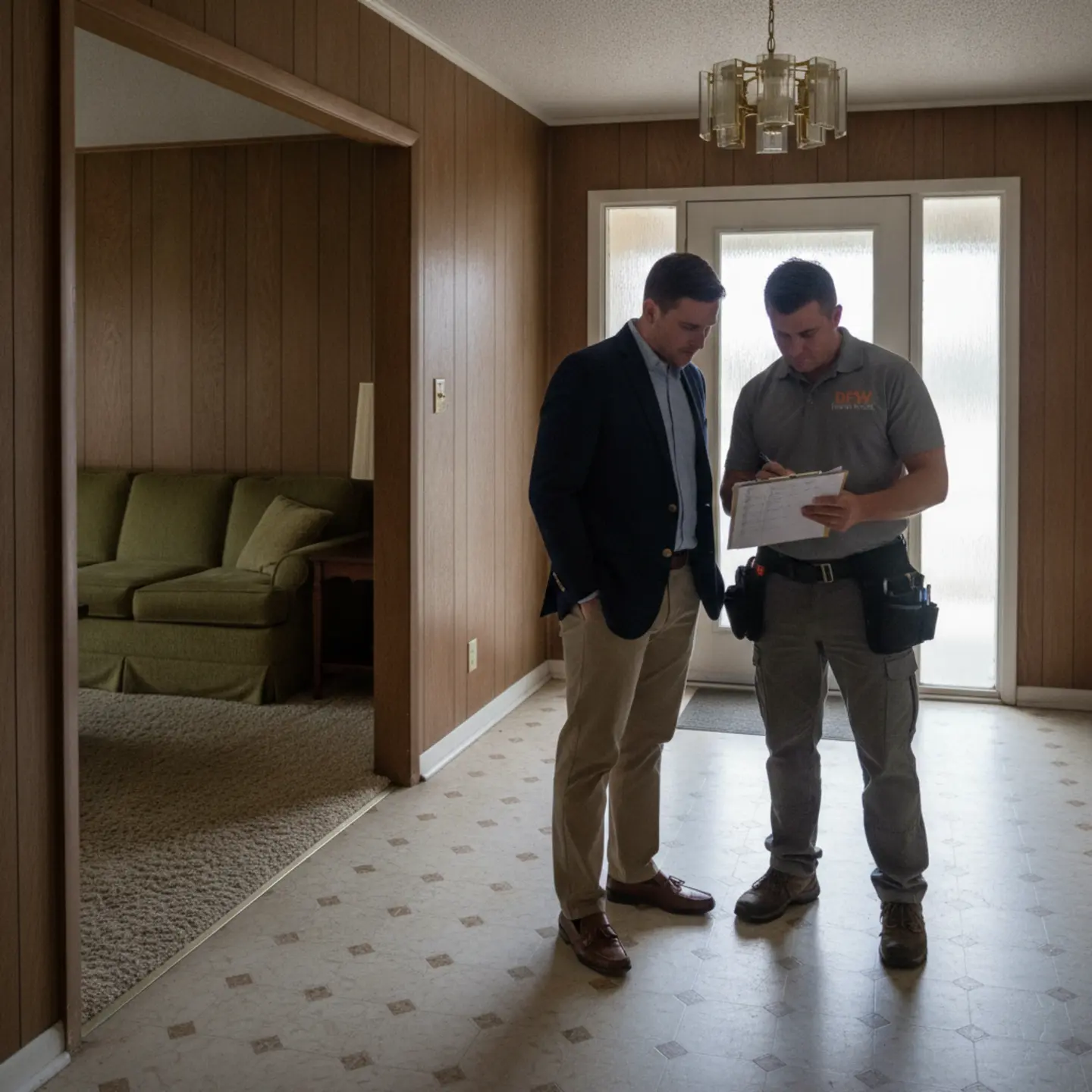
Key Takeaways
- In DFW’s current balanced market, buyers have more negotiating leverage and routinely submit inspection-contingent offers—making a pre-listing inspection one of the most effective tools a seller has to control the narrative and protect their asking price.
- A standard pre-listing inspection in the Fort Worth area costs $375–$750, yet buyers who discover issues on their own typically demand $2,000–$10,000+ in repair credits—often for the same problems a seller could have fixed proactively for far less.
- Texas law requires sellers to disclose known material defects on the TREC Seller’s Disclosure Notice (Form OP-H)—once you have a pre-listing report, those findings are legally “known” and must be disclosed, so transparency is both a legal obligation and a strategic advantage.
- North Texas’s expansive clay soils, hail exposure, and aging housing stock in established Fort Worth neighborhoods make foundation, roof, and HVAC issues especially common—early detection through a pre-listing inspection prevents these from becoming deal-breakers.
- Trust Journey Home Inspections for TREC-licensed, same-day reporting and 4,000+ items checked on every inspection — visit Journey Home Inspections to learn how we help DFW sellers move forward with confidence.
Is a Pre-Listing Inspection Worth It for Texas Sellers?
Yes, a pre-listing inspection is typically worth the investment for Texas sellers, especially in today’s more balanced DFW market. By identifying and addressing defects before a buyer’s inspection, you avoid costly last-minute negotiations, reduce deal fallout, and often recoup the inspection cost through a smoother, faster sale. In a market where buyers have more leverage and inspection contingencies are standard, transparency and proactive problem-solving give you a significant competitive edge.
Here’s what listing agents in Fort Worth, Weatherford, and across the DFW area consistently recommend sellers understand about pre-listing inspections—and why the decision often comes down to your home’s age, condition, and local market dynamics.
Journey Home Inspections
Same-Day Detailed Report — 4,000+ Items Checked
Core Service Programs:
- Buyer & Seller Home Inspections for pre-purchase, pre-listing, and full general inspections covering 4,000+ items
- New Construction & Phase Inspections for new builds, phase checks, and 11-month builder warranty inspections
- Specialty Inspections for pool & spa, septic, well, irrigation, and pier & beam foundation systems
Why Choose Journey Home Inspections:
- ✓ Trusted by customers with a perfect 5.0-star Google rating across 88 verified reviews
- ✓ Family-owned, faith-based, and serving North Texas since 2016
- ✓ Led by Bryan Hughes — TREC-licensed (#21772) and insured
- ✓ InterNACHI Certified Professional Inspector
- ✓ 4,000+ items checked on every inspection — roof to foundation
- ✓ Same-day reports with photos, clear findings, and plain-language explanations
- ✓ Thermal imaging and drone technology on every inspection
Why DFW Market Conditions Make Pre-Listing Inspections More Valuable Than Ever
Fort Worth’s population now exceeds 978,000, and the rapid growth spreading into Parker and Denton counties—through cities like Weatherford and Justin—has kept housing demand strong across the western DFW suburbs. But the frenzied seller’s market of 2021–2022 is firmly in the rearview mirror. According to 2024 market data, the DFW metro median home price sits around $385,000, with homes averaging 40–60 days on market depending on submarket. That’s a meaningful shift toward balance.
In a balanced market, buyers have options—and they use them. Inventory has risen, giving buyers more negotiating leverage, particularly around inspection findings. Inspection-contingent offers are now standard, and buyers are far more willing to demand repairs or price reductions when a home inspector turns up problems. Sellers who get ahead of that dynamic with a pre-listing inspection are in a fundamentally stronger position than those who wait to be surprised during the option period.
North Texas adds another layer of complexity. Expansive clay soils throughout the DFW region cause foundation movement that’s among the most common inspection findings in the state. Extreme summer heat cycles stress HVAC systems. And North Texas sits squarely in “Hail Alley,” where severe thunderstorms routinely damage roofs. These regional factors mean that a buyer’s inspector in Fort Worth, Weatherford, or Justin is very likely to find something—which makes proactive discovery through a general home inspection before listing a genuinely strategic move.
You’re Not Alone in This Decision
Many sellers in Fort Worth, Weatherford, and across DFW feel uncertain about whether a pre-listing inspection is worth the cost and potential hassle. The good news: most experienced listing agents now recommend it, and the financial data supports the decision.
The Real Cost of a Pre-Listing Inspection—and What You’ll Save
Standard pre-listing inspections in the DFW area range from $375 to $750 for homes under 1,500 square feet up to 4,000+ square feet. Add-on inspections—a sewer scope ($200–$400), a roof certification ($150–$300), a WDI termite report ($100–$175), or a pool and spa inspection ($175–$300)—are often recommended for older homes or properties on clay soil, and each adds to the upfront investment.
That investment looks very different when you consider the alternative. When buyers discover issues on their own during the option period, they typically demand $2,000 to $10,000 or more in repair credits or price reductions. A rushed HVAC repair during a 10-day option period often costs 10–30% more than the same repair done on your own timeline. And if a buyer walks away entirely, you’re back to square one—with a property that now carries a stigma in the MLS.
National data from The Real Estate Inspection Company found that homes with pre-listing inspections sold for an average of $14,000 more and spent 14 fewer days on the market. While that study dates to 2017, the underlying logic is even more applicable in today’s balanced DFW market, where deal fallout from inspection surprises is a real and frequent occurrence. The math on a pre-listing inspection is straightforward: a few hundred dollars upfront to avoid thousands in reactive concessions.
What Texas Law Requires: TREC Standards and Your Disclosure Obligations
Texas home inspectors must be licensed by the Texas Real Estate Commission (TREC) and operate under the Texas Standards of Practice—a visual assessment of readily accessible components including structural systems, electrical, HVAC, plumbing, and major appliances. TREC licenses come in three tiers: Apprentice Inspector, Real Estate Inspector, and Professional Real Estate Inspector. For a pre-listing inspection, hiring a Professional Real Estate Inspector ensures the highest level of expertise and thoroughness.
The disclosure implications of a pre-listing inspection are important to understand before you schedule one. Once you have a report in hand, any material defects it identifies are legally considered “known” to you. Texas law—specifically the Texas Seller’s Disclosure Notice (TREC Form OP-H)—requires you to disclose known material defects to prospective buyers. This isn’t a reason to avoid a pre-listing inspection; it’s a reason to approach the findings strategically and transparently.
Most experienced DFW listing agents recommend attaching the pre-listing inspection report directly to the Seller’s Disclosure Notice. This proactive transparency builds buyer trust and reduces the risk of post-closing disputes. You can verify any inspector’s license status, experience level, and disciplinary history at trec.texas.gov. TREC also requires all licensed inspectors to carry both general liability and errors-and-omissions (E&O) insurance, providing an additional layer of consumer protection.
How Listing Agents in DFW View Pre-Listing Inspections
The sentiment among experienced DFW listing agents has shifted decisively. In the seller’s market of a few years ago, some agents felt a pre-listing inspection was optional—homes were moving so fast that buyers often waived inspection contingencies entirely. That environment no longer exists in most DFW submarkets. Today, the vast majority of experienced listing agents recommend pre-listing inspections, particularly for older Fort Worth neighborhoods and any home sitting on the expansive clay soils common throughout Weatherford, Justin, and the broader Parker and Denton county areas.
The reasoning is practical: agents have watched too many deals fall apart during the option period when a buyer’s inspector surfaces a major issue that neither the seller nor the agent anticipated. Foundation movement, aging HVAC systems, and hail-damaged roofs don’t get smaller when discovered late—they get more expensive and more emotionally charged. A pre-listing inspection removes that element of surprise and allows the seller, agent, and buyer to enter negotiations with a shared understanding of the home’s condition.
Agents also recognize that transparency builds buyer confidence. A seller who proactively discloses known issues—especially when they’ve already addressed them—signals good faith. That signal can be the difference between a buyer who submits a strong offer and one who lowballs out of uncertainty.
Common Defects Found in DFW Homes—and Why Pre-Listing Detection Matters
Foundation movement is the single most common inspection finding across DFW, driven by the region’s expansive clay soils that swell and contract dramatically with moisture changes. Early detection through a pier and beam foundation inspection or a standard foundation evaluation allows sellers to either address the issue strategically or disclose it with repair estimates—rather than facing a panicked buyer demanding a full structural engineer report during a 10-day option period.
Roof damage from hail is the second major concern. North Texas sits in the heart of Hail Alley, and a roof that looks fine from the street may have significant granule loss or impact damage that a buyer’s inspector—or their insurance underwriter—will flag immediately. HVAC systems are another frequent finding, especially in older Fort Worth homes where systems may be approaching end-of-life. Plumbing leaks, outdated electrical wiring, and code violations round out the most common categories, along with wood-destroying insect (WDI) activity, which is a persistent concern throughout Texas.
Pro Tip: Get a Roof Certification if You’re in Hail Country
North Texas is part of “Hail Alley,” and roof damage is one of the most common inspection findings. A pre-listing roof certification ($150–$300) can identify damage early, allowing you to repair or disclose transparently—and it often prevents a buyer’s insurance company from flagging issues during their underwriting.
What makes pre-listing detection so valuable for each of these issues is timing. Discovering a problem on your schedule—weeks or months before you list—means you can get competitive contractor bids, make repairs thoughtfully, and document the work. Discovering the same problem during a buyer’s option period means rushed decisions, inflated contractor quotes, and a buyer who is already emotionally primed to walk away.
Strategic Decisions: Repair, Disclose, or Price Around Your Findings
A pre-listing inspection report is a decision-making tool, not a to-do list. Once you have the findings, you and your listing agent can choose from three strategic responses—and the right choice depends on the nature of the issue, its cost to repair, and your overall market position.
Repair before listing makes the most sense for safety or structural defects—electrical hazards, significant HVAC failure, active plumbing leaks—and for issues that are relatively inexpensive to fix. Addressing these removes major buyer objections and justifies a stronger asking price. Common repairs like HVAC servicing ($150–$500), water heater fixes ($100–$400), or electrical corrections ($200–$800) are almost always cheaper when done proactively than when demanded as a credit during negotiations.
Transparent disclosure without repair works well for costly non-critical issues or cosmetic defects. Attaching the pre-listing report to your Seller’s Disclosure Notice demonstrates good faith and prevents buyers from feeling misled when their own inspector turns up the same findings. Buyers who already know about an issue are far less likely to use it as leverage to kill the deal.
Pricing to reflect known conditions is the right call for very expensive repairs—major foundation work, full roof replacement—where repair before listing isn’t practical. A transparent price adjustment, backed by documented findings and contractor estimates, is far more defensible than a buyer discovering the issue themselves and demanding a credit that may exceed the actual repair cost.
Red Flag: Inspectors Who Soft-Pedal Findings
Be wary of inspectors who provide an overly “clean” report or pressure you not to get a reinspection after repairs. An honest, thorough inspection—even if it reveals problems—is far more valuable than a whitewashed report that sets you up for buyer surprises.
Why Journey Home Inspections Is the Right Choice for Weatherford and DFW Sellers
When you’re making one of the largest financial decisions of your life, the inspector you choose matters. Journey Home Inspections has earned a perfect 5.0-star Google rating across 88 verified reviews—not by telling sellers what they want to hear, but by delivering honest, thorough assessments that hold up under scrutiny. That track record of integrity is exactly what you need when preparing to list your home in a market where buyers and their agents are paying close attention.
Every inspection is led by Bryan Hughes, TREC-licensed inspector #21772 and an InterNACHI Certified Professional Inspector with deep experience in the specific challenges DFW sellers face: expansive clay soil foundation movement, hail-damaged roofing, and aging systems in Fort Worth’s established neighborhoods. Bryan’s team checks 4,000+ items on every inspection and delivers same-day reports with photos and plain-language explanations—so you’re never left wondering what a finding actually means or what to do about it.
As a family-owned, faith-based business serving North Texas since 2016, Journey Home Inspections operates on a simple principle: you deserve the full picture. That commitment to transparency aligns directly with the proactive, honest approach that strengthens your negotiating position and protects your sale. Whether you’re in Fort Worth, Weatherford, Justin, Southlake, Argyle, Trophy Club, or anywhere across the DFW service area, the team brings the same standard of care to every property. You can explore the full range of inspection services or read what past clients have to say on the reviews page before you book.
Schedule Your Home Inspection with Journey Home Inspections today and move forward with confidence.
Frequently Asked Questions
No, you are not legally required to fix every finding on a pre-listing inspection report. However, once you have the report, any material defects it identifies are considered “known” to you, and Texas law requires you to disclose them on the Seller’s Disclosure Notice (TREC Form OP-H). You can strategically choose which items to repair, which to disclose without repair, and which to price around—but full transparency about known issues is essential to avoid legal liability and prevent deal fallout during the option period.
Not if you handle it strategically. Discovering major issues before listing actually gives you control over the narrative—you can repair the problem, provide contractor estimates, or transparently disclose it with a price adjustment that reflects the known condition. Buyers are far more likely to be frightened away by unexpected major issues discovered during their own inspection than by honest, well-managed disclosure from a seller who has already done their homework. Surprise is the deal-killer; transparency is the trust-builder.
Yes, most DFW listing agents recommend making the pre-listing inspection report available to all serious prospective buyers upfront, typically attached to the Seller’s Disclosure Notice. Providing it early builds trust, allows buyers to factor the home’s condition into their offer rather than discovering issues later and feeling misled, and can reduce demands for a shortened option period. Buyers and their agents generally respond positively to sellers who demonstrate transparency from the start.
Yes, in nearly all cases buyers will still conduct their own independent home inspection, even if you’ve provided a pre-listing report and completed repairs. The buyer’s inspection is for their peace of mind and is typically a standard contract contingency in Texas transactions. That said, your pre-listing efforts can significantly streamline their inspector’s findings, reduce the likelihood of new surprises, and build buyer confidence in the transaction—all of which contribute to a smoother path to closing.
Journey Home Inspections stands out with a perfect 5.0-star Google rating across 88 verified reviews, led by TREC-licensed inspector Bryan Hughes (#21772), an InterNACHI Certified Professional Inspector with extensive experience in DFW’s specific challenges—expansive soils, hail damage, and aging systems. Every inspection covers 4,000+ items with same-day reporting, thermal imaging, and drone technology, delivered in plain language you can actually act on. As a family-owned, faith-based business serving North Texas since 2016, the commitment to honesty and thoroughness is built into every report. Schedule Your Home Inspection with Journey Home Inspections and move forward with confidence.
Ready to Take Control of Your Home Sale in DFW?
A pre-listing inspection is one of the smartest investments a Texas seller can make—and the right inspector makes all the difference. Journey Home Inspections delivers honest, thorough assessments with same-day reports so you can make confident decisions about your home before buyers ever walk through the door. Don’t let inspection surprises cost you thousands at the negotiating table.
*Pricing, service availability, and inspection details mentioned in this article are accurate as of the date of publication and are subject to change. A home inspection reflects a property’s condition at the time of inspection and is not a warranty or guarantee. Please contact us directly to schedule an inspection of your specific property.