Key Takeaways
- A missing AC service disconnect is both a code violation (NEC Article 440.14) and a serious electrical safety hazard — it’s not a cosmetic issue or minor technicality.
- Installing a code-compliant disconnect in the DFW area typically costs $250–$500, plus $50–$150 in permit fees; buyers commonly request a $300–$600 repair credit during negotiations.
- Missing disconnects are flagged in an estimated 10–20% of home inspections on DFW homes built before 2000 — a widespread issue tied directly to the region’s aging housing stock.
- Only a TDLR-licensed Master Electrician can legally perform this work in Texas, and a permit with municipal inspection is required in Fort Worth, Weatherford, Justin, and surrounding cities.
- Trust Journey Home Inspections for thorough, honest assessments backed by a perfect 5.0-star Google rating — visit Journey Home Inspections to protect your family’s safety and investment.
What Does It Mean If Your Home Inspector Found No AC Service Disconnect?
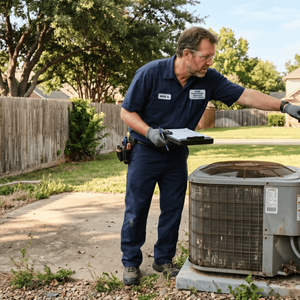
A missing air conditioner service disconnect is both a code violation and a serious electrical safety hazard. The National Electrical Code (NEC Article 440.14) requires a readily accessible, manually operable disconnect switch located within sight of your outdoor AC unit — typically within 50 feet. This switch allows HVAC technicians and electricians to safely de-energize the unit before working on it, preventing accidental electrocution. Without it, your system poses a significant risk to anyone servicing it, and it violates electrical codes adopted by Texas municipalities including Fort Worth, Weatherford, and Justin.
Understanding why this requirement exists, what it costs to fix, and how to navigate this finding during a real estate transaction is essential for protecting your safety and your investment.
Journey Home Inspections
Same-Day Detailed Report — 4,000+ Items Checked
Core Service Programs:
- Buyer & Seller Home Inspections for pre-purchase, pre-listing, and full general inspections covering 4,000+ items
- New Construction & Phase Inspections for new builds, phase checks, and 11-month builder warranty inspections
- Specialty Inspections for pool & spa, septic, well, irrigation, and pier & beam foundation systems
Why Choose Journey Home Inspections:
- ✓ Trusted by customers with a perfect 5.0-star Google rating across 79 verified reviews
- ✓ Family-owned, faith-based, and serving North Texas since 2016
- ✓ Led by Bryan Hughes — TREC-licensed (#21772) and insured
- ✓ InterNACHI Certified Professional Inspector
- ✓ 4,000+ items checked on every inspection — roof to foundation
- ✓ Same-day reports with photos, clear findings, and plain-language explanations
- ✓ Thermal imaging and drone technology on every inspection
Why the AC Service Disconnect Requirement Exists
The requirement isn’t bureaucratic red tape — it’s a safety rule built around how HVAC service work actually happens. NEC Article 440.14 mandates that a disconnecting means be located within sight of and no more than 50 feet from the outdoor AC equipment. The “line of sight” rule is deliberate: a technician working on the condenser unit needs to be able to see the disconnect from their work position, so there’s no possibility of someone else re-energizing the unit while they’re in contact with live components.
Without that switch, an HVAC technician has two bad options: work on a live unit (dangerous) or walk back to the main electrical panel inside the house to cut the breaker (leaving the work area unattended and the unit potentially re-energized by someone who doesn’t know work is in progress). Neither is acceptable under professional safety standards.
Texas adopted the 2023 NEC as its statewide electrical standard, effective September 1, 2023, through the Texas Department of Licensing and Regulation (TDLR). Fort Worth, Weatherford, Justin, and other DFW municipalities enforce these codes locally — and in some cases, cities adopt the most current NEC edition with local amendments. The bottom line: this requirement has teeth, and it applies to your home.
How Common Is This Issue in DFW Homes?
If your inspector flagged a missing AC service disconnect, you’re not dealing with an obscure finding. This deficiency consistently ranks among the top electrical issues in DFW home inspections — industry estimates suggest it appears in 10–20% of inspections on homes built before 2000, with the percentage climbing sharply for homes built before 1980.
That matters in North Texas because the region’s housing stock skews older. An estimated 25–30% of DFW homes were built before 1980, and another 30–35% were built between 1980 and 1999. That’s a combined 55–65% of the market where code compliance gaps are significantly more likely. Newer construction — homes built after 2000 — is far more likely to have compliant installations, since those projects went through permitting and municipal inspection under stricter code enforcement.
DFW’s extreme heat also creates a compounding problem. North Texas AC systems typically need replacement every 10–15 years — well below the national average of 15–20 years. When a new condenser unit gets installed, the electrical infrastructure (wiring, disconnect, breaker) should be updated to match. But in practice, older electrical components are often left in place, leaving a modern unit connected to a non-compliant setup.
You’re Not Alone — This Is a Common Finding
Missing AC service disconnects are among the top electrical deficiencies found in DFW home inspections, especially in homes built before 2000. If your inspector flagged this, you’re dealing with a legitimate, widespread issue — not a rare anomaly.
What Does It Cost to Install a Compliant AC Service Disconnect?
The good news: this is one of the more affordable electrical repairs a home inspection can uncover. In the DFW market, a code-compliant AC service disconnect installation typically runs $250–$500, depending on the specifics of the job.
| Scenario | Estimated Cost (DFW) |
|---|---|
| Basic installation, straightforward access | $250 – $350 |
| Code-compliant with weatherproof enclosure and proper wiring | $350 – $500 |
| Electrical permit fee (Fort Worth) | $75 – $150 |
| Electrical permit fee (Weatherford) | $50 – $120 |
| Electrical permit fee (Justin) | $40 – $100 |
| New dedicated circuit (if existing circuit is undersized or shared) | $500 – $1,500+ |
| Full electrical panel upgrade (if panel lacks capacity) | $2,000 – $6,000+ |
Several factors influence where your quote lands: the distance from the main panel to the AC unit, the amperage required for your system, whether existing conduit can be reused, the weatherproof rating of the enclosure, and how difficult the access is. DFW electrical labor rates run comparable to or slightly above the Texas state average, driven by strong demand for skilled trades in a major metro market.
Disconnect Installation vs. Larger Electrical Upgrades
A straightforward disconnect installation is a relatively simple repair — but a missing disconnect can sometimes be a symptom of a larger electrical problem worth investigating. Before assuming the fix is limited to the disconnect itself, a licensed electrician should assess the entire AC electrical setup.
If the AC unit is running on an undersized or shared circuit, adding a new dedicated circuit and upgrading the wiring can push the total cost to $500–$1,500 or more. If the breaker is the wrong amperage or an outdated type, swapping it typically adds $50–$150. In older homes where the electrical panel simply doesn’t have the capacity to support a new dedicated circuit, a full panel upgrade may be necessary — a major project in the $2,000–$6,000+ range.
This is especially relevant for homes in Fort Worth’s older urban neighborhoods or established areas of Weatherford, where the original electrical infrastructure may be decades old. A thorough general home inspection can help identify whether the disconnect issue is isolated or part of a broader pattern of aging electrical infrastructure.
What Happens If You Ignore a Missing AC Service Disconnect?
Ignoring this finding isn’t a neutral choice — it creates compounding risk over time. Here’s what’s at stake:
- HVAC service refusals: Professional HVAC technicians may decline to service your unit without a proper disconnect, citing legitimate safety concerns. That means delays and potentially additional service call fees when you finally get the electrical work done.
- Forced correction at replacement time: When your AC unit eventually needs replacing — and in North Texas, that’s typically every 10–15 years — the new installation will trigger a permit and inspection. The city inspector will flag the missing disconnect, and you’ll be required to correct it before the new system is approved. Doing it under deadline pressure is more expensive and stressful than addressing it now.
- Insurance complications: Homeowner’s insurers may view an unaddressed electrical safety hazard as increased risk. If an electrical fire or injury occurs and is linked to the non-compliant installation, the insurer could argue negligence, potentially affecting your claim payout or leading to policy exclusions.
- Personal liability: If an accident — electrocution or fire — is traced to the missing disconnect, your liability exposure as the homeowner increases significantly.
- Real estate transaction friction: If you’re selling, buyers will demand correction or a credit. An unresolved safety finding can stall negotiations or kill a deal entirely.
How to Navigate This Finding in a Real Estate Transaction
When a home inspector identifies a missing AC service disconnect during your option period, you have leverage — and a clear path forward. This is a non-negotiable repair item. No buyer should accept a home with a known electrical code violation and safety hazard without either a correction or a credit.
In practice, requesting a repair credit is more common and often more favorable than asking the seller to install the disconnect before closing. A credit — typically in the $300–$600 range — gives you control over contractor selection and ensures the work is done to your standards with a permit and inspection sign-off.
Pro Tip: Request a Repair Credit During Negotiations
In real estate transactions, asking for a repair credit (typically $300–$600) is more common and often more favorable than asking the seller to install the disconnect. A credit gives you control over contractor selection and ensures the work is done to your standards.
When getting bids, request detailed written quotes that break out parts, labor, and permit fees separately. Verify each electrician’s TECL (Master Electrician) license via TDLR.texas.gov and confirm their license is active and in good standing. Ask whether they’ll pull a permit — the answer should always be yes. Understanding what to look for in post-inspection repairs is part of what makes a thorough inspection report so valuable; resources like the Journey Home Inspections FAQ can help you understand what to expect from the process.
Choosing a Licensed Electrician for This Repair
In Texas, only a licensed Master Electrician (TECL) — or a Journeyman Electrician working under a Master’s direct supervision — is legally authorized to install an AC service disconnect. This isn’t a gray area. Unlicensed electrical work is illegal, unsafe, and leaves you with no recourse if something goes wrong.
Before hiring anyone, verify their license number on TDLR.texas.gov and confirm it’s active. Request a Certificate of Insurance covering both General Liability and Worker’s Compensation. Ask whether they routinely pull permits for AC disconnect installations — a reputable electrician will always say yes without hesitation.
Red Flags When Hiring an Electrician
Be wary of any electrician who says a permit isn’t necessary for AC disconnect installation. This is a major red flag indicating they plan to bypass code and inspection. Always verify the electrician’s TECL license via TDLR.texas.gov and request proof of insurance before hiring.
Get multiple bids and compare them carefully. Be cautious of quotes significantly below the $250–$500 range — that’s often a sign of unlicensed work or a plan to skip the permit. Check Google reviews, ask for references from recent customers, and confirm the contractor offers a warranty on their work. If you’re finding electricians through referrals, understand that inspector referrals can be reliable, but always do your own vetting and get competitive bids regardless of the source.
For buyers in Fort Worth, Weatherford, Justin, Roanoke, Argyle, Trophy Club, and surrounding DFW communities, this repair is routine work for any qualified local electrician. The key is hiring someone who treats it as the permitted, inspected electrical work it’s required to be — not a quick cash job.
Why Journey Home Inspections Is the Right Choice for DFW Homebuyers
Finding a missing AC service disconnect isn’t luck — it’s the result of a thorough, methodical inspection by someone who knows exactly what to look for. Journey Home Inspections has earned a perfect 5.0-star Google rating across 79 verified reviews by delivering that level of detail on every job, for every family, since 2016.
Led by TREC-licensed inspector Bryan Hughes (#21772) and InterNACHI Certified, the Journey Home Inspections team checks 4,000+ items per home — including the full electrical system, HVAC components, and all the areas where aging infrastructure tends to hide compliance gaps. Same-day reporting means you have a clear, documented picture of the property’s condition while you’re still in your option period, giving you the time and information you need to negotiate effectively.
As a family-owned, faith-based company serving North Texas communities from Fort Worth and Weatherford to Southlake, Westlake, Eagle Mountain, and beyond, Journey Home Inspections prioritizes your safety and peace of mind over upselling. When an issue like a missing AC disconnect shows up in the report, you get a plain-language explanation of what it means, why it matters, and what to do next — not vague language designed to create alarm without clarity. You can read what other DFW families have experienced in the verified customer reviews.
Schedule your home inspection with Journey Home Inspections today and get the thorough, honest assessment your family deserves.
Frequently Asked Questions
While not an absolute deal-breaker, a missing AC service disconnect is a significant electrical safety issue and code violation that buyers will almost always demand be corrected or credited. Most sellers agree to address it because it’s a relatively inexpensive repair ($250–$500) and a necessary safety upgrade. It’s rarely the sole reason a transaction fails, but it is a non-negotiable negotiation point — and buyers who let it slide without a credit or correction are accepting a known hazard.
No. In Texas, installing an AC service disconnect requires a licensed Master Electrician (TECL) and a permit from the local municipality. Homeowners are not permitted to perform this type of electrical work. Attempting a DIY installation is not only unsafe — it’s illegal, voids any recourse if something goes wrong, and will be flagged when the work is eventually inspected during a future HVAC replacement or sale.
A breaker in the main electrical panel protects the circuit from overcurrent and can shut off power to the AC unit from inside the home. A service disconnect is a separate, dedicated switch located at the outdoor AC unit itself. Its specific purpose is to give technicians an immediate, visible, and accessible way to de-energize the unit while working on it — without having to walk back inside to the main panel, which creates the risk of the unit being accidentally re-energized while someone is in contact with it.
A professional HVAC technician will likely refuse to work on your AC unit if a proper service disconnect is missing, citing safety concerns. They need a readily accessible means to safely de-energize the unit to prevent accidental electrocution during service. You’ll be required to have a licensed electrician install one before they can proceed — which means additional scheduling, additional cost, and potential delays, especially during peak cooling season in North Texas when HVAC demand is at its highest.
Journey Home Inspections stands out with a perfect 5.0-star Google rating across 79 verified reviews, led by TREC-licensed inspector Bryan Hughes (#21772) and InterNACHI Certified professionals. Family-owned and faith-based since 2016, the team inspects 4,000+ items per home with same-day reporting — giving you a complete, plain-language picture of the property’s condition while you’re still in your option period. When issues like a missing AC service disconnect show up, you get clear documentation and the confidence to negotiate effectively. Schedule your home inspection with Journey Home Inspections today.
Found a Missing AC Disconnect? Get a Thorough Inspection Before You Close.
A missing AC service disconnect is exactly the kind of electrical safety issue that can get missed in a rushed inspection — but not with Journey Home Inspections. Our team checks 4,000+ items per home and delivers same-day reports so you have the facts you need while you still have negotiating power. Serving Fort Worth, Weatherford, Justin, Southlake, Westlake, Argyle, Trophy Club, Eagle Mountain, Roanoke, and the greater DFW area.
*Pricing, service availability, and inspection details mentioned in this article are accurate as of the date of publication and are subject to change. A home inspection reflects a property’s condition at the time of inspection and is not a warranty or guarantee. Please contact us directly to schedule an inspection of your specific property.