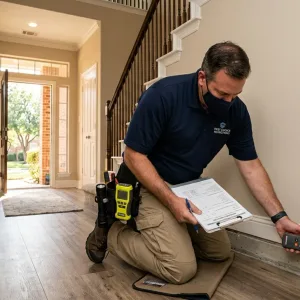
You’ve made an offer on a house in Crowley. The seller accepted. Now you’re standing in the living room of what might be your next home, and the question hits you: what’s actually going on behind these walls? The floors look solid. The roof looks fine from the street. The HVAC kicked on when you tested it. But North Texas clay soil has a way of keeping secrets — and so do aging electrical panels, corroded pipes, and roofs that have absorbed fifteen Texas summers. The home inspection is the moment where those secrets come out. Choosing the right inspector isn’t just a box to check before closing — it’s one of the most financially consequential decisions you’ll make in this entire transaction.
This guide covers everything you need to navigate Crowley, TX home inspections with confidence: what inspections cost, how to verify credentials, what to expect during the process, and how to use your findings to negotiate like an informed buyer.
Key Takeaways
- Standard home inspections in Crowley typically range from $300 to $750+ depending on home size, age, and complexity.
- All Texas home inspectors must hold a TREC license — verify any inspector’s credentials free at trec.texas.gov before booking.
- North Texas expansive clay soil makes foundation assessment one of the most critical parts of any Crowley-area inspection.
- Your option period (typically 7–10 days) is your legal window to request repairs, negotiate credits, or walk away with your earnest money.
- Attending your inspection in person lets you see issues firsthand and ask questions — don’t skip it.
- Add-on services like sewer scope and radon testing provide significant protection at a modest additional cost.
- An inspection fee is a small fraction of what undiscovered defects can cost — foundation repairs alone can run $3,000–$20,000+.
Why Home Inspections Matter in Crowley, TX
A home inspection isn’t a formality — it’s your most powerful tool in the entire homebuying process. The home inspection process gives you a professional, documented assessment of the property’s condition before you’re legally and financially committed to it. In Crowley specifically, that matters more than buyers often realize.
Texas law gives buyers an option period — a defined window during which you can request repairs, negotiate credits, or terminate the contract without losing your earnest money. The inspection report is the foundation of everything that happens during that window. Without it, you’re negotiating blind. With it, you have documented evidence, specific findings, and real leverage.
Industry data consistently shows that somewhere between 70 and 85 percent of home inspections uncover at least one material defect that warrants attention. That’s not a scare statistic — it’s a reflection of how homes age and how normal wear accumulates over time. The goal isn’t to find a perfect house. It’s to understand exactly what you’re buying.
The Crowley Real Estate Market Context
Crowley sits in the southwest Fort Worth corridor, one of the most active growth areas in the entire DFW metroplex. The city has seen steady residential demand driven by its proximity to Fort Worth, relatively accessible price points compared to more established suburbs, and a mix of established neighborhoods alongside newer construction subdivisions.
That mix creates varied inspection needs. A home built in the 1970s or 1980s in an established Crowley neighborhood presents very different inspection priorities than a new construction home in a recently developed subdivision. Older homes may have aging electrical systems, galvanized plumbing, and HVAC units that have been running for decades. Newer homes can have their own issues — builder oversights, improper installations, and code compliance gaps that only a trained eye will catch.
In a competitive market where multiple buyers may be interested in the same property, a thorough inspection also signals that you’re a serious, informed buyer — not someone who will be surprised into backing out at the last minute. That matters to sellers and their agents.
Common Issues Found in Crowley Homes
Crowley’s location in Tarrant County means its homes sit on North Texas’s notorious expansive clay soil — a geological reality that affects foundations throughout the region. When that clay absorbs moisture, it swells. When it dries out in summer heat, it contracts. Over years and decades, that constant movement causes foundation cracks, uneven floors, and doors or windows that stick or won’t close properly.
Beyond foundations, the most common issues inspectors find in Crowley-area homes include aging HVAC systems that are approaching or past their useful life, roof wear accelerated by relentless Texas sun and heat, and plumbing or electrical systems in older homes that predate modern codes. None of these are automatic deal-breakers — but all of them need to be identified, understood, and factored into your decision.
Feeling Overwhelmed by the Inspection Process?
You’re not alone. Most first-time homebuyers feel uncertain about what inspections involve and how to choose the right inspector. This guide breaks down everything you need to know to make a confident decision — from understanding costs to reading your report and negotiating repairs.
Understanding Home Inspection Costs in Crowley
One of the first questions buyers ask is: how much does a home inspection cost? The honest answer is that it depends — but not in a way that should leave you guessing. Pricing is fairly predictable once you understand the factors that drive it. For the Crowley and southwest Fort Worth market in 2026, here’s what you can realistically expect to pay.
Before diving into numbers, it’s worth reframing the cost entirely. The average inspection fee is a few hundred dollars. A missed foundation issue can cost $10,000 to repair. A roof replacement runs $8,000 to $20,000 or more. An HVAC replacement is $4,000 to $10,000. The inspection fee isn’t an expense — it’s insurance against a much larger financial surprise. For a full picture of what detailed inspection services include, it helps to understand the scope before you compare quotes.
Standard Inspection Pricing by Home Size
Square footage is the primary driver of inspection cost, because it directly determines how much time the inspector needs to do a thorough job. Here are typical ranges for the Crowley and southwest Fort Worth corridor in 2026:
- Under 1,500 sq ft: Typically $300–$450
- 1,500–2,500 sq ft: Typically $400–$600
- 2,500–4,000 sq ft: Typically $500–$750
- Over 4,000 sq ft: Typically $600–$900+
These ranges reflect inspector time, expertise, and the complexity of the written report. A thorough inspector producing a detailed, photo-documented report takes longer than one who rushes through a checklist — and that time investment shows up in both the price and the value you receive.
Crowley pricing is generally competitive with DFW metro averages. You may find inspectors at the lower end of these ranges, but be cautious: price alone is a poor proxy for quality. A $250 inspection that misses a significant defect is far more expensive in the long run than a $500 inspection that catches it.
Popular Add-On Services and Their Costs
A standard inspection covers the major visible systems of the home, but there are specialized add-on services that provide additional layers of protection. For many Crowley buyers, at least one or two of these add-ons are worth serious consideration:
- Sewer scope inspection: $200–$400. A camera is run through the sewer line from the house to the street, identifying blockages, tree root intrusion, cracks, and pipe deterioration. Highly recommended for homes over 30 years old.
- Radon testing: $150–$300. A 3–5 day test for this colorless, odorless radioactive gas. Texas has moderate to high radon risk in many areas, including Tarrant County, and some lenders require it.
- Mold testing: $300–$600. Air and surface sampling to identify mold presence and concentration. Particularly relevant in homes with past water damage or moisture issues.
- Thermal imaging: Often included as standard by quality inspectors; as a standalone add-on, typically $100–$200. Detects temperature variations that indicate moisture intrusion, missing insulation, or electrical hot spots.
- Pool/spa inspection: $150–$300. Covers equipment function, structural condition, and safety features. If the home has a pool, this is not optional — it’s essential. Learn more about what a pool and spa inspection covers before your closing date.
Pro Tip: Bundle Services for Better Value
Many inspectors offer package deals combining a standard inspection with a sewer scope and pool inspection at a discounted rate. When you call for quotes, ask specifically about bundle pricing — you could save $100–$200 compared to booking each service separately. It’s worth asking every inspector you contact.
Factors That Affect Your Inspection Cost
Beyond square footage, several other factors can push your inspection cost higher or lower:
- Home age: Older homes require more time and expertise. An inspector spending time on a 1975 home’s electrical panel, galvanized plumbing, and original HVAC system is doing significantly more work than one reviewing a 2018 build.
- Foundation type: Homes with crawl spaces add complexity compared to the slab-on-grade construction common in North Texas. Crawl space inspections require physical access and more detailed assessment.
- Roof accessibility: Steep pitches or very high rooflines increase inspection time and risk. Some inspectors use drones or specialized equipment for difficult roofs, which may affect pricing.
- Special features: Pools, outbuildings, detached garages, irrigation systems, and complex HVAC configurations all expand the inspection scope. If the property has a irrigation system or other specialty features, ask upfront whether they’re included or priced separately.
How to Verify a Home Inspector’s Credentials in Texas
Texas has one of the more rigorous home inspector licensing frameworks in the country, administered by the Texas Real Estate Commission (TREC). Every home inspector operating legally in Texas must hold a valid TREC license — and verifying that license takes less than two minutes. Understanding what those credentials mean, and how to check them, is one of the most important steps in choosing your inspector.
The TREC Standards of Practice define exactly what a licensed inspector must inspect and report on. When you hire a TREC-licensed inspector, you’re hiring someone who has met minimum education requirements, passed a state exam, carries mandatory insurance, and is accountable to a regulatory body that can investigate complaints and revoke licenses.
TREC License Types Explained
There are two active TREC license types for home inspectors in Texas:
- Professional Real Estate Inspector (PREI): The highest credential available. Requires 300+ hours of approved education, documented field experience, and passing the TREC licensing exam. This designation indicates a more experienced, more thoroughly trained inspector.
- Real Estate Inspector (REI): Requires 180 hours of education and passing the exam. A solid credential, though with less required experience than a PREI.
Both license types require maintaining a minimum of $1 million in errors and omissions (E&O) insurance and completing continuing education for license renewal. When comparing inspectors, a PREI designation is generally a positive indicator of experience and expertise — though a highly experienced REI with excellent reviews can also be an excellent choice.
How to Verify an Inspector’s License Online
This process is simple and takes about two minutes:
- Go to trec.texas.gov and click “Verify a License.”
- Select “Real Estate Inspector” from the license type dropdown.
- Enter the inspector’s name or license number.
- Review the license status (active or inactive), issue date, and expiration date.
- Check for any public disciplinary actions or complaint history.
Do this for every inspector you’re seriously considering. It’s free, it’s fast, and it gives you the assurance that the person walking through your future home is accountable to state standards.
Insurance and Consumer Protection
Errors and omissions insurance is mandatory for all TREC-licensed inspectors — a minimum of $1 million per occurrence. This insurance exists specifically to protect you. If an inspector misses a significant defect that costs you money to repair after closing, E&O insurance provides the mechanism for financial recourse.
Ask any inspector you’re considering to confirm their current insurance coverage before booking. A reputable inspector will have no hesitation providing this information. If they’re evasive about it, that’s a meaningful red flag.
If an inspector violates TREC standards or acts unethically, you can file a complaint directly with TREC. The commission investigates complaints and can impose fines, suspend licenses, or revoke them entirely. This accountability structure is one of the primary reasons hiring a licensed inspector matters so much.
⚠ Red Flag: Unlicensed or Uninsured Inspectors
Never hire an inspector without verifying their TREC license and current insurance. Unlicensed inspectors are not required to follow TREC Standards of Practice, and if they miss critical issues, you have no regulatory recourse. The savings from a cheaper unlicensed inspector are never worth the risk.
Journey Home Inspections is TREC-licensed and fully insured, serving Crowley and the surrounding southwest Fort Worth area with thorough, professional inspections and detailed reports you can actually use.
What to Expect During Your Home Inspection
If you’ve never been through a home inspection before, knowing what to expect removes a lot of the anxiety. The process is methodical, thorough, and — if you attend in person — genuinely educational. A standard inspection for a typical Crowley home takes two to four hours, depending on the size, age, and complexity of the property.
After the inspection, you’ll receive a comprehensive inspection report — typically within 24 to 48 hours — that documents every finding with photos, descriptions, and condition ratings. This report becomes your primary tool during the option period negotiation.
Major Systems Covered in Every Inspection
A TREC-compliant inspection covers all major visible systems and components of the home. Here’s what your inspector will assess:
- Foundation and grading: Checks for cracks, settling, uneven floors, and drainage patterns that could indicate soil movement issues.
- Exterior: Siding condition, windows, doors, gutters, downspouts, and the grading around the foundation to ensure water drains away from the structure.
- Roof: Age, condition, flashing integrity, visible leaks or wear, shingle condition, and ventilation.
- HVAC: Heating and cooling system function, approximate age, filter condition, and visible signs of deferred maintenance.
- Plumbing: Water pressure, visible leaks, fixture function, water heater condition and age, and drainage.
- Electrical: Panel condition, breaker labeling, outlet safety (GFCI protection where required), and visible wiring concerns.
- Interior: Walls, ceilings, floors, doors, windows, stairs, and built-in appliances.
- Attic and insulation: Insulation levels, ventilation, and signs of moisture intrusion or pest activity.
The Inspection Timeline
Understanding the flow of the inspection day helps you plan and participate effectively:
- Arrival and property review (15–30 minutes): The inspector walks the exterior, notes the property layout, and identifies any immediate concerns before beginning the detailed assessment.
- Detailed inspection (2–3 hours for a typical home): Systematic examination of all systems, inside and out, from the roof to the foundation.
- Attic, crawl space, and roof access: The inspector physically accesses these areas when safely possible to assess conditions not visible from living spaces.
- Final walkthrough and discussion (30 minutes): The inspector walks you through the key findings, answers your questions, and explains what’s significant versus routine.
- Report delivery: A detailed written report with photos arrives within 24–48 hours.
Why You Should Attend Your Inspection
Reading about a foundation crack in a report is one thing. Standing in the basement and having an inspector show you exactly what they’re looking at — and explain what it means — is a completely different level of understanding. Attending your inspection is strongly recommended, and most quality inspectors actively encourage it.
When you’re present, you can ask questions in real time, understand the severity of findings in context, and learn about the home’s systems and maintenance needs. You’ll leave with a much clearer picture of what you’re buying — and that clarity is invaluable when you’re deciding what to request in negotiations, what to plan for in the first year of ownership, and whether the purchase makes sense at all.
Top Home Inspectors Serving Crowley, TX: Compared and Reviewed
The Crowley and southwest Fort Worth area is served by a range of TREC-licensed home inspectors, from solo practitioners to multi-inspector firms. When you’re comparing your options, the goal isn’t to find the cheapest inspector — it’s to find the one who will give you the most accurate, complete picture of the home you’re about to buy. Journey Home Inspections is one of the well-regarded local options in this market, and we’ve outlined what sets them apart alongside guidance on how to evaluate any inspector you’re considering.
For additional context on how local inspectors compare to national franchise services, the local inspector vs. national franchise comparison for DFW is worth reading before you make your decision.
Journey Home Inspections
Location: Fort Worth, TX | Service Area: Crowley and surrounding southwest Fort Worth corridor, including Mansfield, Burleson, and greater Tarrant County
Journey Home Inspections holds a TREC Professional Real Estate Inspector (PREI) license — the highest credential available for Texas home inspectors. Their reputation in the local market centers on something that matters enormously to buyers: clear, educational communication. Rather than handing you a dense report full of technical jargon and leaving you to figure out what it means, they walk you through findings in plain language, helping you understand not just what was found, but why it matters and what your options are.
Their inspection services include standard general home inspections, sewer scope, thermal imaging, and specialized services for pools, new construction, and more. Pricing is mid-range for the market, which reflects the thoroughness of their process and the quality of their reporting. You can read what past clients have said by visiting their verified client reviews.
What sets them apart: The emphasis on helping buyers make genuinely informed decisions — not just producing a report, but ensuring you understand it. For buyers navigating the Crowley market, that educational approach is especially valuable given the area’s foundation and soil challenges.
What to Look for When Comparing Inspectors
Whether you’re evaluating Journey Home Inspections or any other provider, use these criteria to make a fair comparison:
- TREC license status: Verify active status on trec.texas.gov before booking. No exceptions.
- Years of experience: More experience typically means better pattern recognition — an experienced inspector has seen more homes and more failure modes.
- Online reviews: Check Google, Yelp, and Nextdoor for recent feedback. Look for patterns, not just star ratings. Do reviewers mention thoroughness? Clear communication? Punctuality?
- Pricing transparency: Get written quotes before committing. A reputable inspector will provide a clear price based on your home’s details.
- Availability within your option period: Can they inspect and deliver the report before your option period deadline? This is non-negotiable.
- Specialties: Do they have specific experience with older homes, new construction, or the foundation issues common in North Texas clay soil?
If you’re also considering homes in nearby Mansfield, the Mansfield, TX home inspection guide covers similar territory for that market.
How to Get the Best Inspector Quotes
Call 2–3 inspectors with the same home details: address, square footage, year built, and any special features (pool, outbuildings, etc.). Compare their quotes, credentials, and availability side by side. The best value isn’t the lowest price — it’s a thorough, experienced inspector at a fair price who can complete the inspection within your option period timeline.
Reading and Understanding Your Inspection Report
The inspection report lands in your inbox, and it’s 40 pages long with photos, condition ratings, and terminology you may not be familiar with. This is the moment where many buyers feel overwhelmed — but the report is actually well-organized once you understand its structure. Knowing how to read it transforms it from an intimidating document into a clear action plan.
TREC-compliant reports follow a standard format covering all major systems. Every finding is documented with a description, photos, and a condition rating. The report is designed to be defensible — meaning it provides the documented evidence you need to support inspection findings and repair negotiations with the seller.
How Inspection Reports Are Organized
Most TREC-compliant reports are organized system by system — foundation, roof, HVAC, plumbing, electrical, and so on. Within each section, components are rated (typically Good, Fair, Poor, or Not Present/Not Accessible) and any deficiencies are described in detail with supporting photos.
Reports typically separate findings into two categories:
- Significant defects: Issues that affect safety, structural integrity, or major system function. These require immediate attention and are the focus of your repair negotiations.
- Minor issues and maintenance items: Items that should be monitored or addressed during routine upkeep. These are normal for any home and typically don’t warrant repair requests.
Distinguishing Between Major and Minor Issues
This is where buyers most often need guidance. Not every finding in an inspection report is a crisis — and treating minor items as major ones can derail negotiations unnecessarily. Here’s a practical framework:
- Major issues: Foundation cracks with active movement, roof leaks, electrical panel hazards, HVAC system failure, active plumbing leaks, or evidence of significant water intrusion. These can cost thousands to repair and directly affect safety or habitability.
- Minor issues: Missing outlet covers, caulking gaps around fixtures, minor weatherstripping wear, cosmetic cracks in drywall, or routine maintenance items. These are typically under $500 to address and are normal in any lived-in home.
The cost differential matters enormously in negotiations. A foundation repair can run $3,000 to $20,000. A missing outlet cover costs $3. Treating them with the same urgency undermines your credibility with the seller and their agent.
Using Your Report to Negotiate Repairs
Your inspection report is a negotiation document. Here’s how to use it effectively during the option period:
- Prioritize significant defects. Focus your repair requests on items that affect safety, structural integrity, or major system function. Let minor maintenance items go.
- Get contractor estimates. For major repairs, obtain written estimates from licensed contractors. This gives your requests specific dollar amounts and makes them harder to dismiss.
- Choose repairs or credits. You can request the seller make specific repairs before closing, or request a credit toward your closing costs that you’ll use to make the repairs yourself. Credits are often preferable — they give you control over the quality of the work.
- Know your walk-away point. If the seller refuses reasonable requests on significant defects, or if the total repair costs are too extensive, you have the right to terminate the contract during the option period and receive your earnest money back.
If you’ve received an inspection report and need help understanding what the findings mean, the team at Journey Home Inspections is available to walk you through it. A good inspector doesn’t disappear after delivering the report.
Special Inspections: When You Need More Than a Standard Inspection
A standard home inspection is comprehensive, but it has defined limits. There are situations — based on the home’s age, history, location, or specific features — where specialized inspection services provide critical protection that a general inspection simply can’t offer. Understanding when to add these services is part of doing thorough due diligence.
Sewer Scope Inspections
A sewer scope inspection uses a small camera to travel through the sewer line from the house to the city connection at the street. It identifies blockages, tree root intrusion, pipe cracks, offset joints, and deterioration — issues that are completely invisible during a standard inspection but can cost thousands to repair.
For Crowley homes over 30 years old, a sewer scope is essentially non-optional. Mature trees in established neighborhoods have had decades to send roots toward moisture sources — and sewer lines are a primary target. The cost ($200–$400) is trivial compared to a sewer line replacement, which can run $5,000 to $15,000 or more depending on depth and access.
Radon Testing
Radon is a colorless, odorless radioactive gas produced by the natural decay of uranium in soil and rock. It seeps into homes through foundation cracks, gaps around pipes, and other entry points. Long-term exposure to elevated radon levels is the second leading cause of lung cancer in the United States after smoking.
Tarrant County and much of North Texas falls in a zone of moderate to elevated radon risk. Testing takes 3–5 days using a passive detector placed in the lowest livable level of the home. If results come back above 4 pCi/L (the EPA action level), a mitigation system is recommended. Mitigation systems typically cost $800–$2,500 to install and are highly effective. The test itself costs $150–$300 — a small price for certainty on a serious health issue.
New Construction Inspections
Many buyers assume that a brand-new home doesn’t need an inspection. This is one of the most expensive assumptions in real estate. Builders work under tight schedules and use multiple subcontractors — and code compliance inspections by municipal inspectors are limited in scope and frequency.
A professional new construction inspection catches what slips through: improperly installed HVAC ductwork, plumbing connections that don’t meet code, electrical issues, framing deficiencies, and insulation gaps. The most effective approach is a two-phase inspection: a pre-drywall phase inspection (before the walls close, when framing, electrical, and plumbing are still visible) and a final inspection before closing. The pre-drywall inspection is particularly valuable because it’s your only opportunity to see systems that will be hidden for the life of the home.
WDI (Wood-Destroying Insect) Inspections
A WDI inspection is a specialized examination for termites, carpenter ants, and other wood-destroying insects. While a standard home inspection includes a visual check for evidence of wood-destroying insects, it’s not a substitute for a dedicated WDI inspection performed by a licensed professional.
Many lenders require a WDI inspection as a condition of financing. The cost is typically $75–$200, and findings may require treatment or repair of damaged wood before closing. In North Texas, where subterranean termites are active year-round, this inspection is worth having regardless of lender requirements.
Why Lenders Require Certain Inspections
Lenders require WDI and radon testing because these issues directly affect the property’s value and insurability. A home with active termites or high radon levels represents a financial risk to the lender’s collateral — so they protect their investment by requiring these inspections before funding the loan. Even if your lender doesn’t require them, they protect your investment too.
The Option Period: Your Window to Act on Inspection Findings
The option period is one of the most important features of the Texas residential real estate contract, and it’s directly tied to the inspection process. Understanding how it works — and respecting its deadlines — is essential to protecting yourself as a buyer.
When you execute a contract to purchase a home in Texas, you pay an option fee (typically a few hundred dollars) in exchange for the unrestricted right to terminate the contract during the option period for any reason. This is your home inspection contingency window — the time during which you get the inspection done, review the findings, and decide how to proceed.
Timeline and Deadlines
The option period begins on the effective date of the contract — typically the day after all parties have signed. The standard period is 7 days, though this is negotiable and can be extended to 10 days or longer by mutual agreement.
Here’s what the timeline looks like in practice:
- Day 1: Option period begins. Book your inspection immediately — don’t wait.
- Days 2–4: Inspection is completed. Report is delivered within 24–48 hours.
- Days 4–6: Review the report with your agent. Obtain contractor estimates for major findings. Decide on your repair requests.
- Day 6–7: Submit written repair requests to the seller before the option period expires.
Missing the option period deadline is a serious mistake. Once it expires, you lose the right to terminate based on inspection findings — and you lose your leverage for repair negotiations. Book your inspection the same day your offer is accepted.
Your Three Options During the Option Period
After reviewing the inspection report, you have three paths forward:
- Accept the home as-is: No repair requests. You proceed to closing with full knowledge of the home’s condition. This is appropriate when findings are minor or when you’ve already negotiated a favorable price that accounts for the home’s condition.
- Request repairs or credits: Submit a written list of repair requests to the seller. You can ask for specific repairs to be completed before closing, or for a credit toward your closing costs that you’ll use to address the issues yourself.
- Terminate the contract: If inspection findings are unacceptable and the seller won’t negotiate reasonably, you can terminate the contract during the option period. Your earnest money is returned, and you move on.
Negotiating Repairs and Credits Effectively
The most effective repair requests are specific, documented, and focused on significant defects. Here’s how to approach the negotiation:
- Reference specific findings from the inspection report with page numbers or item numbers.
- Attach contractor estimates to support your cost claims for major repairs.
- Focus on safety issues and major system defects — not cosmetic items or normal wear.
- Work with your real estate agent to frame requests professionally and reasonably.
- Be prepared for the seller to counter. Negotiation is normal; an impasse is not inevitable.
Common Inspection Findings in Crowley-Area Homes
Every market has its own inspection profile — the issues that come up again and again based on local geology, climate, housing stock age, and construction practices. Crowley and the southwest Fort Worth corridor have a distinct set of recurring findings that buyers should understand before they step into a house. Knowing what’s common doesn’t mean you should accept it — it means you can ask better questions and evaluate findings with appropriate context.
Understanding foundation and structural concerns is especially important in this region, where soil conditions create challenges that don’t exist in other parts of the country.
Foundation Issues and Expansive Clay Soil
North Texas sits on some of the most expansive clay soil in the country. This soil absorbs water and swells significantly when wet, then contracts and shrinks during dry periods. In Crowley, where summers are hot and dry and winters can bring significant rainfall, this cycle repeats year after year — and foundations move with it.
The result: foundation cracks, uneven floors, doors and windows that stick or won’t latch, and gaps between walls and ceilings are all common in Crowley homes, particularly those built more than 20 years ago. The key distinction is between normal settling and active structural movement.
- Minor cracks (hairline, less than 1/8 inch, horizontal or vertical) are common and often cosmetic. They reflect normal soil movement and don’t necessarily indicate structural problems.
- Significant cracks (wider than 1/4 inch, stair-step patterns in brick, or cracks with displacement) may indicate active structural movement that warrants evaluation by a structural engineer.
Foundation repairs in North Texas range from $3,000 for minor pier work to $20,000 or more for extensive structural remediation. Your inspector will assess what they observe and recommend further evaluation when findings are concerning.
Foundation Cracks Don’t Always Mean Disaster
Many Crowley homes have minor foundation cracks due to normal clay soil movement — and most of those cracks are cosmetic, not structural. Your inspector will help you distinguish between routine settling and issues that require a structural engineer’s evaluation. Don’t panic at the word “foundation crack” until you understand what you’re actually looking at.
HVAC System Age and Efficiency
Most residential HVAC systems have a useful life of 15 to 20 years. In Crowley’s housing stock, a significant number of homes — particularly those built in the 1990s and early 2000s — have systems that are approaching or past that threshold. An aging HVAC system isn’t automatically a deal-breaker, but it’s a known future expense that should factor into your negotiation.
Inspectors note the approximate age of the system (often visible on the data plate on the outdoor condenser unit), assess its current function, and flag signs of deferred maintenance or imminent failure. A replacement system for a typical Crowley home runs $4,000 to $10,000 depending on system size, efficiency rating, and installation complexity. If the system is 15+ years old and showing signs of decline, that’s a legitimate repair request or credit negotiation item.
Roofing Concerns in Texas Heat
Texas sun is relentless, and it accelerates roof deterioration faster than in most other climates. Asphalt shingles that might last 25–30 years in a cooler climate often need replacement by 15–20 years in North Texas. Hailstorms — which are common in Tarrant County — add another layer of wear and potential damage that may not be visible from the ground.
Common roofing findings in Crowley-area homes include missing or curled shingles, granule loss (visible in gutters), flashing failures around chimneys and vents, and evidence of previous repairs that may not have addressed underlying issues. A full roof replacement on a typical Crowley home runs $8,000 to $20,000 or more depending on size, pitch, and material. If the roof is near end of life, a credit toward replacement is often a reasonable negotiation point.
Plumbing and Electrical System Updates
Homes built before 1990 in Crowley may have plumbing and electrical systems that don’t meet current standards — and in some cases, present genuine safety concerns. Key issues to watch for:
- Galvanized steel plumbing: Common in homes built before the 1970s, galvanized pipes corrode from the inside over time, reducing water pressure and eventually failing. Replacement is expensive ($3,000–$10,000+) but necessary.
- Outdated electrical panels: Panels that can’t safely handle modern electrical loads, or that use outdated breaker technology, are both a safety concern and a homeowner’s insurance issue. Some insurers refuse to cover homes with certain panel types.
- Aluminum wiring: Used in some homes built in the 1960s and 1970s as a copper substitute, aluminum wiring requires special attention and may need remediation to reduce fire risk.
Updating electrical or plumbing systems is expensive and disruptive — costs can range from $3,000 to $15,000 or more depending on scope. But these are also legitimate safety issues that justify serious repair requests or, in extreme cases, termination of the contract.
Red Flags and Deal-Breakers: When to Walk Away
Most inspection findings are manageable — they’re either negotiable repair items or known future expenses you can plan for. But some findings are serious enough to reconsider the purchase entirely. Knowing the difference between a challenging inspection and a deal-breaker protects you from making a financially devastating decision out of emotional attachment to a house.
When serious structural or safety issues are identified, the right response isn’t to panic — it’s to get specialist evaluations, understand the real cost of remediation, and make a clear-eyed decision about whether the numbers work.
Structural and Foundation Red Flags
- Large, active foundation cracks wider than 1/4 inch, particularly in stair-step patterns in brick veneer
- Significant floor settling causing noticeable slopes or structural misalignment
- Evidence of previous foundation repair without proper documentation or engineer sign-off
- Multiple indicators of active movement: sticking doors throughout the house, cracks in multiple locations, gaps between walls and ceilings
Structural engineer evaluations cost $300–$600 and provide a professional assessment of repair necessity and estimated costs. If the inspector flags significant foundation concerns, this evaluation is worth getting before you decide whether to proceed. Foundation repairs in serious cases can run $10,000 to $50,000 or more.
Electrical and Plumbing Deal-Breakers
- Severely outdated electrical panels (Federal Pacific, Zinsco/Sylvania) that insurers frequently refuse to cover
- Knob-and-tube wiring throughout the home — a fire hazard that most insurers won’t cover without remediation
- Active sewage backup or evidence of chronic plumbing failure
- Galvanized plumbing throughout an older home with significant corrosion
These issues aren’t just expensive — they can affect your ability to obtain homeowner’s insurance at a reasonable rate, which in turn affects your ability to close the loan. Get licensed contractor estimates before deciding, and factor the full remediation cost into your analysis.
Pest and Environmental Concerns
- Active termite infestation with evidence of structural wood damage
- Radon levels above 4 pCi/L (the EPA action threshold) — requires mitigation system installation
- Significant mold growth indicating chronic moisture intrusion or ventilation failure
These issues require professional remediation. Factor the cost of treatment, remediation, and any structural repairs into your decision. In some cases — particularly extensive termite damage or severe mold — the remediation cost can approach or exceed the value gained from the purchase price.
When to Consult a Specialist Before Deciding
If your inspector flags concerns in any of these areas, the right next step is a specialist evaluation — not a decision made on incomplete information. A structural engineer, licensed electrician, or licensed plumber can provide a detailed assessment of the problem and a realistic repair estimate. These evaluations typically cost $300–$1,000 but give you the clarity you need to make a sound decision.
Your real estate agent can recommend qualified specialists in the Crowley area, and your inspector can often point you in the right direction as well. The goal is always to make an informed decision — not to be scared away from a manageable situation, and not to walk blindly into a financial disaster.
Comparing inspection services across the Fort Worth area? The Fort Worth home inspection cost breakdown covers pricing and provider comparisons for the broader metro area.
Frequently Asked Questions About Home Inspections in Crowley, TX
These are the questions buyers ask most often — and the ones that make the biggest difference in how confidently you move through the inspection process. If you have questions not covered here, the full FAQ page covers additional topics in depth.
How do I choose the best home inspector in Crowley, TX?
Look for a TREC-licensed inspector — PREI designation preferred — with strong, recent online reviews on Google and Nextdoor. Verify their license status at trec.texas.gov before booking, and ask about their experience with homes similar to yours in age and type. Get written quotes from 2–3 inspectors and compare credentials, availability, and communication style alongside price. The most thorough inspector at a fair price is almost always the best value — not the cheapest option.
What does a standard home inspection in Texas typically cover?
A TREC-compliant inspection covers all major visible systems and components: foundation, grading, exterior, roof, structure, interior, insulation, ventilation, plumbing, electrical, HVAC, fireplaces, and built-in appliances. Inspectors report on the condition and general function of these systems as observed at the time of inspection. The report documents what is visible and accessible — it doesn’t cover cosmetic issues, predict future problems, or include systems that are not accessible during the inspection.
Can I negotiate repairs with the seller after the home inspection?
Yes — and this is exactly what the option period is designed for. After receiving your inspection report, you and your agent can submit a written request for repairs or credits based on the findings. The seller can accept, reject, or counter your requests. If you can’t reach an agreement on significant issues, you retain the right to terminate the contract during the option period and receive your earnest money back. Working with an experienced real estate agent to craft professional, well-documented requests significantly improves your negotiation outcomes.
Do I need a separate inspection for a new construction home in Crowley?
Absolutely yes. Builder warranties don’t cover defects that an inspector would have identified — and new construction homes regularly have code compliance issues, improper installations, and builder oversights that municipal inspections miss. The most effective approach is a two-phase inspection: a pre-drywall inspection before the walls close (when framing, electrical, and plumbing are still visible) and a final inspection before closing. These inspections protect you from hidden defects that could become expensive problems after you take ownership. Learn more about new construction phase inspections and what each phase covers.
Should I attend my home inspection?
Strongly recommended — and most quality inspectors actively encourage buyer attendance. Being present lets you see issues firsthand rather than just reading about them in a report, ask clarifying questions in real time, and develop a much deeper understanding of the home’s condition and maintenance needs. That firsthand knowledge is invaluable during negotiations and in your first years of ownership. Buyers who attend their inspections consistently report feeling more confident in their purchase decisions.
What’s the difference between a standard inspection and a WDI (termite) inspection?
A standard home inspection includes a visual check for evidence of wood-destroying insects, but it’s not a specialized infestation inspection. A WDI inspection is a focused examination by a licensed professional — often a pest control operator with WDI certification — specifically looking for active termite infestations, existing wood damage, and conditions that make infestation likely. Lenders frequently require WDI inspections as a condition of financing because active termite damage directly affects the property’s structural integrity and value. In North Texas, where subterranean termites are active year-round, this inspection is worth having regardless of lender requirements.
Ready to Move Forward with Confidence?
Buying a home in Crowley is a significant decision, and you deserve to make it with complete information — not guesswork. A thorough inspection from a TREC-licensed professional gives you the documented evidence you need to negotiate effectively, plan for the future, and walk into closing without surprises.
Journey Home Inspections serves Crowley and the entire southwest Fort Worth corridor with detailed, educational inspections that empower buyers to make genuinely informed decisions. We’re here to help you understand what you’re buying — not just hand you a report.