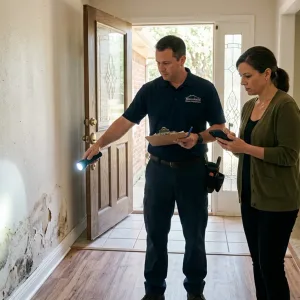
You’ve spent months searching, and you’ve finally found it — the right neighborhood, the right school district, the right floor plan. The house in Mansfield checks every box. Your agent submits the offer, it gets accepted, and now you’re in your option period with one critical question hanging over everything: What’s actually going on inside this house?
That question isn’t paranoia — it’s wisdom. Industry data from ASHI and InterNACHI consistently shows that 80–90% of home inspections reveal at least one defect, and 40–60% uncover a major issue serious enough to warrant renegotiation, repair credits, or even walking away. In Mansfield specifically, where expansive clay soils shift foundations, hail storms roll through regularly, and a significant portion of the housing stock dates to the 1980s and 1990s, the odds that something significant is lurking are not small.
A professional home inspection is the single most important safeguard between a great investment and a costly mistake. This guide gives you everything you need to understand the local market, budget accurately, verify credentials, and choose the right inspector — so you can move forward with confidence instead of anxiety.
Key Takeaways
- Home inspections in Mansfield, TX typically cost $375–$500 for smaller homes and $750–$1,100+ for larger properties; a thorough package with key add-ons runs $925–$1,475+.
- Mansfield’s expansive clay soils, hail exposure, and mix of new construction and aging housing stock make professional inspections especially critical in this market.
- All Texas home inspectors must be TREC-licensed; verify credentials at www.trec.texas.gov before hiring anyone.
- Industry data suggests that for every $1 spent on an inspection, buyers save an average of $10–$20 in repair costs or negotiation credits.
- New construction homes in Mansfield still need inspections — phase inspections and 11-month warranty inspections protect buyers in ways builder walkthroughs simply don’t.
- Attending your inspection in person is one of the most valuable things you can do as a buyer — it turns a report into real understanding.
Why Home Inspections Matter in Mansfield’s Competitive Real Estate Market
Mansfield has grown into one of the most desirable communities in southern Tarrant County — and that growth comes with real stakes. With a population of approximately 80,000 residents growing at over 3% annually, and a median home sale price hovering around $420,000, buyers here are committing to six-figure investments in a market that rewards preparation and punishes shortcuts.
When you’re spending $400,000 or more on a home, a few hundred dollars for a professional general home inspection isn’t an expense — it’s leverage. It’s the difference between knowing exactly what you’re buying and discovering a $15,000 foundation problem six months after you’ve moved in.
The Mansfield market has also matured significantly since the frenzied 2021–2022 period when buyers were routinely waiving inspection contingencies just to get an offer accepted. That era is largely over. Days on market have increased, the pace of transactions has normalized, and buyers are once again exercising their right to thorough due diligence. Professional inspections are standard practice again — and for good reason.
There are also local factors that make Mansfield inspections uniquely important. The DFW area sits on expansive clay soils that swell and contract with moisture changes, causing foundation movement that can range from cosmetic cracking to structural instability. North Texas is also firmly in what meteorologists call “Hail Alley” — severe thunderstorms with damaging hail are a seasonal reality, and roof damage that goes undetected can lead to water intrusion, mold, and insulation failure. These aren’t hypothetical risks. They’re the most common findings in local inspection reports, year after year.
Understanding Mansfield’s Housing Market and Inspection Demand
To understand why home inspections are so important in Mansfield, it helps to understand who’s buying here and what they’re buying. According to 2023 data, Mansfield’s median household income is $124,534, with a homeownership rate of 76.5%. This is an affluent, discerning buyer base — people who’ve worked hard for their money and aren’t interested in surprises after closing.
The housing stock in Mansfield is genuinely diverse. On one end, you have active new construction communities generating steady demand for new construction phase inspections and 11-month builder warranty reviews. On the other end, you have a substantial inventory of homes built in the 1980s and 1990s — properties where HVAC systems, plumbing, electrical panels, and roofing materials are reaching the end of their expected service lives. Both categories present distinct inspection challenges, and both demand an inspector who knows what to look for.
Seasonal demand matters here too. Spring and summer — roughly March through August — are peak transaction months in DFW, which means the best inspectors fill their calendars fast. During peak season, you may need to schedule your preferred inspector 3–7 days in advance or more. If you’re working within a 7–10 day option period, that’s not a lot of runway. Identifying and booking your inspector early in the process is a practical necessity, not just a suggestion.
Mansfield’s Unique Inspection Challenges
Every real estate market has its quirks, and Mansfield’s are significant enough that they should factor directly into how you choose your inspector. Expansive clay soils are the defining geological challenge of the entire DFW region. These soils absorb moisture and expand, then dry out and contract — sometimes dramatically — with seasonal weather changes. The result is foundation movement that can manifest as stair-step cracking in brick veneer, interior drywall cracks (especially around door frames and windows), and floors that are visibly uneven when checked with a level. Catching these signs early, and understanding their severity, is something only an experienced local inspector can do reliably.
Hail damage is the other major local concern. A roof that looks fine from the curb can have significant granule loss, bruised shingles, or damaged flashing that only becomes apparent on close inspection — or when the next heavy rain comes through. An inspector who knows what hail damage looks like in this climate, and who takes the time to get on the roof rather than just observe from the ground, is worth every penny.
Older homes in Mansfield may also have aging electrical panels, galvanized steel plumbing that’s corroding from the inside, polybutylene pipes (a material known for failure that was common in 1980s–1990s construction), and HVAC systems that are well past their 15–20 year expected lifespan. These aren’t cosmetic issues — they’re safety and budget concerns that a thorough inspection will surface.
💡 Mansfield’s Unique Inspection Challenges: What to Ask About
When interviewing inspectors, specifically ask about their experience with expansive clay soil foundation issues, hail damage assessment, and aging HVAC and electrical systems. An inspector who’s done hundreds of inspections in Mansfield and southern Tarrant County will catch problems that a less experienced inspector might overlook. Local knowledge isn’t a bonus — it’s a baseline requirement.
Home Inspection Pricing in Mansfield: What to Budget
One of the most common questions buyers ask is simple: How much does a home inspection cost in Mansfield? The honest answer is that it depends on several factors — primarily the size and age of the home — but here’s a clear breakdown of what to expect in the current 2026 market.
| Home Size | Typical Cost Range (Mansfield/DFW) |
|---|---|
| Under 1,500 sq ft | $375 – $500 |
| 1,500 – 2,500 sq ft | $475 – $625 |
| 2,500 – 4,000 sq ft | $575 – $800 |
| 4,000+ sq ft | $750 – $1,100+ |
For a typical Mansfield home around 2,500 square feet, you should budget $575–$775 for the standard inspection alone. Mansfield pricing tends to land at the mid-to-upper end of the DFW range, which itself runs slightly higher than the Texas state average of $300–$800 — a reflection of the area’s higher home values and the complexity of inspecting homes in this region.
Beyond square footage, several other factors can push your price up or down. Older homes typically cost more to inspect because they require more time and scrutiny — aging systems, potential for outdated materials, and more complex infrastructure all add to the inspector’s workload. Pier-and-beam foundations (more common in older DFW homes) cost more to inspect than slab foundations because of the confined crawl space access involved. Multiple HVAC units, detached structures, and difficult roof access can also increase the fee.
Ancillary Inspection Services and Add-On Costs
A standard TREC inspection covers the major systems and components of the home — but it doesn’t cover everything. Several specialized services are almost always extra charges, and in Mansfield’s market, many of them are genuinely worth adding. Here’s what to expect:
- Termite/WDI Inspection: $75–$150. Highly recommended and often required by lenders in Texas. Performed by a licensed pest control operator.
- Sewer Scope/Camera Inspection: $200–$400. Uses a camera to inspect the main sewer line for blockages, cracks, or root intrusion. Crucial for older homes, and worth doing on new construction to confirm proper installation.
- Pool/Spa Inspection: $75–$150. Evaluates pool equipment, decking, and safety features. Important in Mansfield where many homes have pools — a pool and spa inspection can surface costly equipment issues before they become your problem.
- Sprinkler/Irrigation System Inspection: $50–$100. Checks zones, heads, and valves. See the irrigation system inspection service for what’s covered.
- Radon Testing: $150–$250. Less common in Texas than in northern states, but some buyers opt for it for peace of mind.
- Mold Testing: $250–$700+ per sample. Recommended if the inspector identifies visible mold or conditions conducive to moisture intrusion.
- Thermal Imaging: $50–$150 as an add-on. Uses an infrared camera to detect hidden moisture, missing insulation, or electrical hot spots.
Many reputable inspectors offer bundled packages that combine the standard inspection with popular add-ons at a discounted rate. Always ask about package pricing when getting quotes — it can save you $50–$150 compared to ordering services individually.
True Total Cost for a Thorough Inspection Package
Here’s what a comprehensive inspection package looks like for a typical 2,500 sq ft Mansfield home:
- Standard Home Inspection: $575–$775
- Termite/WDI Inspection: $75–$150
- Sewer Scope Inspection: $200–$400
- Pool/Spa Inspection (if applicable): $75–$150
- Estimated Total: $925–$1,475+
Budget at least $1,000 for a comprehensive inspection with key add-ons in Mansfield. That number can increase for larger homes, older properties requiring more detailed scrutiny, or if mold testing becomes necessary based on visual findings. It’s a meaningful investment — but it’s a fraction of what a single undetected major defect could cost you.
Get Transparent Pricing for Your Mansfield Home Inspection
Journey Home Inspections provides clear, upfront pricing and comprehensive service options tailored to your specific home. No surprises, no vague estimates — just honest information to help you plan.
⚠️ Don’t Underestimate the Cost of Skipping an Inspection
During the 2021–2023 seller’s market, many DFW buyers waived inspections to compete — and faced average surprise repair costs of $5,000–$15,000+ within the first year of ownership. Some faced $30,000 or more for HVAC replacements or foundation repairs that a standard inspection would have caught. According to InterNACHI estimates, for every $1 spent on an inspection, buyers save an average of $10–$20 in repair costs or negotiation credits. Your inspection fee isn’t a cost — it’s insurance against catastrophic post-purchase expenses.
TREC Licensing, Insurance, and Regulatory Requirements
Texas has one of the most robust home inspector licensing frameworks in the country, and that’s genuinely good news for Mansfield buyers. All home inspectors operating in Texas must be licensed by the Texas Real Estate Commission (TREC) — there’s no gray area here. Anyone performing home inspections for compensation without a TREC license is operating illegally, and hiring them exposes you to significant risk.
You can verify any inspector’s license status directly at www.trec.texas.gov/apps/license-holder-search. The search tool shows the inspector’s name, license number, license type, current status (Active, Inactive, or Expired), expiration date, and any disciplinary actions on record. This takes about 60 seconds and should be a non-negotiable step before you book anyone.
TREC requires inspectors to complete 180+ hours of approved training, pass a comprehensive state examination, and complete 16 hours of continuing education annually to maintain their license. This ensures inspectors stay current with building codes, inspection standards, and evolving technologies. It’s a meaningful baseline — not a rubber stamp.
On the insurance side, TREC mandates that all licensed Professional and Real Estate Inspectors carry Errors & Omissions (E&O) insurance with a minimum aggregate limit of $100,000. This covers claims arising from professional negligence or mistakes. Most reputable inspectors also carry General Liability insurance of $1,000,000 aggregate to cover property damage or bodily injury during the inspection. Always ask for proof of both before signing any inspection agreement.
How to Verify Your Inspector’s Credentials
Here’s a practical checklist for verifying credentials before you hire:
- Search the TREC license database by the inspector’s name or license number at www.trec.texas.gov/apps/license-holder-search
- Confirm the license type — Professional Inspector is the highest level; Real Estate Inspector is intermediate; Apprentice Inspector must work under supervision
- Verify the license status shows Active (not Inactive or Expired)
- Check for any disciplinary actions, complaints, or alerts on record
- Ask the inspector directly for proof of E&O insurance and confirm coverage limits meet or exceed the $100,000 minimum
- Ask about their continuing education completion for the current license period
If an inspector hesitates to provide any of this information, that hesitation is itself a red flag. Legitimate, experienced inspectors are proud of their credentials and happy to share them. You can also review verified customer reviews to get a sense of how an inspector performs in the field, not just on paper.
Top 5 Home Inspectors Serving Mansfield, TX: Compared and Reviewed
The DFW market is well-served by home inspectors, but quality varies significantly. The following five companies have demonstrated strong track records in Mansfield and the broader southern DFW area, based on verified reviews, credentials, and consistent presence in local search results and community recommendations. This is an honest assessment — not a paid ranking.
It’s also worth noting that choosing between a local inspector versus a national franchise inspection service is a real decision with meaningful tradeoffs — one worth understanding before you commit.
1. Journey Home Inspections
Location: Fort Worth, TX | Service Area: Mansfield and all of Tarrant County / DFW
Journey Home Inspections has built a strong reputation across Tarrant County for inspections that are as educational as they are thorough. Customers consistently earn 5-star reviews for meticulous attention to detail, clear and accessible communication, and comprehensive digital reports that don’t just list problems — they explain them in plain language.
What sets Journey Home Inspections apart is a genuine commitment to client education. Inspectors take the time to walk buyers through findings on-site, explaining what each issue means, how serious it is, and what the likely remediation path looks like. For first-time homebuyers especially, that kind of guidance transforms an anxiety-inducing process into something genuinely empowering. The company’s full range of residential inspection services includes general home inspections, new construction phase inspections, 11-month builder warranty inspections, pool and spa inspections, and more.
Best for: Buyers who want a thorough, educational inspection experience with clear communication and detailed reporting. Frequently recommended on Nextdoor across Tarrant County.
2. HomeTeam Inspection Service
Location: 3801 William D Tate Ave, Ste 100, Grapevine, TX 76051 | Service Area: Mansfield and southern DFW
HomeTeam’s defining differentiator is their team-based inspection model — rather than a single inspector working through the home sequentially, multiple inspectors examine different systems concurrently. The result is a faster on-site inspection without sacrificing thoroughness, which can be valuable when you’re working against a tight option period timeline.
Clients frequently praise the efficiency of the process, the professionalism of the team, and the clarity of the standardized reports. HomeTeam is a solid choice for buyers who need a quick turnaround and appreciate a systematic, structured approach to inspection.
Best for: Buyers who value speed and efficiency without compromising on coverage, particularly those with tight option period timelines.
3. Texan Inspection Services
Location: 251 W Renner Rd #250, Richardson, TX 75080 | Service Area: DFW-wide, including Mansfield
Texan Inspection Services has earned a strong reputation for technology-forward inspections, including drone-assisted roof assessments and thermal imaging. Their reports are consistently described as exceptionally detailed and visually comprehensive — packed with clear photos and explanations that make findings easy to understand and act on.
Customers highlight their willingness to go above and beyond, spending extra time on areas of concern and ensuring buyers leave the inspection with a complete picture of the property’s condition.
Best for: Buyers who want cutting-edge technology and maximum visual detail in their inspection reports, particularly for larger or more complex properties.
4. All-Pro Home Inspections
Location: 4100 Alpha Rd Ste 200, Dallas, TX 75244 | Service Area: DFW-wide, including Mansfield
All-Pro Home Inspections receives strong praise for responsiveness, professionalism, and the ability to clearly articulate findings in a way that’s accessible to buyers who aren’t construction experts. Their flexible scheduling and rapid report turnaround make them a practical choice in a fast-paced market.
Clients consistently note that All-Pro identifies both major and minor issues with equal diligence, delivering reports that give buyers a complete picture without unnecessary alarm or minimization.
Best for: Buyers who need flexible scheduling and quick report delivery, particularly in competitive transaction timelines.
5. US Inspections DFW
Location: 4100 Alpha Rd Ste 200, Dallas, TX 75244 | Service Area: Entire DFW Metroplex, including Mansfield
US Inspections DFW is consistently commended for meticulous attention to detail and comprehensive reporting. Customers frequently highlight the inspector’s patience in answering questions and their deep knowledge across a wide range of home systems — from aging electrical panels to HVAC performance to foundation assessment.
Their on-site verbal debriefing approach — walking buyers through every significant finding before they leave the property — ensures clients don’t just receive a report but actually understand what it means for their decision.
Best for: Buyers who want a thorough, patient inspector who prioritizes client understanding alongside technical rigor.
Looking for an Inspector Who Puts Your Understanding First?
Journey Home Inspections combines deep local expertise with a genuine commitment to client education — so you don’t just get a report, you get clarity. Explore the full range of inspection services available for Mansfield and Tarrant County buyers.
What to Expect During Your Mansfield Home Inspection
If you’ve never been through a home inspection before, the process can feel mysterious. It doesn’t need to. Here’s exactly what happens during a standard inspection, and how to make the most of it.
A standard inspection for an average 2,000–2,500 sq ft Mansfield home typically takes 2–3 hours on-site. Larger homes, older properties, or inspections that include ancillary services like a sewer scope or pool inspection can run 4 hours or more. That time commitment is a feature, not a bug — thoroughness requires adequate time, and any inspector who wraps up a full home inspection in under 90 minutes should raise immediate concern.
The inspector conducts a visual, non-invasive examination of all readily accessible systems and components, following TREC Standards of Practice. This includes the foundation, structural components, roofing, exterior cladding and trim, interior walls and ceilings, electrical system, plumbing, HVAC, and built-in appliances. A comprehensive general home inspection covers all of these areas systematically.
What the inspector won’t do: move furniture, break through walls, inspect behind sealed panels, or test for environmental hazards like asbestos, lead paint, or mold beyond what’s visually apparent. Those require specialized testing that goes beyond the standard TREC scope.
Attend your inspection. According to NAR’s 2024 Profile of Home Buyers and Sellers, approximately 70–80% of buyers attend at least part of their inspection — and those who do consistently report feeling more confident in their purchase decision. Walking through with the inspector, asking questions in real time, and seeing issues firsthand is an entirely different experience from reading about them in a report two days later. You’ll understand the severity, the context, and the likely remediation path in a way that a written description alone can’t convey.
Most Common Defects Found in Mansfield Homes
Based on inspector experience and industry data from ASHI and InterNACHI, here are the most frequently identified defects in Mansfield and the broader DFW area:
- Foundation issues (very frequent): Stair-step cracking in brick veneer, interior drywall cracks near door frames and windows, and uneven floors — all signs of movement in expansive clay soils. For homes with pier-and-beam construction, a dedicated pier and beam foundation inspection provides additional depth of analysis.
- Roofing issues (frequent): Hail damage, granule loss, worn or missing shingles, improper flashing around penetrations, and inadequate attic ventilation.
- HVAC systems (frequent): Units approaching or past their 15–20 year expected lifespan, improper installation, refrigerant leaks, and clogged condensate drain lines. Understanding HVAC maintenance and what inspectors look for can help you interpret findings more clearly.
- Electrical deficiencies (frequent in older homes): Outdated wiring, ungrounded outlets, overloaded panels, double-tapped breakers, and exposed wiring in attics or crawl spaces.
- Plumbing problems (frequent): Leaking fixtures, corroded galvanized steel pipes, polybutylene pipe failures (common in 1980s–1990s construction), and slow or partially blocked drains.
- Grading and drainage issues (common): Improper slope away from the foundation, water pooling near the foundation perimeter — a significant concern given DFW’s clay soils and rainfall patterns.
Standard Inspection vs. Ancillary Services: What’s Actually Included
The standard TREC inspection covers all major systems and components — but it has defined limits. Ancillary services like termite inspections, sewer scope, pool inspection, radon testing, mold testing, and thermal imaging are almost always separate charges. Many inspectors offer bundled packages that combine the standard inspection with popular add-ons at a discounted rate — always ask about this when getting quotes.
If the inspector identifies significant concerns in a specific area — a suspicious foundation crack, an HVAC system that’s clearly struggling, or signs of moisture intrusion — they may recommend follow-up evaluation by a specialist (structural engineer, HVAC technician, plumber). These specialist evaluations are separate from the inspection fee and are worth pursuing when the inspector recommends them.
📋 Standard Inspection vs. Ancillary Services: What’s Included?
A standard TREC inspection covers the foundation, structure, roof, exterior, interior, electrical, plumbing, HVAC, and built-in appliances — all major systems and components. Ancillary services (termite/WDI, sewer scope, pool, radon, mold, thermal imaging) are almost always extra. Many inspectors offer bundled packages at discounted rates compared to ordering each service individually — ask about these when requesting quotes. The difference between a $600 standard inspection and a $1,200 comprehensive package could be the difference between knowing about a sewer line problem before closing and discovering it six months later.
🚩 Red Flags When Choosing a Home Inspector
Watch for these warning signs: an inspector who rushes through the inspection in under 90 minutes; inability to provide a TREC license number or proof of E&O insurance; pricing that seems unusually low (often a sign of corner-cutting); refusal to allow the buyer to attend; vague, photo-free reports that don’t explain findings in context; or any history of TREC disciplinary actions. A few hundred dollars saved on a discount inspector can cost you thousands in missed defects. You can compare inspection approaches and what to look for in a quality provider by reviewing inspector reviews and comparisons before making your decision.
New Construction and 11-Month Warranty Inspections in Mansfield
Mansfield’s ongoing growth means a significant portion of buyers here are purchasing new construction — and a surprising number of them assume that a brand-new home doesn’t need an inspection. That assumption is wrong, and it’s an expensive one to make.
New construction homes can and do have significant defects. Subcontractor errors, material inconsistencies, rushed framing, improperly installed HVAC systems, and drainage issues that aren’t apparent until the first heavy rain — these are all real findings in new construction inspections across DFW. The city’s building inspectors check for code compliance, but they’re not conducting the same comprehensive evaluation that a professional home inspector provides. The two processes complement each other; they don’t replace each other.
There are three key inspection opportunities in a new construction purchase:
- Pre-Pour (Foundation) Inspection: Before the concrete slab is poured, an inspector verifies that the foundation preparation meets specifications. Catching issues here is far less costly than addressing them after the fact.
- Pre-Drywall (Framing) Inspection: Before the walls are closed up, the inspector examines framing, rough plumbing, electrical, and HVAC installation. Once the drywall goes up, these systems become inaccessible without significant disruption.
- Final (Pre-Closing) Inspection: A comprehensive inspection of the completed home before you take possession, ensuring all work meets code and the home is ready for occupancy.
Phase inspection packages typically run $900–$1,500+ for all three phases, or $300–$600 per individual phase. The new construction phase inspection services offered by Journey Home Inspections are specifically designed for buyers navigating the Mansfield new construction market.
The 11-month builder warranty inspection is equally important — perhaps more so, because it’s the last chance to use your builder’s warranty before it expires. Most builders offer a one-year warranty on workmanship and materials. An inspection conducted around the 10–11 month mark identifies defects that have developed during the first year of occupancy — settling cracks, HVAC issues, drainage problems, and more — and gives you a documented, comprehensive list to submit to the builder for repairs while the warranty is still active. These inspections typically cost $400–$800+ depending on home size, and they routinely identify issues worth far more than that in warranty repairs.
How to Choose the Right Inspector for Your Mansfield Home
With multiple qualified inspectors serving Mansfield, the question isn’t whether you can find a good inspector — it’s how to identify the right one for your specific situation. Here’s a practical framework for making that decision with confidence.
Start by getting 2–3 detailed quotes before committing. According to HomeAdvisor/Angi survey data from 2024, this is what most buyers do — and it’s the right approach. Comparing quotes isn’t just about price; it’s about understanding what each inspector includes in their standard fee, what their ancillary service options are, and how they communicate. A $50 price difference between two inspectors is irrelevant if one provides a vague, photo-free report and the other delivers a comprehensive digital document with detailed explanations and clear remediation guidance.
Beyond price, here’s what to evaluate:
- TREC license verification: Non-negotiable. Check the database before booking.
- E&O insurance confirmation: Ask for proof and verify coverage limits.
- Online reviews: Check Google, Nextdoor, and Angi. Look for patterns — not just overall star ratings. A consistent theme of “thorough,” “clear communication,” and “caught things others missed” is more meaningful than a high average from a small sample.
- Local experience: Ask specifically about their experience with Mansfield’s foundation issues, hail damage assessment, and the specific housing stock age you’re buying into.
- Sample report: Request a redacted sample report before booking. This tells you more about an inspector’s quality than almost anything else — you can see exactly how they document findings, whether they include photos, and how clearly they explain issues.
- Availability within your option period: Confirm they can complete the inspection and deliver the report within your timeline.
- Report turnaround time: Most reputable inspectors deliver reports within 24 hours of the inspection. Same-day delivery is increasingly common among top providers.
If you’re buying in Mansfield or anywhere in Tarrant County, you can also review how inspection services and pricing compare across nearby markets — for example, our detailed guide to home inspections in Fort Worth, TX, including cost breakdowns and inspector comparisons, provides useful context for understanding regional pricing norms.
Questions to Ask Before Hiring an Inspector
Use this list when speaking with potential inspectors. Their answers — and how they answer — will tell you a lot about their professionalism and fit for your needs:
- How long have you been inspecting homes in Mansfield and the DFW area?
- Are you TREC-licensed? What is your license number and current license type?
- Do you carry E&O insurance? What are the coverage limits?
- Can you provide references from recent clients in Mansfield or southern Tarrant County?
- What is included in your standard inspection fee, and what costs extra?
- What ancillary services do you offer, and do you have bundled package pricing?
- How long does a typical inspection take for a home of this size and age?
- Can I attend the inspection?
- What format is the report delivered in, and how quickly will I receive it after the inspection?
- What is your experience with foundation issues on expansive clay soils and hail damage assessment?
You can also review the frequently asked questions about the inspection process to prepare yourself with the right questions before your inspection day. When you’re ready to schedule your Mansfield home inspection, having these answers in hand will make the booking process faster and more confident.
Explore How Mansfield Compares to Nearby Markets
Buying in the broader DFW area? Our local guides cover inspection costs, top providers, and market context for cities across the region — including Southlake, Weatherford, Keller, and Arlington.
Understanding Your Inspection Report and Next Steps
You’ve attended the inspection, asked your questions, and now the report has arrived in your inbox. What do you do with it?
A quality inspection report will clearly identify defects, categorize them by severity, include photographs of each finding, and provide explanations in plain language. It should be organized so you can quickly distinguish between items that require immediate attention and items that are routine maintenance concerns. If you receive a report that’s a vague checklist without photos or explanations, that’s a problem with the inspector — not with the home.
Once you have the report, you’ll typically have a few options depending on what was found:
- Negotiate for repairs: Ask the seller to fix specific items before closing. This is most appropriate for safety issues and major defects.
- Request a credit or price reduction: Instead of asking the seller to manage repairs, ask for a closing cost credit or price reduction so you can handle the work yourself. This is often cleaner and gives you more control over the quality of repairs.
- Terminate the purchase agreement: If findings are severe enough — or if the seller refuses to negotiate on major issues — and you’re still within your option period, you can walk away. In Texas, the option period typically gives you the right to terminate for almost any reason.
- Accept and proceed: For minor defects and routine maintenance items, you may simply choose to proceed with the purchase with a clear picture of what needs attention.
Your real estate agent is your partner in developing a negotiation strategy based on the inspection findings. For major issues — foundation concerns, HVAC systems at end-of-life, significant roof damage — consider obtaining specialist quotes before negotiating. Knowing that a foundation repair will cost $8,000–$12,000 gives you a specific, defensible number to work with at the negotiating table.
“Keep your inspection report after closing. It’s a detailed record of the home’s condition at the time of purchase — invaluable for maintenance planning, future repairs, and disclosure documentation when you eventually sell.”
The option period in Texas is typically 7–10 days, though this is negotiable. That’s your window for the inspection, report review, specialist consultations if needed, and negotiation. Use every day of it wisely. Rushing through this process is one of the most common and costly mistakes buyers make.
Frequently Asked Questions About Home Inspections in Mansfield, TX
What happens if the home inspection finds major problems with the Mansfield home I’m buying?
If major problems are found during your option period, you typically have three paths forward: negotiate with the seller for specific repairs before closing, request a credit toward closing costs or a price reduction to offset the cost of repairs you’ll handle yourself, or — if the problems are severe enough and the seller won’t negotiate — terminate the purchase agreement entirely. Your real estate agent will guide you through these choices based on your specific contract terms, the nature of the defects, and the current market dynamics. The key is that you have options, and having a detailed, well-documented inspection report gives you the leverage to exercise them effectively.
Can I back out of a home purchase in Texas if the inspection reveals significant issues?
Yes. If you have an active option period in your Texas purchase contract — which is standard in most residential transactions — you can terminate the agreement for virtually any reason during that specified timeframe, including significant defects found during the inspection. The option period exists precisely to give buyers the space to conduct due diligence and make an informed decision. Once the option period expires, your ability to walk away without penalty becomes much more limited, which is why scheduling your inspection promptly after going under contract is so important.
Do new construction homes in Mansfield need an inspection?
Absolutely — and this is one of the most important misconceptions to correct. Even brand-new homes can have significant defects resulting from subcontractor errors, material inconsistencies, rushed framing, or improper system installations. Municipal building inspectors check for code compliance, but their scope is narrower and their time on-site more limited than a dedicated professional inspection. A thorough new construction inspection — particularly a pre-drywall phase inspection that examines framing, rough plumbing, and electrical before the walls close — can identify issues that would otherwise be inaccessible and potentially very expensive to address after the fact.
How long does a typical home inspection take for an average-sized home in Mansfield?
For an average-sized home in Mansfield — roughly 2,000–2,500 square feet — a thorough inspection typically takes 2–3 hours on-site. Larger homes, older properties with more complex systems, or inspections that include ancillary services like a sewer scope or pool inspection can extend to 4 hours or more. An inspector who completes a full home inspection in under 90 minutes is almost certainly not being thorough — rushing is one of the clearest red flags in this industry, and it’s worth asking upfront how long the inspector expects to spend on-site for a home of your size and age.
Should the buyer attend the home inspection in Mansfield?
Yes, without question. Attending your inspection allows you to walk through the property with the inspector, ask questions as findings are discovered, and gain a firsthand understanding of the home’s condition that a written report alone can’t fully convey. It’s also an invaluable opportunity to learn about the home’s systems — where the main water shutoff is, how the HVAC is configured, what the attic access situation looks like — information that’s genuinely useful for maintenance and ownership. NAR data suggests 70–80% of buyers attend at least part of their inspection; the ones who attend the full inspection consistently report feeling more confident in their decision.
Is a home inspection the same as a home appraisal in Mansfield?
No — these are two entirely different processes that serve different purposes and different parties. A home inspection is an independent, visual evaluation of the home’s physical condition, conducted for the buyer’s benefit to identify defects and inform the purchase decision. A home appraisal is performed for the lender to determine the home’s fair market value and ensure the loan amount is justified by the property’s worth. Both are typically required in a financed purchase, but they happen independently and neither substitutes for the other. Confusing the two — or assuming the appraisal covers what an inspection covers — is a costly mistake.
Your Mansfield Home Deserves a Thorough, Honest Inspection
Buying a home in Mansfield is one of the biggest financial decisions you’ll ever make — and you deserve to make it with complete information, not crossed fingers. Whether you’re purchasing a resale home, a new construction property, or approaching your 11-month builder warranty deadline, a professional inspection gives you the clarity and leverage to protect your investment.
Journey Home Inspections serves Mansfield, Fort Worth, and the greater DFW area with the kind of thorough, educational inspections that turn uncertainty into confidence. Don’t leave your purchase to chance.