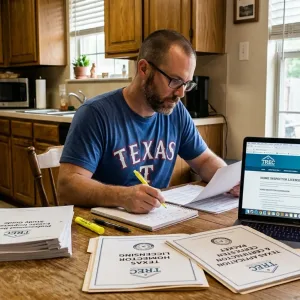
You’ve decided to pursue a career as a home inspector in Texas, but you’re staring at a maze of acronyms—TREC, PRI, E&O insurance, continuing education—and wondering where to even start. The requirements are real, the process has multiple stages, and the stakes are high enough that getting it wrong costs you time and money. The good news: the path is clear once you understand the structure. This guide walks you through every step of the Texas home inspector license requirements and certification process, from your first 140 hours of education to the day you pass your Master Inspector exam and operate as a fully independent Professional Real Estate Inspector in the DFW market.
Key Takeaways
- Texas uses a three-tier licensing system: Apprentice Inspector, Real Estate Inspector, and Professional Real Estate Inspector (PRI)—each requiring progressively more education, field experience, and exam passage.
- The Texas Real Estate Commission (TREC) is the sole regulatory body that issues and manages all home inspector licenses in Texas.
- Education requirements range from 140 hours at the Apprentice level to a minimum of 470 hours for the PRI designation.
- Field experience is mandatory: 20 documented supervised inspections for Real Estate Inspector and 40 for PRI.
- E&O insurance with minimum limits of $100,000 per occurrence and $300,000 aggregate is required for Real Estate Inspectors and PRIs.
- All licensed inspectors must complete 16 hours of continuing education every two years to maintain their license.
- The DFW market sees over 100,000 residential transactions annually, creating consistent, strong demand for qualified inspectors.
- Always verify an inspector’s license through TREC’s License Holder Search at trec.texas.gov before hiring.
Understanding Texas Home Inspector Licensing: The Three-Tier System
Before you enroll in a single course or schedule an exam, you need to understand how Texas structures its home inspector licensing. Unlike some states that issue a single license, Texas uses a progressive three-tier system that builds competency in stages. The Texas Real Estate Commission—TREC—is the sole regulatory body overseeing every aspect of this process, from approving education providers to issuing licenses and investigating complaints. You can review TREC’s official licensing requirements as your primary reference throughout this process, but this guide gives you the full picture in one place.
Understanding the tier system matters because it affects your timeline, your earning potential, and the type of work you’re legally permitted to do at each stage. Skipping ahead isn’t an option—each tier has specific prerequisites that must be satisfied before you can advance. Here’s how the three tiers break down.
Apprentice Inspector: Entry-Level Licensing
The Apprentice Inspector license is your entry point into the profession. To obtain it, you must complete 140 hours of TREC-approved core curriculum education and pass the Apprentice Inspector exam administered by TREC. There’s no field experience requirement to obtain the license, but here’s the critical catch: as an Apprentice, you must work under the direct supervision of a licensed Real Estate Inspector or Professional Real Estate Inspector for every single inspection you perform. You cannot conduct inspections independently at this stage.
Think of the Apprentice tier as your foundation. The education covers the core building systems—electrical, plumbing, HVAC, structural, and roofing—along with Texas-specific concerns like foundation issues caused by the expansive clay soils common throughout North Texas. The supervised work that follows is where that classroom knowledge starts connecting to real-world conditions. This tier typically takes two to three months from the start of education to an active license.
Real Estate Inspector: Mid-Level Licensing
Advancing to Real Estate Inspector requires 270 total hours of TREC-approved education—that’s the 140 Apprentice hours plus an additional 130 core hours—along with passing the Real Estate Inspector exam and documenting 20 supervised field inspections under a PRI or Real Estate Inspector. At this level, you gain significantly more independence and can supervise Apprentice Inspectors yourself. However, you still need to be supervised by a PRI for at least 20 inspections before you can advance to the highest tier.
The Real Estate Inspector designation represents a meaningful step up in professional standing. You’re no longer just learning the basics—you’re developing deeper technical expertise and beginning to build your professional reputation. Most inspectors at this stage are actively working in the field, accumulating experience, and building relationships with real estate agents and clients. Expect this tier to take four to six months from Apprentice completion, including the supervised inspection requirement.
Professional Real Estate Inspector (PRI): Highest Tier
The Professional Real Estate Inspector designation is the pinnacle of Texas home inspector licensing. Getting here requires 270 hours of core education plus 200 additional specialized hours—a minimum of 470 hours total—along with passing the Master Inspector exam (the most rigorous of the three) and documenting 40 supervised field inspections performed under a PRI. Once you hold a PRI license, you can work completely independently, supervise both Apprentice and Real Estate Inspectors, and operate your own inspection business without restriction.
In the DFW market, the PRI designation carries real weight. Consumers and real estate agents who understand the licensing tiers specifically seek out PRIs because they represent the highest level of training, experience, and accountability. If your goal is to build a sustainable inspection business in Fort Worth, Weatherford, or the surrounding suburbs, reaching PRI status should be your target from day one—even if it takes 12 to 18 months to get there.
It’s completely normal to feel confused by the three-tier system and all the requirements stacked on top of each other. Thousands of inspectors across Texas have successfully navigated this exact path. Breaking it into stages—education, exam, field experience, application—makes it manageable. Focus on one tier at a time, and the full picture becomes much clearer.
Education Requirements: Hours, Curriculum, and Approved Providers
One of the most important things to understand about Texas home inspector education is that the hours are cumulative. You’re not starting over at each tier—you’re building on what you’ve already completed. This means the 140 hours you complete as an Apprentice count toward the 270 hours required for Real Estate Inspector, and those 270 hours count toward the 470 hours required for PRI. Your education investment compounds as your career advances.
All education must come from TREC-approved providers. This is non-negotiable. Taking courses from a non-approved provider—even if the content is excellent—means those hours won’t count toward your license requirements. Verify approval before you pay a single dollar in tuition. The commitment to quality education is something the team at Journey Home Inspections takes seriously, and it shows in the quality of inspections delivered to clients across the DFW area.
Apprentice Inspector Education (140 Hours)
The 140-hour core curriculum covers the foundational building systems that every home inspector must understand: electrical systems, plumbing, HVAC, structural components, and roofing. In Texas, the curriculum also addresses state-specific concerns that are particularly relevant in North Texas—foundation issues caused by expansive clay soils, local building codes, and common defects found in the region’s housing stock.
Beyond technical systems, the Apprentice curriculum covers inspection standards, safety protocols, and basic report writing. You’ll learn what TREC’s Standards of Practice require you to inspect, how to document findings, and how to communicate defects clearly to clients. Most students complete this phase in four to eight weeks, depending on whether they choose online, in-person, or hybrid instruction formats. Online courses offer flexibility for working adults, while in-person programs often provide more hands-on learning opportunities.
Real Estate Inspector Additional Education (130 Hours)
The additional 130 hours required for Real Estate Inspector licensing build on the Apprentice curriculum with deeper technical knowledge. At this stage, you’re moving beyond foundational concepts into more complex scenarios: advanced foundation assessment, HVAC diagnostics, electrical system analysis, and the edge cases that don’t fit neatly into textbook examples. You’ll also get an introduction to business basics and professional standards that prepare you for operating in the real market.
This phase typically takes six to twelve weeks beyond your Apprentice education, depending on your course load and schedule. Many students complete this education concurrently with their supervised inspection hours, which is an efficient approach if your schedule allows it.
Professional Real Estate Inspector Specialized Education (200 Hours)
The 200 additional hours required for PRI licensing are where your education becomes genuinely specialized. TREC mandates specific components: four hours on TREC Rules and Legal Updates, four hours on Standards of Practice review and application, and 192 hours covering business management, legal liability, advanced technical specializations, marketing, and client relations.
This phase also allows for meaningful elective specializations. Thermal imaging, mold inspection, structural engineering principles, and new construction inspection are all areas where additional certification can differentiate you in a competitive market. In the DFW suburbs where new construction is booming—particularly in Justin, Weatherford, and the communities north of Fort Worth—new construction phase inspections represent a growing and specialized niche worth developing. Expect this phase to take three to six months depending on your course load and specialization choices.
Finding TREC-Approved Education Providers in Texas
TREC maintains an official list of approved education providers on its website at trec.texas.gov. This list is your starting point—not Google, not word of mouth, not a friend’s recommendation. Before enrolling anywhere, confirm that the specific provider and the specific courses you plan to take are TREC-approved for your licensing tier. Providers range from large national companies to local Texas-based training organizations, and quality varies significantly.
Cost for a full education program ranges from approximately $1,500 to $3,500 or more depending on the tier, provider, and format. Online programs tend to be less expensive than in-person options, though some students find the structure of in-person instruction more effective for retaining technical content. You can reference TREC’s approved education provider directory to begin identifying legitimate options in your area.
How to Verify Provider Approval
Visit trec.texas.gov and search the approved provider list by name or course type. Don’t stop at verifying the provider’s name—confirm that the specific courses you plan to take are approved for your licensing tier. A provider might be approved for some courses but not others, and enrolling in the wrong course is a costly mistake that delays your licensing timeline.
It’s also worth checking for any disciplinary actions or complaints against the provider. TREC’s website includes this information. And don’t hesitate to ask the provider directly for references from recent graduates—a reputable education provider will be happy to connect you with past students who can speak to their experience.
Evaluating Provider Quality
TREC approval is the minimum bar, not the quality standard. Look for providers whose instructors are themselves licensed PRIs with active field experience—someone who inspects homes regularly will teach the material with a practical depth that a purely academic instructor cannot. Read student reviews on Google and Yelp, and look for comments that speak specifically to exam preparation quality and instructor responsiveness.
The best providers offer exam prep materials and practice tests, provide networking opportunities with established inspectors, and sometimes offer job placement assistance. If a provider offers a free webinar or sample lesson, take it. Thirty minutes of sample content will tell you more about teaching quality than any marketing brochure.
Understanding what quality training looks like—and what professional inspectors actually do in the field—can help you choose the right education path. See how a professional inspection firm approaches its work and standards.
Exam Requirements and Preparation Strategy for Texas Home Inspector Certification
TREC administers three separate licensing exams, one for each tier. Each exam tests knowledge of building systems, Texas codes, TREC Standards of Practice, and professional ethics. Pass rates typically range from 60 to 75 percent on the first attempt—which means a meaningful percentage of candidates fail and must retake the exam. That’s not meant to intimidate you; it’s meant to underscore that preparation matters. Completing your coursework is not the same as being ready to test.
Most education providers include exam prep materials and practice exams, but you should plan for 40 to 60 hours of dedicated study beyond your coursework. The exams test not just whether you absorbed the material, but whether you can apply it to real scenarios—the kind of judgment calls that come up during actual inspections. Understanding professional home inspection standards in Texas isn’t just about passing an exam; it’s about being genuinely prepared to protect clients from costly oversights.
Apprentice Inspector Exam
The Apprentice Inspector exam covers the 140 hours of core curriculum material. Expect 100 to 150 multiple-choice questions with a passing score of 70 percent or higher. If you fail, you can retake the exam after a waiting period between attempts. Plan for two to four weeks of focused preparation after completing your coursework. Use practice exams to familiarize yourself with question format and difficulty—the wording of exam questions is often as important as knowing the material.
Real Estate Inspector Exam
The Real Estate Inspector exam covers all 270 hours of cumulative education and is more comprehensive than the Apprentice exam. Expect 150 to 200 multiple-choice questions with a passing score of 70 percent or higher. The deeper technical knowledge tested at this level—advanced foundation assessment, HVAC diagnostics, complex electrical scenarios—requires four to six weeks of focused preparation. Don’t assume that because you passed the Apprentice exam, this one will be easy. The jump in complexity is real.
Master Inspector (PRI) Exam
The Master Inspector exam is the most rigorous of the three, covering all 470 hours of total education. Expect 200 or more multiple-choice questions with a passing score of 75 percent or higher. This exam tests not just technical knowledge but business acumen and professional judgment—the kind of thinking that separates a competent inspector from an excellent one. Plan for six to eight weeks of intensive preparation. This is not an exam to approach casually after years of field experience. Treat it with the same rigor you’d bring to any professional certification.
Field Experience and Supervised Inspections: Building Real-World Competency
No amount of classroom education fully prepares you for the experience of standing in an attic in July in North Texas, identifying whether a crack in a truss is structural or cosmetic, and then explaining your findings to a nervous first-time homebuyer. That’s what supervised field inspections are for. TREC requires 20 documented supervised inspections for the Real Estate Inspector tier and 40 for PRI—and these requirements exist for good reason.
Understanding what home inspectors look for during inspections is one thing in a textbook; it’s something entirely different when you’re navigating a 1960s-era home with aluminum wiring, a slab foundation showing signs of differential movement, and a seller who’s watching your every move. Supervised inspections are your apprenticeship in the truest sense.
Documenting Supervised Inspections
TREC has specific documentation requirements for supervised inspections. Each log entry must include the property address, inspection date, the supervising inspector’s name and license number, and your signature. These logs must be submitted with your license advancement application, and they must be complete and accurate. Falsifying inspection logs is a serious violation that can result in license denial or revocation—a career-ending mistake before your career even starts.
Start keeping organized records from your very first supervised inspection. A simple spreadsheet or dedicated notebook works fine. The habit of meticulous documentation that you develop now will serve you throughout your career—in your inspection reports, your business records, and your continuing education tracking.
Finding a Supervising Inspector
Finding a quality supervising inspector is one of the most important steps in your early career, and it’s one that many aspiring inspectors underestimate. Start networking before you complete your education. Attend ASHI (American Society of Home Inspectors) or InterNACHI meetings in the DFW area. Connect with established inspectors at industry events. Ask your education provider for recommendations—many have relationships with PRIs who are willing to supervise new inspectors.
Another option is joining an established inspection firm that employs multiple inspectors and can provide built-in supervision. This approach trades some independence for access to an existing client base, mentorship, and operational support—a trade-off that makes a lot of sense for new inspectors who are still learning the business side of the profession.
When evaluating potential supervisors, ask yourself: Are they a PRI? Do they have a strong reputation in the market? Will they provide genuine mentorship, or just sign off on your logs? The quality of your supervision shapes the quality of your early career development. Choose carefully.
Learning During Supervised Inspections
Use supervised inspections as a genuine learning opportunity, not just a box to check. Observe how experienced inspectors approach different property types and ages. In North Texas, you’ll encounter a wide range of conditions: post-tension slab foundations, pier-and-beam construction, hail-damaged roofing, aging HVAC systems, and homes built in every decade from the 1940s through today. Each property teaches you something new if you’re paying attention.
Pay close attention to client communication. How does your supervisor explain a foundation crack to a buyer who’s panicking? How do they handle a seller who’s defensive about a defect? The interpersonal skills you develop during supervised inspections are just as valuable as the technical knowledge—and they’re much harder to learn from a textbook.
Before you even complete your education, start attending ASHI or InterNACHI meetings and connecting with established inspectors. Finding a quality supervising inspector is significantly easier when you already have relationships in the industry. Don’t wait until you need a supervisor to start looking for one.
Supervised inspections aren’t busywork—they’re your real-world apprenticeship. Working alongside experienced PRIs teaches you how to identify defects, communicate findings to anxious clients, and handle the edge cases that no classroom can fully prepare you for. The 20 or 40 inspections required by TREC represent a minimum floor, not an ideal ceiling. The more you observe and participate, the better inspector you’ll become.
Insurance and Bond Requirements: Protecting Your Business and Clients
Errors & Omissions (E&O) insurance is not optional for Real Estate Inspectors and PRIs—it’s a legal requirement. TREC mandates minimum coverage of $100,000 per occurrence and $300,000 in aggregate. This insurance protects both you and your clients if a claim is made alleging inspector negligence or errors that resulted in financial harm. Without it, a single lawsuit could end your business and your career simultaneously.
Annual E&O insurance costs typically range from $800 to $2,000 or more, depending on your coverage limits, deductible choices, and claims history. Many inspectors carry higher limits than the TREC minimum—$500,000 per occurrence and $1 million aggregate are common choices for established inspectors who want meaningful protection. Understanding professional liability protection for home inspectors is a foundational part of running a sustainable inspection business.
Errors & Omissions (E&O) Insurance Explained
E&O insurance covers financial losses if a client sues you claiming your inspection was negligent or that you missed a significant defect. It covers legal defense costs, settlements, and judgments—not just the final award if you lose a case. Legal defense alone can cost tens of thousands of dollars even if you ultimately prevail. Deductibles typically range from $500 to $2,500 per claim, and your claims history directly affects future premiums. Maintaining a clean record through thorough, professional inspections isn’t just about ethics—it’s about keeping your insurance costs manageable over the long term.
The minimum TREC limits are a starting point, not a destination. Consider what a missed foundation defect in a $500,000 home could cost a client—and what that lawsuit could cost you. Many experienced inspectors carry limits well above the minimum for exactly this reason.
Surety Bond Requirements
Texas also requires a $5,000 surety bond for licensed inspectors. This bond protects consumers if an inspector fails to deliver promised services or commits fraud. The surety bond requirement can be satisfied separately—typically at a cost of $50 to $200 annually—or it can be satisfied by maintaining E&O insurance that meets TREC’s minimum limits. Either way, the bond must be maintained continuously. A lapse results in license suspension, which means you cannot legally perform inspections until it’s reinstated.
Choosing an Insurance Provider
Work with insurance brokers who specialize in home inspector coverage. They understand the industry’s specific risks and can help you compare policies that are genuinely comparable—not just the cheapest option with the most exclusions. Read policy exclusions carefully before purchasing. Some policies exclude certain types of inspections, specific property conditions, or add-on services like thermal imaging or pool inspections. If you plan to offer pool and spa inspections or pier-and-beam foundation inspections as part of your services, verify that your policy covers them explicitly.
Operating without proper E&O insurance is not just a regulatory violation—it’s a financial catastrophe waiting to happen. One missed defect that costs a client $10,000 in repairs could result in a lawsuit that exceeds your annual income. Get insured before your first inspection, and maintain that coverage without lapse throughout your career. The cost of insurance is a fraction of the cost of a single uninsured claim.
If you’re planning to launch your inspection business and want to understand how successful inspectors structure their operations—from insurance to client relationships—seeing a professional inspection business in action is one of the best ways to learn.
TREC Standards of Practice and Professional Ethics for Texas Home Inspectors
TREC’s Standards of Practice define the scope and conduct of every home inspection performed in Texas. These aren’t guidelines or suggestions—they’re the legal framework that governs what you must inspect, what you can exclude, and how your findings must be reported. Violations of the Standards of Practice can result in consumer complaints, TREC investigations, and disciplinary action ranging from warnings to license suspension or revocation.
Understanding TREC Standards of Practice for home inspectors isn’t just about staying out of trouble—it’s about building a professional reputation that sustains your business over the long term. Clients who receive thorough, standards-compliant inspections become repeat customers and referral sources. Clients who feel their inspector cut corners become TREC complaints.
Key Standards of Practice Requirements
Under TREC’s Standards of Practice, inspectors must inspect all readily accessible systems and components—which means if you can physically access an area, you’re expected to inspect it. Skipping an accessible attic or crawl space because it’s inconvenient is a Standards of Practice violation. You must provide written reports detailing your findings, conditions observed, and recommendations for further evaluation or repair. Vague reports that don’t clearly communicate significant defects are a common source of complaints.
Inspectors cannot guarantee future performance or provide warranties on systems or components—that’s not what an inspection is. You must also disclose conflicts of interest, such as financial relationships with contractors you might recommend, and maintain confidentiality of client information. These ethical requirements aren’t just legal obligations; they’re the foundation of professional trust.
Common Violations and Disciplinary Actions
TREC receives hundreds of complaints annually against licensed inspectors. The most common violations include incomplete inspections (failing to inspect accessible areas or systems), inadequate reporting (vague findings or missing significant defects), conflicts of interest (accepting referral fees from contractors or lenders), unlicensed activity (performing inspections without proper licensing or supervision), and insurance lapses (failing to maintain required E&O coverage).
Disciplinary actions range from formal warnings to license suspension or revocation, depending on the severity of the violation and whether it’s a first offense or a pattern of behavior. A license revocation doesn’t just end your ability to work—it becomes part of the public record on TREC’s website, visible to any consumer who searches your name. Protecting your license means protecting your livelihood.
Continuing Education: Staying Current and Maintaining Your Texas Home Inspector License
Earning your license is not the end of your professional education—it’s the beginning of an ongoing commitment to staying current. All licensed Texas home inspectors must complete 16 hours of TREC-approved Continuing Education (CE) every two years to maintain their license. Failure to complete CE requirements results in license suspension until the requirements are met, which means you cannot legally perform inspections during that period.
Think of CE not as a burden but as an opportunity. The inspection industry evolves—building codes change, new construction techniques emerge, technology advances, and TREC updates its rules and Standards of Practice. Inspectors who stay current through quality continuing education are better equipped to serve clients and more competitive in the market. Pursuing advanced home inspection techniques and specializations through CE is one of the most effective ways to differentiate yourself in a crowded market.
Required CE Topics
Of the 16 required CE hours, four must cover TREC Rules and Legal Updates—regulatory changes, new rules, and legal developments that affect how you operate. Another four hours must address Standards of Practice, including case studies of violations and best practices for staying compliant. The remaining eight hours are elective, drawn from TREC-approved courses in technical, business, or professional development areas.
The mandatory topics ensure that every licensed inspector stays current with the regulatory framework. The elective hours give you flexibility to pursue areas that strengthen your specific practice—whether that’s foundation systems, electrical analysis, new construction techniques, or business management skills.
Finding and Selecting CE Courses
TREC maintains a list of approved CE providers and courses on its website. Online courses offer flexibility for busy inspectors who are managing active inspection schedules. Industry conferences and association meetings—ASHI, InterNACHI, and Texas-specific inspector associations—often provide CE credit while also offering valuable networking opportunities. Choose courses that address your knowledge gaps or advance your specialization interests rather than simply taking the easiest or cheapest options available.
Track your CE completion carefully and maintain documentation for license renewal. TREC requires proof of completion when you renew, and scrambling to find documentation at renewal time is an avoidable stress. Build the habit of saving certificates immediately upon course completion.
License Application Process and Timeline: From Education to Active License
Once you’ve completed your education, passed your exam, and documented your supervised inspections, the final step is submitting your application to TREC. The application process follows a consistent pattern across all three tiers, with variations in the specific documentation required. TREC processes applications in the order received, and processing times can vary seasonally—plan for two to four months from education completion to an active license, and submit your application as soon as you’re eligible rather than waiting.
Incomplete applications are returned, which can add weeks or months to your timeline. Review the required documentation checklist carefully before submitting, and double-check that every item is included and accurate. You can access the TREC license application portal through TREC’s website to begin your submission once you’re ready.
Application Steps for Each Tier
For the Apprentice tier: complete 140 hours of education, pass the Apprentice exam, and submit your application with proof of education completion and exam passage. For Real Estate Inspector: complete 270 hours of education, pass the Real Estate Inspector exam, document 20 supervised inspections with supervising inspector signatures, and submit your complete application package. For PRI: complete 470 hours of education, pass the Master Inspector exam, document 40 supervised inspections, and submit your application with all required documentation.
Required Documentation
Across all tiers, you’ll need proof of education completion from your TREC-approved provider and exam passage documentation from TREC. For Real Estate Inspector and PRI applications, add your supervised inspection logs with supervising inspector signatures, an E&O insurance certificate meeting minimum limits, surety bond documentation or proof that your E&O meets the minimum bond requirement, and the application fee—which varies by tier but typically ranges from $100 to $300.
After Approval: Getting Your License
Once TREC approves your application, they issue your license number and send official documentation. Your license is immediately active and searchable in TREC’s public database—meaning consumers can verify your credentials the same day you’re licensed. If you’re an Apprentice, remember that supervision requirements remain in effect even after you have your license. For Real Estate Inspectors and PRIs, you can begin accepting inspection work immediately. License renewal is required every two years with proof of CE completion and payment of the renewal fee.
The DFW Market Landscape: Demand, Competition, and Career Opportunities
The Dallas-Fort Worth metroplex is one of the nation’s fastest-growing metropolitan areas, and that growth translates directly into inspection demand. Industry estimates suggest over 100,000 residential transactions occur annually across the DFW core counties, and each transaction typically involves at least one inspection. Statewide, Texas sees an estimated 150,000+ inspections annually. For aspiring inspectors, these numbers represent a market with consistent, durable demand—not a niche or a trend.
The suburbs driving much of this growth—Fort Worth, Weatherford, Justin, Eagle Mountain, Roanoke, and the communities north and west of the city—are experiencing rapid suburbanization that shows no signs of slowing. New construction in these areas creates specific demand for new construction phase inspections, which differ meaningfully from pre-owned home inspections and represent a specialized niche worth developing. You can also explore home inspection services in the Fort Worth area to understand how the local market operates in practice.
Market Demand and Growth Factors
Fort Worth, Weatherford, and the surrounding Parker County communities are experiencing population growth driven by economic opportunity, relative affordability compared to Dallas proper, and the appeal of suburban living with access to a major metropolitan job market. Tarrant County’s strong homeownership rates and household incomes that meet or exceed Texas state averages support an active real estate market that generates steady inspection demand year-round—though demand peaks in spring and summer (April through August) and slows in late fall and winter.
New construction in fast-growing suburbs like Justin and Weatherford adds a specific dimension to local demand. Buyers of newly built homes increasingly request pre-drywall inspections, foundation inspections, and final walk-through inspections—services that require specialized knowledge and represent premium pricing opportunities for qualified inspectors.
Competition and Market Positioning
The DFW market is competitive. Tarrant County alone has several hundred active PRIs, with many more Real Estate Inspectors and Apprentices operating across all tiers. The market is not underserved—but it is large enough to support multiple inspectors across different service areas and specializations. Differentiation is the key to sustainable success.
Inspectors who specialize—thermal imaging, foundation assessment, septic system inspections, well inspections—command premium pricing and attract clients who specifically need those services. Building a reputation for thoroughness and clear communication generates referrals from real estate agents, which is the primary source of inspection business for most inspectors. Professional memberships in ASHI or InterNACHI signal commitment to standards that many consumers and agents recognize and value. You can compare approaches to the local market by reading about local inspector vs. national franchise inspection service quality in DFW.
Career Path Options
The DFW market supports several viable career paths. Solo independent operation gives you full control over your brand, pricing, and schedule—but requires you to build your client base from scratch. Joining an established inspection firm provides access to existing clients, mentorship, and operational support in exchange for less independence. Franchise opportunities offer standardized training, branding, and client acquisition support, though with less flexibility than independent operation. Specialization—developing deep expertise in foundation assessment, new construction, or thermal imaging—can position you as the go-to inspector in a specific niche across your service area.
With over 100,000 residential transactions annually in DFW and strong population growth in suburbs like Weatherford and Justin, there’s consistent demand for qualified inspectors. Position yourself as a specialist in your service area—whether that’s new construction inspections in fast-growing suburbs or foundation assessments in established neighborhoods—and build your reputation around that specialization from day one.
If you’re considering launching your inspection career in the DFW area, understanding the local market from the perspective of an established inspection firm can be invaluable. Journey Home Inspections serves Fort Worth, Weatherford, and the surrounding communities.
Common Mistakes to Avoid When Pursuing Your Texas Home Inspector License
The licensing process is straightforward when you follow it correctly—but there are predictable mistakes that cost aspiring inspectors time, money, and momentum. Most of these mistakes are avoidable with a little advance planning. Here are the ones that come up most often, and how to sidestep them.
Understanding professional standards for home inspectors in Texas from the very beginning of your education—not just at exam time—is one of the most effective ways to avoid the most common professional missteps.
Education and Exam Mistakes
The most costly education mistake is enrolling in a non-TREC-approved course. It happens more often than you’d expect—a provider looks legitimate, the content seems relevant, and the price is right. But if the course isn’t on TREC’s approved list, those hours don’t count. Verify approval before you pay tuition, every time, for every course.
Rushing through education without genuine mastery is another common trap. Cramming to finish quickly leads to exam failure, which means waiting periods between retakes and delayed licensing. Allocate 40 to 60 hours of dedicated study time beyond your coursework for each exam, and use practice exams to familiarize yourself with question format and difficulty. The exams test application, not just memorization—you need to understand the material well enough to reason through novel scenarios, not just recognize facts you’ve seen before.
Field Experience and Documentation Mistakes
Failing to find a supervising inspector before completing your education is a surprisingly common mistake. Many aspiring inspectors complete their coursework and then realize they have no one to supervise their field inspections—which means their licensing timeline stalls while they scramble to find a supervisor. Start that search before you finish your education, not after.
Poor record-keeping of supervised inspections is another avoidable problem. If your logs are incomplete, missing supervising inspector signatures, or contain inaccurate information, TREC will return your application. Maintain detailed, accurate logs from your very first supervised inspection, and get signatures immediately after each inspection rather than trying to collect them retroactively.
Finally, resist the temptation to rush through supervised inspections just to meet the minimum number. The point isn’t to check a box—it’s to develop the competency that will define your career. Inspectors who treat supervised inspections as a genuine learning opportunity become better inspectors faster. Those who rush through them often struggle when they’re working independently.
Business Setup Mistakes
Operating without proper insurance is the most dangerous business mistake a new inspector can make. One missed defect—a foundation crack, an electrical hazard, a roof condition that leads to water intrusion—can result in a lawsuit that exceeds your annual income. Get insured before your first inspection, and don’t let your coverage lapse.
Neglecting business structure and tax planning is another common oversight. Consult an accountant before you launch—understanding your entity structure, tax obligations, and business expenses from the start saves significant headaches later. Underpricing your services is also a trap: research market rates in your area (base inspections in DFW typically range from $350 to $700+ depending on home size) and price your work to reflect your expertise and overhead costs, not just what you think clients want to pay. And don’t ignore marketing and networking. Building relationships with real estate agents early—before you need the business—is far more effective than trying to generate referrals from scratch after you’ve launched.
Verifying Inspector Credentials: What Buyers Should Know Before Hiring
For consumers reading this guide, the licensing information above isn’t just background knowledge—it’s the framework for making an informed hiring decision. The inspector you hire has significant influence over one of the largest financial decisions of your life. Verifying their credentials takes five minutes and can save you from a very expensive mistake.
Always verify license status through TREC’s License Holder Search at trec.texas.gov before hiring any inspector. You can search by name or license number and confirm that the license is active and in good standing. This is the only official verification method—an inspector’s website or business card is not sufficient. Understanding how to choose a qualified home inspector in Texas starts with this basic verification step.
Beyond license verification, look for the PRI designation—it’s the highest level of Texas licensing and represents the most comprehensive education, experience, and examination requirements. Confirm that E&O insurance is current and meets minimum limits. Look for professional memberships in ASHI or InterNACHI as indicators of commitment to ongoing education and professional standards. Request a sample inspection report to evaluate clarity, thoroughness, and how defects are communicated. Read online reviews and ask for references from past clients. You can also read Journey Home Inspections’ client reviews to understand what a thorough, professional inspection experience looks like.
Red Flags to Watch For
An inspector who is unable or unwilling to provide their license number or insurance documentation should be disqualified immediately. Extremely low pricing compared to market rates—significantly below the $350 to $400 floor for a standard DFW inspection—often signals corner-cutting that you’ll pay for later. Reluctance to provide sample reports or references is another warning sign. Pressure to waive your inspection contingency or re-inspection rights is a red flag regardless of source—whether from the inspector, the listing agent, or anyone else involved in the transaction.
Vague or evasive answers about experience or qualifications should also give you pause. A confident, qualified inspector will answer your questions directly and provide documentation without hesitation. If an inspector seems uncomfortable with basic credential verification, that discomfort is telling you something important.
Frequently Asked Questions About Texas Home Inspector Licensing
Visit the Texas Real Estate Commission website at trec.texas.gov and use the License Holder Search portal. You can search by the inspector’s name or license number to confirm their license is active and in good standing. This is the only official method for verifying licensing status—an inspector’s business card or website is not a substitute for TREC verification. This search also shows whether any disciplinary actions have been taken against the inspector, which is valuable information before you hire.
What is the difference between an Apprentice Inspector and a Professional Real Estate Inspector?
An Apprentice Inspector has completed 140 hours of education and passed the Apprentice exam, but must be supervised by a licensed Real Estate Inspector or PRI for every inspection they perform—they cannot work independently. A Professional Real Estate Inspector (PRI) has completed a minimum of 470 hours of education, passed the most rigorous of the three TREC exams (the Master Inspector exam), and documented 40 supervised field inspections. PRIs can work completely independently, supervise other inspectors, and operate their own inspection businesses. PRI is the highest level of Texas home inspector licensing and represents the most comprehensive training and experience.
How long does it take to become a licensed home inspector in Texas?
Timeline varies significantly by tier. The Apprentice license typically takes two to three months from the start of education to an active license. Advancing to Real Estate Inspector adds four to six months, including the 20 supervised inspections requirement. Reaching PRI status adds another six to twelve months of additional education and the 40 supervised inspections requirement. Total time from starting your education to becoming a fully independent PRI typically ranges from 12 to 18 months, depending on your pace of education, how quickly you complete supervised inspections, and TREC’s application processing time.
What happens if my home inspector misses a major defect that I discover after closing?
If an inspector’s negligence or failure to follow TREC’s Standards of Practice caused the missed defect, you have two primary avenues for recourse. First, you can file a complaint with TREC through their website—TREC can investigate the inspector and take disciplinary action if a Standards of Practice violation is found. Second, if the inspector’s negligence resulted in financial harm, you may have grounds for a legal claim under the Texas Deceptive Trade Practices Act (DTPA), which can allow you to recover damages. The inspector’s E&O insurance is specifically designed to cover these situations, which is one reason why verifying that coverage before hiring is so important.
How much does E&O insurance cost for home inspectors?
E&O insurance for Texas home inspectors typically costs between $800 and $2,000 or more annually, depending on your coverage limits, deductible choices, and claims history. TREC requires minimum coverage of $100,000 per occurrence and $300,000 aggregate, but many experienced inspectors carry higher limits—$500,000 per occurrence and $1 million aggregate are common for established inspectors who want meaningful protection. Your claims history directly affects future premiums, so maintaining thorough inspection practices from the start helps keep insurance costs manageable over the long term.
Can I get reciprocity for a home inspector license from another state?
Texas does not offer full reciprocity for home inspector licenses from most other states. Inspectors relocating to Texas must typically meet Texas’s specific education and experience requirements and pass TREC’s licensing exams, even if they hold an active license in another state. Some prior education hours may transfer depending on the applicant’s background and the courses completed, but this is evaluated on a case-by-case basis. If you’re moving to the DFW area from another state, contact TREC directly to understand how your existing credentials may apply to Texas licensing requirements.
Ready to Pursue Your Texas Home Inspector License?
The path to becoming a licensed home inspector in Texas is clear and achievable—and the DFW market offers strong, consistent demand for qualified inspectors who take their credentials seriously. Whether you’re just beginning your education or preparing for your PRI exam, understanding the full picture of requirements and timelines means you can move forward with confidence rather than confusion.
If you’re a buyer in the Fort Worth, Weatherford, or surrounding areas looking to hire a qualified, licensed inspector—or if you’re an aspiring inspector who wants to see what professional inspection work looks like in practice—Journey Home Inspections is here to help.