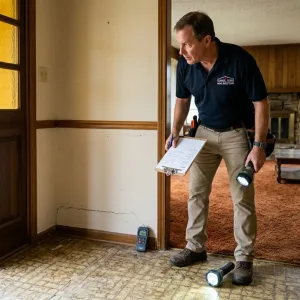
Updated for 2026 | Serving Hurst, Mid-Cities, and the broader DFW area
Here’s a number that should stop you in your tracks: according to InterNACHI estimates, 80 to 90 percent of home inspections uncover at least one significant defect. Not a cosmetic scratch or a sticky door — a real defect. Something that could cost you thousands, or in the worst cases, tens of thousands of dollars after you’ve already handed over your down payment and moved in. Foundation repairs in DFW can run anywhere from $5,000 to $50,000 or more. A full HVAC replacement? $5,000 to $15,000. A roof? $8,000 to $20,000. And yet, a standard home inspection for an average Hurst home costs somewhere between $400 and $600.
That math is pretty hard to argue with. A home inspection isn’t an optional line item — it’s one of the most cost-effective forms of financial protection you can buy during a real estate transaction. If you’re buying a home in Hurst or anywhere in the DFW Mid-Cities corridor, this guide will walk you through exactly what inspections cost, what drives those costs up or down, what the regulatory framework looks like in Texas, and how to find an inspector you can actually trust. No fluff, no vague generalities — just the information you need to make a confident decision.
If you’re already exploring your options, professional home inspection services in the DFW area are more accessible — and more important — than ever in today’s market.
Key Takeaways
- Standard home inspections in Hurst, TX cost $350–$750 for most homes, depending on square footage and age.
- Budget $800–$1,300+ for a complete picture — including termite inspection, sewer scope, and thermal imaging.
- All Texas home inspectors must hold an active TREC Professional Inspector license — verify at www.trec.texas.gov before hiring anyone.
- Hurst’s median home age (1975–1985) means inspectors frequently encounter aging HVAC, plumbing, electrical systems, and foundation movement from DFW’s expansive clay soils.
- 83% of homebuyers purchased a home inspection in 2024 (NAR data) — a strong return to due diligence after the 2021–2022 market frenzy when many waived inspections.
- 80–90% of inspections uncover at least one significant defect — making the $400–$600 inspection cost one of the best investments in any real estate transaction.
- Avoid inspectors who also offer repair services — this is a direct conflict of interest.
- Book your inspection immediately after signing a purchase agreement to protect your contingency timeline.
Why Home Inspections Matter in Hurst, TX’s Real Estate Market
Hurst sits squarely in the heart of the DFW Mid-Cities corridor — a mature, established suburb with a housing stock that tells its own story. The median year built for homes in Hurst hovers around 1975 to 1985, which means a large portion of the homes on the market today were constructed four to five decades ago. The original HVAC systems, plumbing lines, and electrical panels in those homes weren’t designed to last forever. Many of them are approaching — or have already exceeded — their expected service life.
Add to that DFW’s infamous expansive clay soils, which swell when wet and shrink when dry, and you have a region where foundation movement is practically a standard finding on inspection reports. This isn’t a reason to panic — it’s a reason to be informed. Understanding what you’re walking into before you close is exactly what a professional inspection is designed to provide.
The broader market context matters here, too. During the 2021–2022 buying frenzy, a significant number of buyers in DFW waived inspection contingencies entirely just to make their offers more competitive. Some of those buyers discovered costly surprises after closing — surprises that a $500 inspection would have surfaced. The market has since normalized considerably. According to NAR’s 2024 Profile of Home Buyers and Sellers, 83% of buyers purchased a home inspection — a meaningful return to standard due diligence. In 2026’s more balanced market, buyers have leverage again, and inspections are once again a critical negotiation tool.
For buyers considering homes in Hurst, Bedford, Euless, or anywhere in the Mid-Cities, a general home inspection isn’t a formality — it’s the foundation of a sound purchasing decision.
The Real Cost of Skipping an Inspection vs. Getting One
Let’s put the numbers side by side. A standard home inspection for an average Hurst home runs $400 to $600. Here’s what you’re protecting yourself against:
- Foundation repairs in DFW: $5,000–$50,000+ (depending on severity and method)
- Full HVAC system replacement: $5,000–$15,000+
- Roof replacement: $8,000–$20,000+
- Main sewer line repair or replacement: $3,000–$15,000+
- Electrical panel upgrade or rewiring: $2,000–$10,000+
A $500 inspection that surfaces a foundation issue, a failing HVAC system, or a deteriorated sewer line doesn’t just save you money — it gives you the information you need to negotiate, walk away, or budget appropriately. That’s not an expense. That’s leverage.
Home Inspection Pricing in Hurst, TX: What You’ll Actually Pay in 2026
The most common question buyers ask is simple: how much is this going to cost me? The honest answer is that pricing is primarily driven by square footage, with secondary factors like home age, foundation type, and the presence of additional structures also playing a role. Here’s what the current DFW market looks like for standard residential inspections:
| Home Size | Typical Cost Range (Hurst/DFW) |
|---|---|
| Under 1,500 sq ft | $350 – $475 |
| 1,500 – 2,500 sq ft | $450 – $600 |
| 2,500 – 3,500 sq ft | $550 – $750 |
| 3,500+ sq ft | $700 – $1,000+ |
These ranges reflect current DFW market pricing based on local inspection company rate sheets and industry survey data (HomeAdvisor, 2025). Hurst pricing is generally comparable to or slightly higher than the national average of $300–$600, largely because DFW homes — particularly older ones — tend to involve more complexity: foundation monitoring, aging systems, and hail damage history all require additional inspector attention and time.
One thing worth noting: reputable inspectors in DFW maintain consistent pricing year-round. Seasonal discounts are rare. If you see pricing that’s dramatically lower than these ranges, that’s worth scrutinizing — not celebrating. Working with experienced home inspectors who understand DFW-specific issues means you’re paying for genuine expertise, not just a checkbox.
💛 You’re Right to Be Concerned About Costs
Home inspection is an additional expense on top of your down payment, closing costs, and moving expenses. That’s real, and it’s fair to think carefully about it. But consider this: a $500 inspection is roughly 1–2% of what a single major repair — a foundation issue, a failed HVAC system, a deteriorated roof — would cost you after closing. The math makes the inspection one of the most defensible purchases in the entire transaction.
Factors That Drive Inspection Costs Up
Beyond square footage, several factors can push your inspection cost toward the higher end of the range — or add fees on top of the base price:
- Home age: Pre-1980 homes often carry a surcharge due to the increased complexity of evaluating aging systems and materials.
- Foundation type: Pier-and-beam foundations (found in some older Hurst homes) take more time and equipment to evaluate than standard slab-on-grade. A pier and beam foundation inspection involves crawling into confined spaces to assess subflooring, beams, and plumbing underneath.
- Multiple structures: Detached garages, workshops, and guest houses each add to inspection time and cost.
- Property condition: Severely neglected homes require more time and may involve hazard assessment.
- Travel distance: Homes well outside an inspector’s primary service area may incur a travel surcharge.
Comparing Hurst Costs to Texas and National Averages
For context: the Texas state average for a home inspection runs $300–$800 (HomeAdvisor, 2025 data), and the national average sits at $300–$600. DFW lands at the mid-to-upper end of the Texas range, which makes sense given the region’s cost of living, the prevalence of older housing stock, and the added complexity that comes with foundation-heavy inspections. Larger, older homes in Hurst — which are common — will typically fall into the $550–$750 range or higher.
If you’re ready to understand what a thorough inspection looks like for your specific Hurst home, Journey Home Inspections can provide a detailed quote and answer any questions about what’s included — with no pressure and no surprises.
Ancillary Inspection Services and Hidden Costs to Budget For
A standard home inspection is your foundation — but it doesn’t give you the complete picture. For most Hurst homes, especially those built before 1990, a handful of add-on services are either strongly recommended or outright required by lenders. Buyers who budget only for the base inspection and then get surprised by additional costs are a common story. Here’s what you should actually plan for:
| Service | Typical Cost (DFW) | Notes |
|---|---|---|
| Termite/WDI Inspection | $75 – $150 | Often required by lenders in Texas |
| Sewer Scope | $200 – $400 | Highly recommended for pre-1990 homes |
| Pool/Spa Inspection | $75 – $150 | Common in DFW; covers equipment and safety |
| Thermal Imaging | $50 – $150 (add-on) | Detects hidden moisture, insulation gaps, electrical hot spots |
| Radon Testing | $150 – $250 | Less critical in Texas but available |
| Irrigation System Inspection | $50 – $100 | Checks zones, heads, and functionality |
For a typical 2,000–2,500 sq ft Hurst home with a standard inspection, WDI, and sewer scope, you’re looking at a realistic total of $800 to $1,300 or more. Add a pool inspection if applicable, and you’re at the higher end of that range. Many inspectors offer comprehensive inspection packages that include ancillary services, which can simplify scheduling and often come with bundled pricing.
💡 Pro Tip: Budget for the Full Picture, Not Just the Base Inspection
A standard inspection runs $400–$600, but add termite ($75–$150), sewer scope ($200–$400), and possibly thermal imaging ($50–$150) and you’re looking at $800–$1,300 for a complete picture of your Hurst home’s condition. Plan for this upfront so it doesn’t catch you off guard during the transaction.
Why Termite Inspections Are Non-Negotiable in Texas
A Wood Destroying Insect (WDI) inspection — commonly called a termite inspection — is performed by a licensed pest control operator, not your home inspector. In Texas, lenders frequently require it as part of the underwriting process, and for good reason: DFW’s climate is highly conducive to termite activity. Termite damage can reach $10,000 or more before it’s even visible to the naked eye. At $75–$150, a WDI inspection is one of the most cost-effective protections in your due diligence toolkit.
Sewer Scope: When It’s Worth the Investment
For homes built before 1990 — which describes a large portion of Hurst’s housing stock — a sewer scope inspection is one of the smartest add-ons you can get. A camera is run through the main sewer line to check for blockages, cracks, root intrusion, or outright collapses. It can also reveal the presence of polybutylene pipes or galvanized steel, both of which are prone to failure. Main sewer line repairs run $3,000–$15,000 or more. A $200–$400 scope that surfaces a problem before closing gives you real negotiating leverage — or the chance to walk away from a very expensive problem.
If the home has a pool or spa, a dedicated pool and spa inspection is also worth including. Pool equipment repairs and resurfacing can cost thousands, and a visual inspection of the pump, filter, heater, and decking can surface issues that aren’t obvious to an untrained eye.
Who Pays for the Home Inspection in a Texas Real Estate Transaction?
This is one of the most common points of confusion for first-time buyers: who actually pays for the inspection? In Texas, the answer is almost always the buyer. The inspection is performed for the buyer’s benefit — it’s their due diligence, their protection — so they bear the cost. This is standard practice across the state, and it’s not typically negotiable as part of the offer.
That said, what happens after the inspection is very much negotiable. If your purchase agreement includes an inspection contingency (and in 2026’s normalized market, it almost certainly should), you have the right to request repairs, a price reduction, or a credit toward closing costs based on significant defects uncovered during the inspection. Sellers in the current DFW market are generally willing to negotiate on legitimate, costly issues — they want the deal to close too.
Seller Pre-Listing Inspections: A Growing Trend in DFW
Increasingly, savvy sellers in the DFW market are ordering their own inspections before listing. A pre-listing inspection allows sellers to identify and address issues upfront — either fixing them before buyers see the home or disclosing them transparently to build trust and justify their asking price. This approach can significantly reduce the friction that often occurs during the buyer’s inspection phase, where unexpected findings can derail a deal or trigger aggressive price negotiations.
Pre-listing inspections cost the same as buyer inspections, but sellers often find they save money in the long run by avoiding last-minute price reductions or repair credits. It’s worth noting: even if a seller has had a pre-listing inspection done, buyers should still get their own independent inspection. The pre-listing report is the seller’s information — your inspection is yours.
TREC Licensing and Regulatory Requirements: What Protects You in Texas
Texas has one of the most rigorous home inspector licensing frameworks in the country, and understanding it is genuinely useful — not just as background information, but as a practical tool for evaluating who you hire. Every home inspector operating in Texas must hold an active Professional Inspector license issued by the Texas Real Estate Commission (TREC). This isn’t a soft requirement. It’s the law.
To earn a Professional Inspector license, candidates must complete 180 classroom hours of TREC-approved inspection coursework, perform 200 supervised inspections, pass the Texas Home Inspector Exam, clear a background check, and meet specific insurance requirements. That’s a meaningful barrier to entry — and it exists to protect you. Hiring TREC-licensed professional inspectors with verified credentials and local DFW expertise is the most direct way to ensure you’re protected under Texas law.
✅ Verify in 30 Seconds: Check Your Inspector’s TREC License
Go to www.trec.texas.gov, navigate to the license search tool, and enter your inspector’s name or license number. Confirm the license type is “Professional Inspector,” the status is “Active,” and there are no disciplinary actions on record. This takes 30 seconds and can save you from a significant mistake.
Professional Inspector vs. Apprentice Inspector: Know the Difference
TREC issues two tiers of inspector licenses: Professional Inspector and Apprentice Inspector. The distinction matters enormously for consumers. A Professional Inspector can perform inspections independently, issue reports, and supervise apprentices. An Apprentice Inspector must be directly supervised by a Professional Inspector at all times — they cannot legally perform inspections on their own.
The risk: some less scrupulous operations send unsupervised apprentices to perform inspections while a Professional Inspector’s name appears on the report. This puts you at significant risk. Always verify that the person physically showing up to inspect your home is a Professional Inspector — or, if they’re an apprentice, that a Professional Inspector is meaningfully present and overseeing the work.
What TREC Standards of Practice Actually Require
TREC’s Standards of Practice (SOP) define the minimum scope of a standard home inspection in Texas. Inspectors are required to evaluate and report on all readily accessible, visually observable components of the following systems: structural (foundation, roof structure, walls, floors, ceilings), electrical (service panels, branch circuits, connected devices), HVAC (heating and cooling equipment, distribution systems), plumbing (supply, drain, waste, venting, water heating), and appliances (dishwashers, ranges, garage door operators, dryer vents, and more).
Equally important is what the SOP explicitly excludes: mold testing, asbestos, radon, lead paint, and other environmental hazards are all outside the scope of a standard inspection. Inspectors also cannot dismantle components or inspect areas that are not readily accessible. Understanding this scope helps you know when a specialist evaluation — a structural engineer for foundation concerns, for example — is the appropriate next step. You can review the full frequently asked questions about home inspections to understand what’s covered and what isn’t.
Insurance Requirements and Your Recourse If Something Goes Wrong
TREC requires all Professional Inspectors to carry Professional Liability (Errors & Omissions) insurance with a minimum aggregate limit of $100,000, as well as General Liability insurance with a minimum aggregate of $100,000. Before hiring any inspector, request a Certificate of Insurance directly. Higher limits are always preferable.
If an inspector demonstrably misses a significant defect that was visible and within SOP scope, you have several avenues for recourse. You can file a formal complaint with TREC (they investigate violations and can impose fines, suspensions, or license revocations). You may also pursue claims under the Texas Deceptive Trade Practices Act (DTPA), which can result in economic damages and, in cases of knowing violations, treble damages. The inspector’s E&O insurance may cover damages, subject to policy limits. Texas has a two-year statute of limitations for negligence claims, so act promptly if you believe you have a legitimate grievance.
Choosing a TREC-licensed inspector with verified credentials and deep knowledge of DFW homes is the most direct way to protect your investment. Journey Home Inspections brings both regulatory compliance and genuine local expertise to every inspection in the Hurst and Mid-Cities area.
The DFW Home Inspection Market: Provider Types and What to Expect
The good news for buyers in Hurst and the Mid-Cities is that the DFW home inspection market is well-supplied. There’s no shortage of TREC-licensed inspectors, and the competitive market generally works in your favor — you have real choices. The challenge is evaluating those choices intelligently, rather than defaulting to whoever your agent recommends or whoever comes up first in a search.
There are three broad categories of inspection providers in DFW. Solo independent inspectors offer personalized service and often competitive pricing, but availability during peak season (March–August) can be limited. Multi-inspector firms like multi-inspector firms serving the DFW area offer broader availability, comprehensive ancillary service offerings, and more consistent report quality. Franchise operations (Pillar To Post, WIN Home Inspection, HouseMaster) bring brand recognition and standardized processes but may carry slightly higher pricing due to franchise overhead.
⚠️ Red Flag: Inspectors Who Also Do Repairs
An inspector who also offers repair services has a direct financial incentive to find — or exaggerate — defects in your home. This is a serious conflict of interest, and it’s one of the most important red flags to watch for. Always hire an independent inspector with no financial stake in what they find or recommend.
Credentials and Certifications Beyond TREC Licensing
TREC licensing is the floor, not the ceiling. The best inspectors in DFW often hold additional credentials that signal ongoing education and professional commitment. Here’s what to look for:
- ASHI Certified Inspector (ACI): The American Society of Home Inspectors requires adherence to a strict code of ethics and ongoing continuing education.
- InterNACHI Certified Professional Inspector (CPI): A comprehensive certification from the International Association of Certified Home Inspectors, widely recognized in the industry.
- TPREIA Membership: The Texas Professional Real Estate Inspectors Association indicates commitment to Texas-specific best practices.
- Thermal imaging certification: Indicates specialized training in infrared camera use for detecting hidden moisture, electrical hot spots, and insulation gaps.
Red Flags: Predatory Practices to Avoid in the DFW Market
Beyond the repair-services conflict of interest, watch for these warning signs when evaluating inspectors:
- Inspections completed in under 2 hours for an average-sized home — thoroughness requires time, and rushing is a red flag.
- Generic, boilerplate reports with stock photos and no property-specific details or custom photographs.
- Pricing dramatically below market average — this often signals inexperience, inadequate insurance, or corner-cutting.
- Unlicensed apprentices performing inspections without verifiable Professional Inspector supervision.
- Pressure to hire affiliated contractors for repairs found during the inspection.
Common Defects Found in Hurst Homes: What Inspectors Actually Look For
Knowing what inspectors typically find in Hurst’s aging housing stock isn’t meant to alarm you — it’s meant to help you understand the value of the inspection process. These aren’t hypothetical concerns. They’re the real, documented findings that show up regularly in inspection reports across the Mid-Cities area.
🔍 Why DFW Homes Need Extra Attention
Hurst’s aging housing stock (median year built: 1975–1985) and DFW’s expansive clay soils create unique inspection challenges that inspectors in other parts of the country simply don’t encounter as frequently. Foundation movement, hail damage, and aging HVAC and plumbing systems are common findings that require expert evaluation — not guesswork.
Here’s what experienced inspectors most commonly find in Hurst-area homes, based on aggregated industry data and local inspector experience:
- Foundation movement: Exterior brick cracks, interior drywall cracks, sticky doors and windows, and uneven floors — all signs of the seasonal soil movement that’s endemic to DFW.
- Roofing issues: Hail damage (often not immediately visible), worn or missing shingles, improper flashing, and inadequate attic ventilation leading to premature deterioration.
- HVAC systems nearing end-of-life: Units that are 15–25 years old, refrigerant leaks, clogged condensate lines, and improper installation are frequent findings in homes from this era.
- Plumbing defects: Galvanized steel pipe corrosion, polybutylene pipe failures (common in 1980s construction), and slow or blocked drains.
- Electrical issues: Outdated wiring, ungrounded outlets, undersized or overloaded panels — all common in homes built before modern electrical codes.
- Moisture intrusion and water damage: Leaks around windows, doors, and plumbing fixtures leading to wood rot and conditions conducive to mold growth.
An inspector who knows DFW homes will know exactly where to look for each of these issues. A thorough evaluation of aging HVAC and plumbing systems is particularly important in Hurst’s housing stock, where deferred maintenance on these systems is common.
Foundation Issues in DFW: Why They’re So Common
DFW’s expansive clay soils are the root cause of the region’s widespread foundation movement. When wet, these soils swell and push upward; when dry, they shrink and pull away. This seasonal cycle creates stress on slab foundations that, over decades, can result in significant movement. Some degree of settling is normal in older DFW homes — but significant cracking, uneven floors, or doors that won’t close properly warrant attention.
A home inspector will note visible signs of foundation distress, but diagnosing the severity and recommending repairs is the domain of a licensed structural engineer. If your inspector flags foundation concerns, budget for a specialist evaluation — typically $400–$800 — before making any decisions. Foundation repairs in DFW range from $5,000 for minor work to $50,000 or more for significant structural remediation. That’s why the inspection matters so much.
Hail Damage and Roofing: A DFW-Specific Concern
North Texas sits in one of the most active hail corridors in the country. Severe thunderstorms are a regular feature of DFW springs and summers, and hail damage to roofs is one of the most common findings in inspection reports across the region. The tricky part: hail damage isn’t always visible from the ground, and it can cause premature roof failure years after the event. An experienced inspector will get on the roof — or use drone technology for steep or high roofs — to assess the actual condition of the shingles, flashing, and ventilation.
Roof age and condition directly affect your home’s value, your insurance premiums, and your ability to get coverage at all. A roof replacement in DFW runs $8,000–$20,000 or more. Knowing the condition before you close is non-negotiable.
Understanding what inspectors typically find in Hurst homes is the first step. The next step is scheduling an inspection with someone who knows exactly what to look for in homes of this age and construction type — and can explain every finding clearly.
How to Find and Evaluate Home Inspectors in Hurst: A Step-by-Step Guide
Most buyers find their inspector through a real estate agent referral. That’s fine as a starting point, but it shouldn’t be your only move. Agents sometimes have financial relationships with inspectors they refer — not necessarily improper, but worth knowing. The best approach is to use an agent referral as one data point among several, then do your own independent research before making a decision.
Here’s a practical process for finding and evaluating experienced inspectors with deep knowledge of DFW homes:
- Verify TREC license status at www.trec.texas.gov. Confirm Professional Inspector status, active license, and no disciplinary history. This takes 30 seconds.
- Read Google Reviews and Nextdoor recommendations for real customer feedback. Look for patterns in reviews — consistent praise for thoroughness and clear communication is a strong signal.
- Request a sample inspection report. A good report is detailed, property-specific, includes custom photos, and explains findings in plain language. A generic boilerplate report is a red flag.
- Compare multiple inspectors on qualifications, experience, service offerings, and report quality — not just price.
- Ask about turnaround time. Standard is 24–48 hours for report delivery. Faster is better during a tight contingency window.
You can also check out verified customer reviews to understand what the inspection experience is actually like before you commit.
Questions to Ask Before Hiring an Inspector
Before you book, ask these questions directly:
- How many inspections have you completed? (Experience matters — more is better.)
- Are you a TREC Professional Inspector? (Verify independently, not just on their word.)
- What ancillary services do you offer in-house? (Bundled services simplify scheduling and often come with better pricing.)
- How long will the on-site inspection take? (2–4 hours for an average home is the right range.)
- When will I receive the report? (24–48 hours is standard; same-day is even better.)
- Do you carry E&O insurance? (Request a Certificate of Insurance directly.)
What to Expect During Your Home Inspection
For an average 2,000–2,500 sq ft Hurst home, plan for 2–3 hours on-site. Larger or older homes can take 4 hours or more. You should attend the inspection — not to hover, but to ask questions and learn about the home you’re about to buy. A good inspector will walk you through what they’re finding in real time, not just hand you a report 24 hours later.
Expect a detailed written report within 24–48 hours, complete with photos of every finding, clear explanations, and recommendations for next steps. The report should be specific to your home — not a generic checklist. If an inspector is in and out in under 2 hours for a full-sized home, that’s a serious red flag.
Seasonal Timing and Scheduling: When to Book Your Hurst Home Inspection
DFW’s home inspection market follows the same seasonal rhythm as its real estate market. Spring and summer — March through August — are peak season. Inspection volume is highest, wait times stretch to 3–7 days, and flexibility is limited. Fall and winter (September through February) see shorter wait times of 1–3 days and greater scheduling flexibility.
One thing that doesn’t change seasonally: pricing. Reputable inspectors in DFW maintain consistent rates year-round. If you’re hoping to score a winter discount, you might find minor flexibility with some inspectors, but don’t count on it from established firms.
The practical advice: book your inspection the moment your purchase agreement is signed. Don’t wait. In competitive situations, getting your preferred inspector on the schedule quickly can be the difference between a thorough inspection and a rushed one — or between getting your first-choice inspector and settling for whoever’s available.
Planning Your Inspection Timeline Within a Purchase Agreement
Standard inspection contingency periods in Texas run 7–10 days from the effective date of the contract. That sounds like plenty of time, but it goes fast. Book the inspection immediately after signing. Allow 24–48 hours for report delivery. If the inspection surfaces major concerns — foundation distress, significant HVAC issues, evidence of sewer line problems — you may need additional time for specialist evaluations (a structural engineer, for example) before your contingency deadline. Build that buffer into your planning from day one.
For buyers considering homes in other parts of the DFW region, the same principles apply. You can explore what to expect from inspections in nearby markets like Fort Worth home inspections, Southlake home inspections, or Weatherford home inspections if you’re casting a wider net in your home search.
Top Home Inspectors in Hurst, TX and the DFW Area: Compared and Reviewed
The Hurst and Mid-Cities area has a well-established market of TREC-licensed inspectors, ranging from solo practitioners with deep local roots to national franchise operations with standardized processes. Here’s an honest look at the main providers and what differentiates them.
Journey Home Inspections — Fort Worth, TX
Journey Home Inspections is a TREC Professional Inspector licensed and insured firm (E&O coverage verified) serving Hurst, the Mid-Cities, and the broader DFW area — including Weatherford, Southlake, Westlake, Argyle, and Trophy Club.
- Comprehensive inspections with full ancillary service offerings: WDI coordination, sewer scope, thermal imaging, pool/spa, irrigation
- Known for detailed, clear reports delivered within 24 hours with custom photos and specific findings
- Strong local reputation for understanding DFW-specific issues: foundation movement, hail damage, aging HVAC and plumbing systems
- Offers both buyer inspections with contingency support and new construction phase inspections for builders and buyers
- Pre-listing inspections available for sellers preparing to list
- Address: Fort Worth, TX
Pillar To Post Home Inspectors (DFW Locations)
Pillar To Post is a national franchise with multiple DFW locations serving Hurst and surrounding areas. Their inspectors hold TREC Professional Inspector licenses and operate under standardized training and processes. They offer comprehensive service offerings including WDI, sewer scope, and thermal imaging, with digital reports delivered with clear photos and explanations. Pricing typically falls in the mid-to-higher range due to franchise overhead, but the brand recognition and consistency of process are genuine advantages for buyers who prioritize predictability.
WIN Home Inspection (DFW Locations)
WIN Home Inspection is another national franchise with a DFW presence serving Hurst and the Mid-Cities. Their inspectors are TREC-licensed and offer bundled inspection packages that include ancillary services. Digital reports with interactive features and clear documentation are a strong point. Online presence and customer reviews are generally solid. Pricing is competitive with other franchises, and availability is typically good even during peak season due to their multi-inspector model.
Local Independent Inspectors in Hurst and the Mid-Cities
The Hurst area is also served by numerous experienced solo inspectors who bring deep local knowledge and established relationships within the community. Pricing from independent inspectors is typically competitive with or lower than franchises, and the personalized service can be a genuine advantage. The tradeoffs: availability during peak season (March–August) may be limited, and quality varies more widely than with established firms. If you’re considering an independent inspector, prioritize those with 10+ years of experience, strong Google and Nextdoor reviews, and verifiable TREC credentials. The Arlington home inspection market offers a useful comparison for understanding how independent and franchise providers stack up across the Mid-Cities region.
Key Statistics and Data: What the Numbers Tell Us About Home Inspections in 2026
Numbers have a way of cutting through uncertainty. If you’re still weighing whether a home inspection is truly worth the cost, here’s the data that should settle the question.
“According to NAR’s 2024 Profile of Home Buyers and Sellers, 83% of buyers purchased a home inspection — a significant return to standard due diligence after the 2021–2022 market frenzy when many waived inspections entirely to compete.”
That 83% figure is meaningful. It reflects a market that has recalibrated toward rational decision-making. Buyers who waived inspections during the 2021–2022 frenzy and discovered major defects post-closing learned an expensive lesson. The current market rewards buyers who do their homework.
InterNACHI estimates that 80–90% of home inspections uncover at least one significant defect. That’s not a reason to be afraid of buying a home — most defects are addressable. But it is a powerful argument for never skipping the inspection. Even new construction homes have defects. Subcontractor errors, rushed timelines, and incomplete work are common findings in brand-new homes, which is why new construction phase inspections are increasingly popular with buyers who want to verify quality before closing.
The ROI of a Home Inspection: Numbers That Matter
Here’s the return-on-investment calculation in plain terms:
- Standard inspection cost: $400–$600 for an average Hurst home
- Average number of significant defects found: 1–3 per inspection (InterNACHI estimates)
- Cost of major repairs if missed: $5,000–$50,000+ (foundation, roof, HVAC, plumbing)
- The math: Your inspection cost is roughly 1–2% of what a single major repair would cost you — and that’s before accounting for the negotiating leverage an inspection gives you
Market Trends: Why Inspections Matter More in 2026 Than Ever
The 2021–2022 era of waived inspections produced a wave of post-purchase regret across DFW. Buyers who skipped inspections to win bidding wars discovered foundation issues, failing HVAC systems, and deteriorated roofs that should have been surfaced during due diligence. The market has since normalized, and inspection contingencies are once again standard practice in most purchase agreements.
In 2026’s market, inspection findings are a primary negotiation tool. Sellers know it, agents know it, and buyers who use it effectively can negotiate repairs, credits, or price reductions that more than offset the cost of the inspection itself. Lenders are also increasingly requiring inspections and ancillary services (particularly WDI) as part of the underwriting process, further cementing the inspection’s role as a non-negotiable step in any Texas home purchase.
For buyers in the Keller area, similar market dynamics apply — you can explore what to expect from Keller home inspections as part of your broader DFW research.
Frequently Asked Questions: Hurst, TX Home Inspections
Absolutely — and this surprises many first-time buyers. Even brand-new homes can have significant defects resulting from subcontractor errors, material issues, or rushed construction timelines. A professional inspection on a new construction home can identify code violations, improper installations, and incomplete work that the builder is obligated to fix before you close. Catching these issues before closing can save thousands in post-purchase repairs and headaches. If you’re buying new construction, consider a phase inspection conducted at key construction milestones — not just at final walkthrough.
Yes — and in 2026’s more balanced DFW market, this is one of the most powerful tools a buyer has. If your purchase agreement includes an inspection contingency (which it should), you can request repairs, a credit toward closing costs, or a price reduction based on significant defects uncovered during the inspection. Sellers in the current market are generally willing to negotiate on legitimate, costly issues because they want the deal to close. The key is having a detailed, credible inspection report that documents the findings clearly — which is another reason report quality matters when choosing an inspector.
If an inspector demonstrably misses a significant defect that was visible and within the TREC Standards of Practice scope, you have real recourse. Start by contacting the inspector directly to discuss the issue. If that doesn’t resolve it, file a formal complaint with TREC — they investigate violations of the SOP and can impose disciplinary actions including fines, suspension, or license revocation. You may also pursue legal action under the Texas Deceptive Trade Practices Act (DTPA), which allows for economic damages and potentially treble damages in cases of knowing violations. The inspector’s E&O insurance may cover damages, subject to policy limits. Texas has a two-year statute of limitations for negligence claims, so don’t delay if you believe you have a legitimate case.
A standard home inspection includes a visual assessment of the foundation — the inspector will note visible signs of distress like cracking, uneven floors, and sticking doors. However, if the inspector identifies significant foundation concerns, they will recommend evaluation by a licensed structural engineer, which is a separate and more specialized service (typically $400–$800). In DFW, where expansive clay soils make foundation movement endemic, this specialist evaluation is highly recommended whenever an inspector flags notable distress. Foundation repairs in the region run $5,000–$50,000 or more, making the cost of a structural engineer evaluation a very smart investment when there’s any doubt.
Yes — and in many cases, your lender will require it. A Wood Destroying Insect (WDI) inspection is performed by a licensed pest control operator (separate from your home inspector) and identifies active or past infestations of termites, carpenter ants, and powder post beetles. DFW’s climate is highly conducive to termite activity, and infestations can cause severe structural damage — often before it’s visible to the naked eye. At $75–$150, a WDI inspection is one of the most cost-effective protections in your due diligence toolkit, and skipping it in this region is a genuine risk.
For an average 2,000–2,500 sq ft home in Hurst, a thorough inspection typically takes 2–3 hours on-site. Larger homes (3,500+ sq ft) or older homes with more complex systems can take 4 hours or more. If ancillary services like a sewer scope or pool inspection are added, plan for additional time. If an inspector is in and out in under 2 hours for a full-sized home, that’s a meaningful red flag — thoroughness requires adequate time, and a rushed inspection is not doing its job. You should attend the inspection and feel free to ask questions throughout the process.
Ready to Schedule Your Hurst Home Inspection?
Understanding the cost and importance of a home inspection is the first step — and you’ve done that work. The next step is choosing an inspector who combines TREC compliance with genuine, hard-won knowledge of DFW homes and the specific challenges they present.
Journey Home Inspections serves Hurst, the Mid-Cities, and the broader DFW area — including Fort Worth, Weatherford, Southlake, Westlake, Argyle, and Trophy Club — with comprehensive inspections, transparent pricing, and expert knowledge of the homes and issues you’ll encounter in this region. Whether you’re a first-time buyer trying to navigate the process or an experienced homeowner planning a pre-listing inspection, the goal is the same: give you clarity and confidence before you make one of the biggest decisions of your life.